- Fun and addictive gameplay
- Creative genre blending praised
- Excellent tower defense gameplay
- Frustrating trap-disabling enemies
- Repetitive maze and content
- Unrewarding ending and story
Emotions
Archetypes
Hardware
What players like:
Common complaints:
Gameplay feedback:
Performance notes:
Recommendations:
Other player notes:
Similar games
Blend with other games





Review evidence
Why players say this
Review evidence
Why players say this
Steam review verdict
Addictive tower defense with clever genre blending, but plagued by trap-disabling enemies, repetitive content, and a disappointing ending.
What players like
Game is fun and addictive: Players consistently describe the game as fun, addictive, and engaging, with some noting its captivating and satisfying nature. This sentiment is widely shared across many reviews, highlighting the core appeal of the game.
Creative genre blending: The game successfully fuses tower defense with roguelike, puzzle, and dungeon themes, creating a distinctive experience. Players find the hybrid approach innovative and well-executed, offering a fresh take on the genre.
Excellent tower defense gameplay: The tower defense mechanics are praised as enjoyable, solid, and entertaining, with a unique twist that sets it apart. Reviewers appreciate the blend of strategy and puzzle elements that keep gameplay fresh.
Variety of traps with synergies: Players highlight the extensive variety of traps and the ability to upgrade them, with synergies that allow for creative combinations. This depth enables strategic experimentation and keeps gameplay engaging.
Strategic maze building mechanic: The ability to design and reshape mazes is a standout feature, offering tactical depth and freedom in trap placement. This mechanic is praised for adding a unique layer of strategy to the defense gameplay.
Common complaints
Frustrating trap-disabling enemies: Enemies that can destroy or disable traps are a major source of frustration, as they render half the arsenal ineffective and are often immune to most traps. The issue spans clusters 2, 10, 17, 24, 33, and 36.
Repetitive maze and content: Labyrinths and patterns repeat often, leading to boredom and low replay value, especially after the first 10 hours. This is supported by clusters 7, 21, 23, 28, and 32.
Limited trap variety and utility: Players report that traps lack variety, are often useless or single-use, and are scarce, leading to little sense of achievement. This is a common complaint backed by clusters 1, 39, and 29.
Poor balancing and difficulty: The game is considered too punishing, with difficulty roughly three times higher than necessary and poor trap balance. Players find the game more like work than fun due to this.
Unclear mechanics and rules: Many mechanics and rules are not explained well or intuitively, forcing players to guess and leading to frustration. This is evident in clusters 16, 18, 27, and 31.
Gameplay and performance
Tower defense genre hybrid: The game is frequently described as a tower defense game, often combined with puzzle, roguelite, and maze-building elements. Many players note its unique twist on the genre.
Trap-based gameplay core: Traps are the primary gameplay focus, with diverse trap types, combinations, and secret synergies. Players emphasize trap management and upgrading.
Roguelike elements present: The game features roguelike progression, procedural runs, and randomness. These elements are integral to the experience, often combined with other genres.
Puzzle-driven gameplay: Many players highlight the puzzle aspect, noting that the game requires strategic planning and problem-solving rather than fast-paced action. It is often compared to Sudoku in difficulty.
Maze building mechanics: Building and modifying mazes is a core mechanic, allowing players to shape enemy paths. This includes placing walls and traps in strategic ways.
Generally smooth performance: Multiple users report that the game runs well, is fully optimized, and plays smoothly without framerate or stuttering issues. Some note perfect performance with no lag, glitches, bugs, or crashes, while one user confirms solid performance on a GTX 1070.
High resource usage: The game is described as unoptimized, demanding large amounts of memory and high-end hardware, and drawing massive computing power. Users mention it is performance heavy, demanding on specs, and uses PC resources heavily, even on systems that should handle it easily.
Overheating on high settings: Several users report overheating issues, including GPU overheating when graphics settings are maxed out and high system load on ultra settings. One user had to cap FPS at 90 to prevent GPU overheating, indicating a need for performance tuning on demanding configurations.
Frequent crashes reported: Several users experience frequent crashes, with one reporting crashes 4 times in 6 minutes. Some crashes lead to severe issues like a black screen requiring Windows repair, and one user reports the game becomes unopenable on a high-end computer after a crash.
Optimization needs improvement: Several users directly state that the game is poorly optimized or could be better optimized for older systems. This feedback is vague but indicates a general consensus that performance on various hardware could be improved.
Recommendations
Highly recommended for tower defense fans: Multiple reviewers strongly recommend the game for fans of tower defense, strategy, and roguelike genres. The game is praised for its strategic depth and engaging gameplay.
Generally recommends buying: A broad group of reviewers give positive recommendations to buy or play the game without hesitation. They express strong support for the game overall.
Recommended for strategic thinkers: Reviewers highlight the game's appeal to players who enjoy slow, deliberate planning and puzzle-like challenges. The game offers deep strategic mechanics that require brainpower.
Try demo before purchase: Several reviewers suggest downloading the free demo to decide if the game fits your preferences. They find the demo representative and helpful for making an informed choice.
Worth full price: Reviewers consider the game worth its full price, offering good value for the experience. They are satisfied with the content and recommend buying without waiting for a discount.
Buying context
Community fair range: $12.00 - $18.00.
Game completion: 38.0h.
Story completion: 12.0h.
Session length: 7.0h.
MINOS has an early friction period due to limited traps and slow progression, but becomes highly enjoyable after unlocking key abilities and trap placements, typically within a few minutes to a couple of hours. Some players later find it repetitive or tedious.
Reported time to anchor: 10m.
Friction: limited basic traps; slow progression; frustrating learning curve; tedious early stages; tutorial bug or frustration; boring story early.
Player profiles
Puzzle Strategist: Methodical, analytical; enjoys planning trap synergies and maze layouts, restarting to perfect runs. Motivation: The satisfaction of solving complex trap optimization puzzles and achieving flawless execution. Stance: buy.
Content Critic: Plays through the content systematically; becomes frustrated when repetition sets in and seeks more variety. Motivation: Wants a complete, varied experience; values replayability and progression depth. Stance: no buy.
Roguelite Tower Defense Fan: Embraces randomness, adapts builds to unlocked perks and traps, enjoys meta-progression loops. Motivation: The blend of tower defense strategy with roguelike randomization and persistent upgrades. Stance: buy.
Platform notes
Performance is smooth for most mid-range VRAM users, but low-VRAM systems show a mix of stability problems and high-end VRAM systems are plagued by crashes.
Windows 8-11GB VRAM: positive. Users report no crashes or framerate problems, with only a minor combat bug noted.
Windows <8GB VRAM: mixed. Some users enjoy solid performance, but others on very low VRAM suffer frequent crashes and stability issues.
Windows 16GB+ VRAM: negative. Players report severe instability with repeated crashes that can even require system repair.
Steam Deck: The game is consistently reported to run well on Steam Deck by multiple users, with no evidence of technical barriers such as small text, external launchers, or stability issues. One isolated comment mentions poor optimization and missing FSR, but this does not detract from the overall positive experience.
Linux and Proton: The limited user feedback indicates the game runs well on Steam Deck (Linux) without reported issues. No negative compatibility signals were found.
Other review notes
Comparisons to Dungeon Keeper: Many reviewers draw parallels between this game and the classic Dungeon Keeper series, especially regarding trap-building and dungeon management. The comparison is generally favorable, with some noting it captures the desired atmosphere while adding fresh twists.
Hades comparisons for style: The game is frequently compared to Hades for its Greek mythology reinvention and overall vibe, including art style and narrative approach. Some reviewers note it takes cues from Hades despite being a different genre, often tower defense.
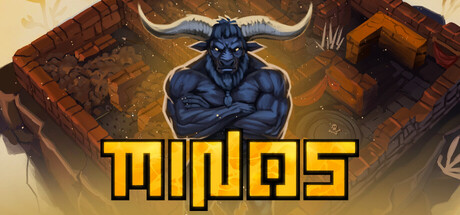
Greek mythology Minotaur theme: The game's story and setting are heavily based on Greek mythology, specifically the myth of the Minotaur and the Labyrinth. Reviewers mention elements like destiny and maze exploration, reflecting the mythological inspiration.
Demo availability enhances purchase: Several reviewers mention that a demo was available, which allowed them to try the game before buying. This positive aspect likely contributed to their purchase decision and overall satisfaction.
Steam Deck compatibility praised: The game runs well on Steam Deck and supports controller play, with some reviewers using it in desktop mode with an Xbox controller. This enhances portability and accessibility for players on the go.