- Engaging exploration and secrets
- Simple yet addictive gameplay
- Great atmosphere and visuals
- Items vanish on death
- Network and connectivity issues
- Solo play is poorly balanced
Emotions
Archetypes
What players like:
Common complaints:
Gameplay feedback:
Performance notes:
Recommendations:
Other player notes:
Similar games
Blend with other games






Review evidence
Why players say this
Review evidence
Why players say this
Steam review verdict
Engaging exploration, secrets, and addictive simple gameplay shine with great atmosphere and visuals, but lost items on death, network issues, and weak solo balance hurt.
What players like
Engaging Exploration and Secrets: Exploration is frequently praised as rewarding and full of hidden items and secret rooms, even leading to new areas when lost. Many players enjoy discovering secrets and solving numerous puzzles through observation and creativity.
Simple Yet Addictive Gameplay: Players find the core mechanics simple but highly enjoyable, often describing the game as interesting, addictive, and hard to put down. The gameplay hooks immediately and keeps players returning.
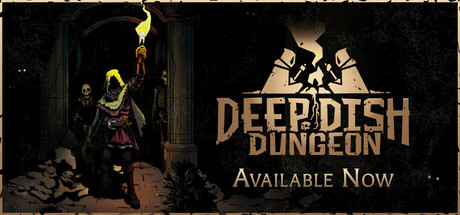
Great Atmosphere and Visuals: The game's aesthetics, art direction, and retro ambiance are widely praised for creating a special, immersive atmosphere. Scary sounds, darkness, and a cohesive soundscape enhance the dungeon crawl experience.
Strong Co-op Fun: Players repeatedly highlight that the game is very fun with friends, often described as best played cooperatively. Co-op sessions are engaging and create hilarious, strategic moments that make time fly.
Well-Crafted Dungeon Design: Level design is described as amazing, with vast interconnected dungeons that make getting lost fun. Handcrafted dungeons and good connections between zones contribute to an excellent exploration experience.
Common complaints
Items vanish on death: Backpacks and their contents disappear upon death, including keys and crafting materials, causing permanent loss and potentially endless death loops. This can ruin entire runs.
Severe network and connectivity issues: Frequent connection drops, network errors, and crashes prevent co-op play. Servers are poor with absurdly high latency, and errors persist even after restarting.
Solo play is poorly balanced: Players report that solo play is boring, frustrating, and lacks companion support or consolation mechanics. Combat often feels impossible alone and getting lost is frequent.
Progression is extremely slow: Gameplay, combat, and overall progression feel very slow. Getting around is painful, making the experience feel like a slog rather than an adventure.
Launch bugs and lack of polish: The game launched with numerous bugs and still feels unfinished. Issues include bows not working, enemy attacks missing, and general glitches.
Gameplay and performance
Three-player co-op supported: Players emphasize co-op multiplayer for up to three players, including solo and co-op modes. This is a core feature for playing with friends, siblings, and coordinating tasks.
Challenging combat and enemies: Combat features monsters like bats, spiders, skeletons, and slimes, with respawning enemies. Combat is clunky and not the main focus, requiring coordination and specific tactics.
Resource management and survival: Players manage food, materials, light, and equipment. Survival aspects include thirst, hunger, stamina, and backpack weight affecting movement.
Dungeon crawler roguelike genre: The game is described as an old-style dungeon crawler with roguelike elements, focusing on dungeon exploration. It draws from classical CRPGs and Metroidvania-like interconnected design.
Puzzle-solving core mechanic: Puzzles are heavily featured, with lots of puzzles and puzzle-solving as a core mechanic. Some puzzles even require a few friends, and inventory management is part of the puzzle design.
Smooth performance on varied hardware: Several clusters highlight flawless, fluid performance with no latency, including on an old PC and on an RTX 5090. Installation is also fast thanks to a small file size.
Optimization and performance complaints: One cluster explicitly calls for optimization, and another reports severe FPS drops by a factor of 2 to 3. Together they indicate noticeable performance problems for some users.
Light graphics run without issues: Two clusters note that the lightweight graphics cause no optimization problems. This suggests the game is accessible on lower-end systems despite some optimization complaints elsewhere.
Recommendations
Best played in co-op: Reviewers repeatedly emphasize that the game shines when played with friends or in co-op. Playing with one or two others is described as the ideal way to experience the dungeon exploration.
Strong general recommendation: Many reviewers give the game a strong positive recommendation overall, describing it as highly enjoyable. Some even call it a masterpiece worth congratulating the developers for.
Praise for exploration and puzzles: Exploration and puzzle elements receive consistent praise, with reviewers recommending it to fans of those aspects. The game is described as rewarding for those who enjoy immersive environments.
Appeals to dungeon crawler fans: The game is strongly recommended for fans of dungeon crawlers and roguelikes. Reviewers suggest players familiar with the genre can dive in with confidence.
Bugs and polish concerns: Several reviewers caution against buying until bugs are fixed, suggesting waiting for patches. They recommend holding off for initial polish updates before playing.
Buying context
Game completion: 20.0h.
Session length: 5.0h.
The game is reported as fun immediately when played co-op with friends, with strong reports of addictive sessions, while solo play often brings slow traversal, restrictive inventory, and resource slog. No evidence gives a precise time when fun begins.
Friction: Slow movement and painful traversal, especially with a backpack and no sprint; Restrictive inventory at first; Resource gathering and certain items are a slog; Lack of map and light management can cause confusion; Slow progression and uncertainty about what to do next; Solo play can be stressful and discouraging.
Unlock drivers: Playing with friends or co-op to share the burden and cover more ground; Inventory improves over time; A big brain moment from you or a friend speeds up progress; Learning room layout helps appreciation during slow exploration.
Player profiles
Dungeon Crawler Enthusiast: Methodically explores every corner, solves navigation puzzles, and scavenges for items, often with minimal UI and heavy atmosphere. Motivation: Exploring immersive dungeon environments, solving puzzles, and uncovering secrets. Stance: buy.
Co-op Social Gamer: Plays in small groups, coordinates tasks and roles, and thrives on the unpredictability of co-op sessions. Motivation: Socializing and cooperating with friends in a chaotic, fun environment. Stance: buy.
Veteran Survival/Roguelike Player: Dives deep into survival/roguelike games, plays for hundreds or thousands of hours, and accepts bugs and missing features in new releases. Motivation: Engaging with survival and roguelike systems, exploring new early-access titles, and tolerating rough edges for long-term potential. Stance: buy.
Other review notes
Valheim and Zelda comparisons: Players frequently compare this game to Valheim and Zelda, but note that it is not a cooking game disguised as those titles. It also shares a food-based stat increase system similar to Valheim.
Survival game comparisons: Reviewers compare it to survival games like 7 Days to Die, Green Hell, and Return to Moria. It offers more freedom and less grind than Return to Moria, though mealtimes are less grand.
Classic CRPG and old-school RPG comparisons: The game is compared to classical CRPGs and old-school RPGs like Eye of the Beholder and Ravenloft. This suggests a design that appeals to fans of traditional role-playing games.
Immersive soundscape: The soundscape is described as close to a fully immersive level, enhancing the overall experience. This adds significant atmosphere to the game.
Dense content relative to size: The game is noted to be dense with content relative to its install size. This indicates efficient use of resources and a lot of gameplay packed into a small package.