- Fun and enjoyable gameplay
- Creative premise with potential
- Roguelike mode is a highlight
- Confusing tech tree progression
- Lack of tutorial and guidance
- Frequent bugs with familiars
Emotions
Archetypes
What players like:
Common complaints:
Gameplay feedback:
Performance notes:
Recommendations:
Other player notes:
Similar games
Blend with other games


Review evidence
Why players say this
Review evidence
Why players say this
Steam review verdict
Fun, creative, and carried by a strong roguelike mode, though its confusing tech tree, missing tutorial guidance, and frequent familiar bugs hold back its potential.
What players like
Fun and enjoyable gameplay: Reviewers consistently find the game fun and enjoyable, with many describing it as a lot of fun and overall good.
Creative premise with potential: The game's concept is seen as creative and full of potential, though some note it may not be fully realized yet.
Roguelike mode is a highlight: The roguelike mode is frequently praised as the best part of the game, being extremely good and encouraging replayability.
Challenging but fun: Players find the game surprisingly challenging, with difficulty much higher than it appears, but still enjoyable.
Unique genre fusion: The combination of tower defense and colony simulation is well-received, with many calling it an interesting and well-executed fusion.
Common complaints
Confusing tech tree progression: The tech tree is often described as unintuitive, messy, and non-linear, making it hard for new players to know what to prioritize. Prerequisites are unclear, and unlocks sometimes require deep investment in unrelated branches before they become usable.
Lack of tutorial and guidance: Many players report that there is essentially no tutorial or that the tutorial is very poor, leaving important features to be discovered by accident. In-game explanations and guidance are also frequently cited as insufficient.
Frequent bugs with familiars: Several bugs prevent familiar summoning or cause existing familiars to stop working, consume resources without producing units, or stand idle indefinitely. These issues can brick a run or severely disrupt gameplay.
Poor AI for familiars: Familiars and golems frequently exhibit dumb or clumsy AI, such as idling, wandering aimlessly, or failing to perform tasks despite available resources. This leads to starvation, inefficiency, and player frustration.
Poor optimization and lag: Players frequently mention bad optimization, poor performance, and lag, especially in late game or when many characters and items are present. The game may slow down significantly even with a modest number of units.
Gameplay and performance
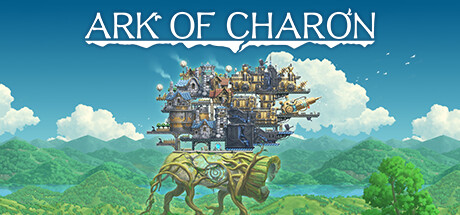
Colony sim tower defense hybrid: The game blends colony simulation, city building, and tower defense mechanics. Players manage a base while defending against enemy waves.
Resource gathering and management: Gameplay involves real-time resource gathering, mining, farming, and underground collection. Players must balance and manage limited resources throughout.
Large branching technology tree: The game features a substantial tech tree with multiple branches and tiers that unlock stronger buildings and weapons. Tech points drive progression through research.
Base building and resource gathering: Building, replacing, and optimizing structures is a core mechanic alongside resource collection and storage. Players develop their base to improve efficiency.
Familiar work assignment system: Familiars function as residents that players assign to tasks like gathering, manufacturing, planting, digging, and hauling. Work priorities can be configured for each familiar.
Severe late-game performance drops: Many players report drastic FPS drops and unplayable lag in late game, often dropping below 10 FPS even on high-end hardware. Progress and larger bases exacerbate the issue.
Crashes and stability issues: Various crashes reported, including frequent crashes, hard crashes requiring PC restart, and crashes during saving that cause progress loss. Some also experience sudden stops and loading failures.
Variable performance across hardware: Performance varies widely: some users report smooth gameplay on lower-end systems, while others experience issues on high-end setups. A 3060ti ran without stuttering, but an i9/RTX 4060 laptop had high heat and fan noise.
Performance degrades with fortress size: As the fortress grows and more familiars are added, the game becomes heavy and hard to control, with noticeable slowdown. This scaling issue is a common complaint.
Stuttering during gameplay: Frequent stuttering occurs, especially in later stages and during combat, impacting overall smoothness. Some experience it occasionally while others find it game-breaking.
Recommendations
Wait for sale or discount: A recurring recommendation is to buy the game only during a sale or at a discount, as many find the full price too high for the current content or polish. This sentiment appears across numerous clusters with varying intensity.
Recommended for tower defense fans: Many reviewers recommend the game to players who enjoy tower defense, often combined with colony sim or base building elements. Clusters highlight tower defense as a core appealing aspect.
Appeals to base building enthusiasts: Players who enjoy base building and defending their creations find the game appealing, especially with its wave defense and resource management. This is a common positive recommendation.
Not worth full price: Many reviewers feel the game is not worth its full asking price, citing mediocrity or lack of content. They suggest buying only at a discount.
Start on easy or relaxed mode: Many recommend starting on easy, casual, or relaxed mode to learn the mechanics without pressure, then transitioning to harder modes. This advice appears in various forms.
Buying context
Community fair range: $11.00 - $22.00.
Game completion: 60.0h.
Story completion: 30.0h.
Several players find the game immediately addictive and satisfying, with a strong one-more-map loop. Others report that it becomes tedious after roughly 20-30 hours as resource management, pacing, and progression problems accumulate.
Friction: Insufficient tutorial and vague tooltips leave mechanics unintuitive.; Steep learning curve from multiple systems and a forced tech tree.; No mid-run save, so leaving a session can erase progress.; Repetitive resource gathering and construction.; Janky minion control, building, and storage.; Early-game balance, enemy pacing, and ammo bugs..
Unlock drivers: Taking time to learn how the mechanics work.; Learning to navigate the game's quirks.; Fixing bugs such as the ballista ammo issue.; Playing the roguelike mode for more challenge and depth.; The shift between peaceful management and defensive battles..
Player profiles
Hardcore Optimization Strategist: Meticulous zoning, load-bearing planning, tower-defense setup, and nomadic migration. Motivation: Optimizing resource flow, base layout, and defense under pressure. Stance: buy.
Roguelike Build Experimenter: Plays roguelike mode, experiments with shield/lightning/weapon builds, and adapts to shorter zone stays. Motivation: Testing different builds and clearing run-based challenges. Stance: buy.
Casual Second-Screen Builder: Casual mode, second-screen play, and taking time to explore rather than optimize. Motivation: Relaxing, low-pressure base building and resource management. Stance: buy.
Platform notes
Steam Deck: The game appears to launch on Steam Deck/Linux without Proton version switching and is expected to run well on Deck. However, reviews report missing UI scaling, no control rebinding, an intrusive non-minimizable tutorial, and crash/autosave problems that can erase progress. The result is playable but not seamless; handheld users should expect readability and control friction plus stability risk.
Extra review signals
External guides: The feedback primarily concerns insufficient explanation and weak onboarding, forcing players to rely on external guides, wikis, or trial and error to learn the game's systems. There is no explicit evidence of drop-rate farming, inventory valuation, crafting planning, or navigation/bug issues as the main barrier.
Other review notes
Frequent Oxygen Not Included comparisons: Many reviewers compare the game to Oxygen Not Included, noting similar mechanics but often describing it as simpler, less complex, or less refined.
Early access or incomplete state: Reviewers frequently mention the game is in early access, still buggy, or labeled v1.0 despite an unfinished feel.
Development has ended: Multiple reviewers state that the developers have stopped updating or supporting the game, with some calling it abandoned as of 2024.
Price considered too high: Reviewers feel the game's price is not cheap and is somewhat high relative to the amount of content offered.
Demo available: Several reviewers note the existence of a demo that offers a limited taste of the full game.