- Fun and relaxing city builder
- Addictive gameplay loop
- Innovative building physics
- Bugs and stability issues
- Repetitive and boring gameplay
- Performance and optimization problems
Emotions
Archetypes
Hardware
What players like:
Common complaints:
Gameplay feedback:
Performance notes:
Recommendations:
Other player notes:
Similar games
Blend with other games





Review evidence
Why players say this
Review evidence
Why players say this
Steam review verdict
A fun, relaxing city builder with addictive loops and clever physics, but bugs, repetition, and poor performance hold it back.
What players like
Generally positive reception: The game receives broadly positive feedback, with many describing it as good, fun, and promising. It is well-received by a wide audience.
Fun and relaxing city builder: Players consistently describe the game as a fun, chill, and solid city builder that is enjoyable for fans of the genre. It offers a relaxing experience without excessive challenge.
Addictive gameplay loop: Many reviewers find the game highly addictive, often losing track of time while playing. This addictive quality is frequently mentioned as a key strength.
Innovative building physics: The building physics are praised as satisfying, solid, and well-executed, adding a unique and enjoyable layer to the city-building experience. This physics-based approach is seen as a standout feature.
Immersive and engaging: Players find the game very immersive and often get hooked on it. The engaging nature keeps them coming back for more.
Common complaints
Bugs and Stability Issues: Many clusters report frequent bugs, crashes, and stability problems that hinder gameplay and progression. Merging clusters 1, 9, 25, 34, 37, 39, and 47 highlights the pervasive nature of these issues.
Repetitive and Boring Gameplay: Clusters 2, 8, and 19 indicate that gameplay becomes repetitive, monotonous, and boring over time, with little variety in tasks and tech trees. This leads to a lack of engagement in longer sessions.
Performance and Optimization Problems: Clusters 12, 17, 29, 35, 40, 43, and 47 describe severe frame drops, lag, and stuttering, especially in late game or with many entities, requiring better optimization.
Incomplete and Unfinished Feel: Clusters 10, 11, 20, and 36 mention that the game feels unfinished, like an early access title, and needs more polish and quality-of-life improvements.
Tutorial and Explanations Lacking: Clusters 15, 21, 22, 23, and 31 indicate that the tutorial is unhelpful, mechanics are poorly explained, and the UI could be more explanatory, leading to a steep learning curve.
Gameplay and performance
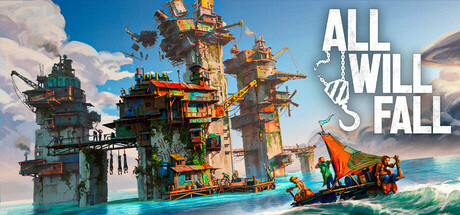
City Building Survival Genre: The game is primarily a city-building and survival strategy game with resource management and growing population. Players build and manage a colony or city under post-apocalyptic or flooded conditions.
Physics-Based Building System: Construction is driven by physics, where structural integrity, weight, tension, and load-bearing mechanics determine stability. Buildings can collapse if not properly supported.
Resource Management and Production: Players must gather, produce, and manage resources such as food, water, and materials. Production and consumption are tracked to sustain the colony.
Tech Tree Progression: A technology tree allows players to unlock upgrades and convert resources. Progression often moves from basic materials like wood to advanced ones like concrete.
Scenario-Based Campaign: The game features multiple scenarios with varying difficulties, objectives, and unique mechanics. Each scenario offers different challenges and victory paths.
Late-game performance degradation: Many reviews report that performance degrades significantly as the city grows, with lag and frame drops becoming severe in the late game. This is often tied to large numbers of buildings and high population.
Frequent crashes and freezes: Players experience frequent crashes, freezes, and instability, sometimes every few minutes or after extended play sessions. These issues often prevent progression and can occur even with lowered graphics settings.
Poor optimization overall: Numerous reviews criticize the game's optimization, noting that it runs poorly even on high-end hardware and that performance is inconsistent. Many feel that the game is not well optimized for a variety of systems.
Positive performance experiences: Some players report that the game runs smoothly, even on high settings or with complex paths, and handles hundreds of citizens without lag. A few mention optimizations are noticeable or that performance is better than expected.
Weather effects cause lag: Rain, storms, and other weather effects cause significant lag and frame drops, sometimes making the game unplayable. This is often attributed to particle effects or wave simulations.
Recommendations
Recommended for city builder fans: Multiple clusters highlight the game as a good fit for players who enjoy city building, especially with a twist or survival elements. Clusters 1, 5, 11, 12, 13, 19, 26, 33, 50, 60, 61, 80, 88, 110, 123, 131, 145, 150, 153, and 154 all target this audience.
Positive general recommendations: Many reviewers simply recommend the game, praising it as a solid experience worth playing. Clusters 2, 3, 6, 7, 25, 35, 52, 62, 74, 132, 136, 149, 151, 152, and 155 all express unreserved endorsement.
Negative reviews due to current state: Many negative reviews stem from the game's current state, citing bugs, lack of polish, and unmet expectations, with some recommending against purchase or suggesting refunds. Clusters 9, 10, 16, 30, 48, 57, 73, 85, 93, 107, 115, 120, 124, 126, 140, and 147 express dissatisfaction.
Wait for sale or updates: Many suggest waiting for a discount or for the game to receive more patches and content before purchasing. Clusters 17, 34, 40, 59, 80, 90, 91, 94, 97, 106, 113, 116, 141, and 146 recommend patience.
Mixed feelings on value: Some reviewers say it is worth the money, while others consider it not worth the price or overpriced. Clusters 3, 8, 30, 83, 118, 139, and 143 show differing opinions on value.
Buying context
Community fair range: $15.00 - $25.00.
Game completion: 250.0h.
Story completion: 100.0h.
Session length: 1.0h.
Endgame: 3.0h.
Most reports describe immediate addiction and fun from the early game, driven by creative building and resource-management systems, though a rough tutorial and controls can slow some players. A recurring minority reports late-game lag, tedium, and repetition, and some never click.
Friction: Rough or underexplained tutorial; Camera controls and view-blocking structures; Trial-and-error learning because mechanics are not clearly taught; Waiting for low tide, resources, or events; Micromanagement and poor AI task handling; Progression-blocking bugs or missing and flawed systems.
Player profiles
Chill Newcomer City Builder: Plays casually, learns icons and systems gradually, manages food/water lightly, and enjoys a chill building loop. Motivation: Relaxing, accessible city building and watching a settlement grow without overwhelming pressure. Stance: buy.
Hardcore Survival Management Veteran: Min-maxes resources, plans production and population, handles disasters, and replays scenarios to improve. Motivation: Mastering complex survival management systems and optimizing a colony under pressure. Stance: buy.
Structural Physics Tinkerer: Builds in sandbox style, deconstructs and reconstructs, tests load limits, and iterates on designs. Motivation: Experimenting with structural physics and creative vertical building, then rebuilding better after failures. Stance: buy.
Platform notes
Across the provided hardware cohorts, performance is a recurring weakness: many reviews report frame drops, stutters, crashes, and poor optimization, especially as population, weather, or physics load increases, though a few configurations still report acceptable play after patches or settings changes.
Windows 8-11GB VRAM: negative. Reviews commonly report severe FPS drops, stutters, crashes, and unplayable late-game performance, even among some users who still recommend the game.
Windows <8GB VRAM / 16-31GB RAM: negative. Users report frequent crashes, freezing, and low frame rates under weather or population load, with optimization problems dominating the feedback.
Windows 12-15GB VRAM / 16-31GB RAM: mixed. Some users report stable or improved performance, but many others describe stutters, freezes, large FPS drops, and crashes as cities grow.
Steam Deck: The Steam Deck experience for this title is playable but not frictionless. Deck-specific reports are largely positive: roughly 30 fps with minor dips during weather and day-night transitions, low 15-18 W power draw for 2-3 hours, and smooth play including external-display setups. However, users must tinker with settings, enlarging the small default UI font and lowering graphics to sustain a stable 30 fps. The most frequent and impactful complaints across the dataset are severe optimization and stability problems, including heavy frame drops in mid-to-late game, stutter, and black-screen crashes, though many of these are attributed to PC hardware rather than the Deck itself. No Proton Experimental toggling or external-launcher navigation was reported, so the strict 40-point floor for those triggers does not apply, but the small-text and graphics-tuning requirements place the score in the 'Tinkering Required' band.
Linux and Proton: The available evidence is limited to one review with a Linux-relevant signal. It states the game plays well on Steam Deck, supporting the conclusion that the game runs well on SteamOS/Linux. The laptop performance comment is generic hardware-related and not tied to Linux/Proton compatibility. There are no reports of launch failures, Proton workarounds, anti-cheat blockers, or Linux-specific instability.
Extra review signals
Monetization: The provided reviews contain no evidence of microtransactions, real-money shops, gacha mechanics, loot boxes, or pay-to-win systems. The only recurring complaint is that the base game is overpriced, which is not considered MTX evidence. One review speculates about future paid DLC, but this is hypothetical and not evidence of current in-game monetization. Therefore, the game's monetization is assessed as fair or pure, with a score of 0.
External guides: The dominant user complaint is the absence of an in-game wiki or adequate documentation: players state that core mechanics, species behaviors, and detailed specifications are not obvious and must be learned through guesswork. A secondary but distinct complaint covers a technical defect where the game freezes on alt-tab unless borderless window mode is used. No review requests drop rates, farming locations, loot tables, inventory/selling decisions, blueprints, or crafting requirements, so no Tier 1 or Tier 2 trigger is present. Because explicit 'mechanics' and instructional-documentation complaints exist, the strict priority algorithm resolves to Tier 3 ('The Student').
Other review notes
Regular Updates and Fixes: Developers update the game regularly, adding new content and fixing bugs. Many mention frequent patches and near-daily hotfixes.
Compared to Frostpunk: The game is frequently compared to Frostpunk, though some note it lacks harsh consequences and difficult dilemmas. Others find it similar but with linear scenario limitations.
Demo Available Before Release: A demo version was available prior to the game's full release. This allowed players to try the game early and make informed purchasing decisions.
Frostpunk with Water Setting: Reviewers describe the game as a sea version of Frostpunk, or like Frostpunk but set in a water world. It is also compared to Raft and Frostpunk.
Compared to Multiple Colony Sims: The game is compared to Frostpunk, Rimworld, Timberborn, and other colony sims. It is also likened to Cataclismo and ocean-themed games.