- Zelda-like core gameplay
- Engaging story and characters
- Appealing pixel art and music
- Confusing and vague story
- Puzzles are easy and repetitive
- Tedious and linear level design

Emotions
Archetypes
What players like:
Common complaints:
Gameplay feedback:
Performance notes:
- -
No data available
Recommendations:
Other player notes:
Similar games
Blend with other games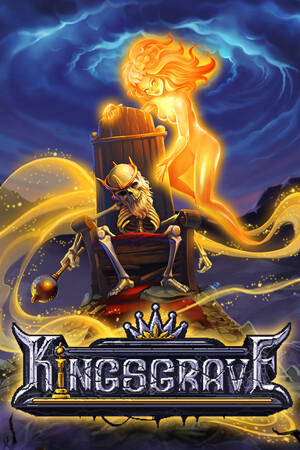




Review evidence
Why players say this
Review evidence
Why players say this
Steam review verdict
An engaging Zelda-like adventure with strong story, characters, pixel art, and music, though vague plotting, easy repetitive puzzles, and tedious linear levels hold it back.
What players like
Zelda-like core gameplay: Many reviewers describe the game as a 2D top-down action adventure in the style of classic Zelda titles. The gameplay loop focuses on dungeon crawling, puzzle solving, and item collection.
Engaging story and characters: The narrative is dense and intriguing, filled with character interactions, scattered lore, and secrets. Players enjoy piecing together details and exploring the world.
Appealing pixel art and music: The pixel art is praised as quite good, and the music is fantastic. The audio and visual presentation contribute to a cool atmosphere.
Faster, action-oriented combat: Combat is noted to be quicker and more aggressive than traditional Zelda games, emphasizing action over slow puzzle-solving. Boss fights require pattern observation to find openings.
Solid dungeon-crawling experience: The non-puzzle dungeon-crawling aspects are solid, and room puzzles are well-designed. The game streamlines the Zelda-like adventure to focus on dungeons.
Common complaints
Confusing and vague story: The narrative is fragmented, with many characters and constant scene switching, and lacks proper explanation. The lore is vague and there is little payoff for following the plot.
Puzzles are easy and repetitive: Puzzles are overly simple, often feeling like tutorials, and reuse the same elements without variety. Some puzzles are open to cheesing or lack proper solutions.
Tedious and linear level design: The game is a series of dungeons connected by a minimal lobby, with no overworld. The progression is linear and content can be easily missed if not careful.
Inferior sequel to Prodigal: Many reviewers feel the game is a step back from Prodigal in story, design, and overall quality. It is often described as a disaster as a sequel.
Missing quality-of-life features: The game lacks basic quality-of-life features such as a recipe list, dungeon maps, and clear control explanations. This makes navigation and crafting cumbersome.
Gameplay and performance
2D Zelda-like gameplay: The game is a classic 2D top-down action adventure and puzzle experience, similar to Gameboy Color Zelda titles and Link's Awakening. It blends puzzle-solving with dungeon exploration and combat.
Strong puzzle focus: The game is heavily puzzle-focused, including movement puzzles ranging from straightforward to cryptic, as well as item-based and environmental puzzles like barrel and pole lasso challenges. Puzzle design is central to progression.
Dungeon-crawling structure: Gameplay is streamlined into a series of connected dungeons with a hub lobby area instead of a traditional overworld. Dungeons are relatively short and sequential.
Linear narrative progression: The game is more linear and story-focused than open-ended, with progression locking players into areas once they advance. It features a directed narrative set in a magical castle in another plane.
Faster paced combat: Combat is simple but more fast-paced and aggressive than comparable games like Prodigal. The overall game pace is quicker and more action-oriented.
Recommendations
Best for Prodigal fans with adjusted expectations: Reviewers note it is well-suited for fans of Prodigal and the developer's previous works, especially those invested in the story and universe lore. However, they advise setting the right expectations and suggest buying on sale.
Play Prodigal first for context: Multiple reviewers strongly recommend completing Prodigal before playing this game to understand the story, backstory, and references. Playing it first avoids confusion and enhances appreciation of the narrative continuity.
Mixed or negative sentiment exists: A few reviewers express uncertainty or negative feelings, including one who does not recommend the game and another who recommends it despite negative feelings due to loyalty to the developer. These represent a minority view.
Appeals to 2D Zelda fans: Several reviewers recommend the game to fans of classic top-down 2D Zelda-style action adventure and puzzle games. The gameplay loop and structure are reminiscent of those titles.
Offers less relationship, more combat: One reviewer recommends it for players who liked Prodigal but wanted less relationship content, easier puzzles, and more combat. This suggests a shift in focus from the original.
Buying context
Game completion: 7.0h.
Session length: 1.5h.
Player profiles
Prodigal Continuity Seeker: Plays for narrative continuity and world lore, checks prior-game references, and seeks more of the same setting. Motivation: Experiencing more of the Prodigal world and understanding its story references. Stance: sale.
Zelda-Style Dungeon Combatant: Engages in top-down 2D dungeon crawling with more combat and fewer relationship and puzzle elements. Motivation: Combat-heavy top-down dungeon crawling in a Zelda-like format. Stance: buy.
Challenge-and-Polish Critic: Pushes through bosses and repeat playthroughs for achievements, judging difficulty, repetition, and bug impact. Motivation: A challenging, polished action experience that holds up through repeat play. Stance: no buy.
Other review notes
Smaller scope than Prodigal: The game is shorter and more focused than Prodigal, with less relationship content and easier puzzles. It emphasizes combat and gameplay over story.
Direct sequel to Prodigal: Multiple reviewers identify the game as a direct sequel to Colorgrave's previous title, Prodigal. The story continues from that game's postgame.
Less cozy than Prodigal: Compared to Prodigal's life-sim and dating elements, this game feels less cozy and offers fewer character moments. Some reviewers see it as a step back.
Short but replayable: The game lasts about 6-8 hours and is considered short, but its replayability adds value. Its low price ($7) makes it comparable to DLC.
Hallucinatory story quality: The narrative has a vague, dreamlike quality with unclear context. This writing style may be harder to follow without prior knowledge of the series.