- Sequel improves on predecessor
- Relaxing city builder experience
- New mechanics add depth
- Repetitive and monotonous gameplay
- Lacks strategic depth
- Feels like DLC expansion

Emotions
Archetypes
What players like:
Common complaints:
Gameplay feedback:
Performance notes:
Recommendations:
Other player notes:
Similar games
Blend with other games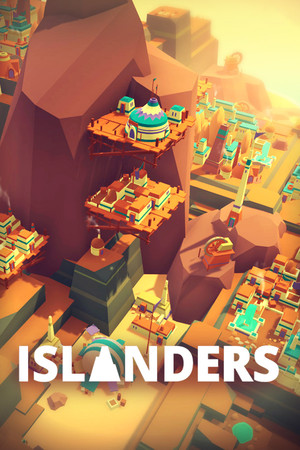




Review evidence
Why players say this
Review evidence
Why players say this
Steam review verdict
This relaxing city builder sequel improves on its predecessor with deeper mechanics, but repetitive, monotonous gameplay and shallow strategy make it feel like a DLC expansion.
What players like
Sequel improves on predecessor: The game is widely praised as a significant improvement over the first title, with better mechanics, more content, and enhanced visuals. Many reviewers consider it a perfect sequel that refines and expands the original formula.
Relaxing city builder experience: Players frequently describe the game as a cozy, stress-free city builder that is easy to sink into. The calm atmosphere and simple gameplay make it ideal for relaxation.
New mechanics add depth: The addition of new buildings and mechanics significantly enhances gameplay depth and variety. Players find these additions interesting and well-implemented.
Beautiful visual presentation: The game's visuals are consistently praised as gorgeous, stunning, and aesthetically pleasing. Reviewers highlight the beautiful art style and graphics.
Variety in island selection: The ability to choose different island types with unique mechanics adds replayability and fun. This feature is highly appreciated by players.
Common complaints
Repetitive and monotonous gameplay: Many players find the core gameplay loop repetitive, with content becoming monotonous after a few hours. This is a widespread complaint across multiple clusters.
Lack of strategic depth: The game is criticized for lacking strategic depth, especially compared to other city builders. Players find it too simple and not challenging enough.
Feels like a DLC or expansion: Players frequently compare the game to a DLC rather than a full sequel, citing limited improvements and lack of new features. This sentiment appears in several clusters.
Achievements and challenges too hard: Many achievements and challenges are considered impossible or overly difficult, with extremely low completion rates. This frustrates players aiming for completion.
Randomization and variety issues: Lack of randomization in building packs and repetitive building choices reduce variety. Players often end up with similar selections each run.
Gameplay and performance
Island progression and variety: Players travel to new islands with different characteristics, unlocking new buildings and boons as they progress. Island variety and progression are central to the game.
Building placement for points: Core mechanics involve placing buildings to earn points, with scoring based on natural features and nearby buildings. Optimal placement is key to maximizing scores.
Puzzle and strategy blend: The game is described as a puzzle game with challenges, sometimes mixed with strategy elements. It focuses on solving building placement puzzles rather than traditional city simulation.
Minimalist puzzle city-builder: The game is a city-builder with a minimalistic gameplay loop where players calmly place buildings as a puzzle. It blends city-building with puzzle mechanics on small islands.
Unlock buildings with score: Accumulating enough points unlocks new buildings, bonuses, and boons. Scoring high grants random building packs and powerful upgrades.
Runs Well on Low-End PCs: Feedback indicates the game performs smoothly on modest hardware and does not require a powerful PC. This makes it accessible to a wide audience.
Performance Issues and Crashes Reported: Some players experience stuttering, long placement lags, frequent crashes, and excessive system load, even compared to AAA games. These technical problems can hinder enjoyment.
Steam Deck Compatibility Praised: Multiple players report the game runs perfectly on Steam Deck, indicating strong handheld compatibility. This is a key positive for portable play.
Stable Performance with Many Structures: One player notes no performance issues even when placing numerous structures, suggesting good optimization for base-building gameplay.
High GPU Usage at Max Quality: At maximum settings, the game uses a lot of GPU resources, which may affect players with less powerful graphics cards.
Recommendations
Loved by fans of first game: Many reviewers who played the original Islanders say this sequel is a must-play and improves on the first. It is considered a worthy successor that provides more of what made the original great.
Worth the price: Reviewers frequently mention the game is well worth its price, whether at full price or on sale. The low cost of admission makes it an easy recommendation for most players.
Perfect for relaxation and casual play: The game is ideal for short, relaxing sessions, whether after a busy day or in the evening. It is recommended for casual gamers who want a pleasant, calming experience.
Great for puzzle city builder fans: Players who enjoy chill city builders with puzzle or planning elements highly recommend this game. It appeals to those who like minimalist, OCD-friendly puzzle games with a calm atmosphere.
Highly recommended by many: Numerous reviewers give the game a strong recommendation, often with a perfect score, for its overall quality and enjoyability.
Buying context
Community fair range: $5.00 - $10.00.
Game completion: 30.0h.
Session length: 2.0h.
Endgame: 200.0h.
Islanders: New Shores is overwhelmingly described as immediately addictive and relaxing, with a strong 'just one more island' hook, though a subset of players finds it repetitive or shallow over time.
Friction: Repetitive gameplay loop, described by some as a slog almost instantly.; Repetition and staleness after longer play sessions.; Cramped islands forcing pixel-perfect placement that feels tedious rather than chill.; Limited depth and long-term motivation for strategy-focused players.; Limited variety in buildings, biomes, and combinations.; Repetitive music for some players..
Unlock drivers: Streamlined gameplay loop and QOL improvements that keep frustration low.; Smoother mechanics that make the sequel more addictive than the first.; Specific challenges and in-game progression rewards that extend replay value.; More building types, skins, island biomes, and building interactions that add variety.; Boons and late-game additions that add depth..
Player profiles
Cozy Relaxation Builder: Slow, session-based building with no timers or combat, often in sandbox or relaxed high-score mode. Motivation: Unwind through low-stakes, aesthetically pleasing city building. Stance: buy.
Returning ISLANDERS Fan: Return to the core placement loop while exploring new biomes, bonuses, and mechanical variations. Motivation: Continue the familiar ISLANDERS loop with expanded content and refinements. Stance: buy.
Score-Optimizing Puzzle Strategist: Min-max synergies, chase high scores, and tackle harder challenge rules. Motivation: Master the scoring puzzle and optimize building placement. Stance: buy.
Platform notes
Steam Deck: User feedback for the current game on Steam Deck is overwhelmingly positive. Reviewers consistently report smooth performance, strong controller support, and a well-suited portable experience. No reviews mention Proton Experimental, external launchers, anti-cheat errors, or unreadable UI for this title. The only compatibility complaint concerns the original Islanders, where one user could not continue after tinkering with controls, but that is a legacy issue rather than a current-game blocker.
Linux and Proton: The available reviews contain only positive Steam Deck/Linux-adjacent evidence. Users report the game plays really well on Steam Deck, and one suggests it may run better there. There are no mentions of Proton tweaks, launch failures, anti-cheat blockers, or Linux-specific graphical issues. Generic non-Linux feedback was ignored.
Other review notes
Sequel to first game: The game is widely recognized as a direct sequel to the first Islanders game, building upon its predecessor.
Improvement over first game: Many reviewers agree that this sequel improves on the original in almost every way, including visuals, content, and overall quality.
Familiar core gameplay: Despite improvements, the core gameplay remains largely the same as the first game, with only minor tweaks and additions.
More content and options: The sequel adds more buildings, island types, mechanics, and options compared to the original.
Low price point: Reviewers frequently mention that the game is available at a low price or purchased at a discount.