- Fun and engaging gameplay
- Good overall game quality
- Improved graphics over predecessors
- Worse than predecessors
- Poor graphics quality
- Weak cheating AI
Emotions
Archetypes
Hardware
What players like:
Common complaints:
Gameplay feedback:
Performance notes:
Recommendations:
Other player notes:
Similar games
Blend with other games 90%Stronghold Crusader: Definitive Edition
 90%Stronghold 3 Gold
 89%Stronghold: Definitive Edition
 85%Stronghold: Warlords
 82%Stronghold Legends: Steam Edition
 81%Age of Empires: Definitive Edition
 80%Age of Empires III: Definitive Edition
 79%Becastled
 78%Knights of the Crusades
 78%Age of Empires II (Retired)
 78%Praetorians - HD Remaster
 78%Diplomacy is Not an Option
Review evidence
Why players say this
Review evidence
Why players say this
Steam review verdict
Fun, engaging gameplay and solid overall quality are undercut by a weaker entry than its predecessors, poor and uneven graphics despite some visual improvements, and cheating-prone weak AI.
What players like
Fun and engaging gameplay: Players consistently describe the game as fun, playable, and highly addictive, especially when playing with friends. This is the most frequent and positive theme across reviews.
Good overall game quality: Reviews commonly state that the game is good, decent, or not bad overall, with some calling it a classic. The general sentiment is positive, though not overly enthusiastic.
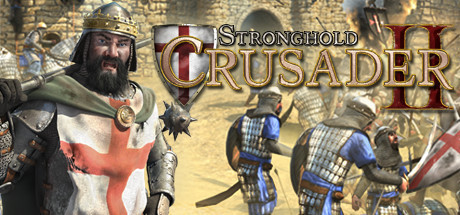
Improved graphics over predecessors: Many reviewers highlight that the graphics are better than in previous games in the series, including comparisons to Stronghold Crusader and Stronghold 2. The visual upgrade is a clear positive point.
Strong strategy experience for fans: The game is praised as a rewarding and nostalgic experience for strategy enthusiasts, offering a great strategic experience that will not disappoint fans of the genre.
New units add tactical depth: Players appreciate the addition of new units with special abilities, buffs, and specialties, which increase variety and tactical options. This is seen as a meaningful enhancement to gameplay.
Common complaints
Worse than predecessors: Players repeatedly say the game is a downgrade from earlier Stronghold titles, especially Crusader and Stronghold 2. It lacks features, feels watered down, and is considered an unworthy successor.
Poor graphics quality: Many reviewers criticize the visuals as outdated, low quality, and worse than previous games. Complaints cover models, textures, animations, and overall visual polish for a 2014 release.
Weak and cheating AI: The AI is described as stupid, frustrating, and poorly designed. It also cheats with infinite resources and excessive gold, and is often overly aggressive.
Numerous bugs and glitches: Bugs are common and annoying, affecting both single-player and online play. Reviewers describe the game as full of bugs and errors.
Broken AI pathfinding: Troops and AI units frequently walk into kill zones, get stuck, or refuse to attack. Pathfinding is especially poor on uneven terrain and requires excessive micromanagement.
Gameplay and performance
Medieval castle-building RTS: Players frequently describe the game as a hardcore medieval real-time strategy title focused on castle construction, economy, and sieges in the style of classic Stronghold games.
Multiplayer mode available: Many reviewers highlight the presence of multiplayer, including matches against friends, competitive or cooperative play, lobbies, and LAN support.
Skirmish against AI opponents: The game offers a skirmish mode where players can fight challenging AI opponents, often described as AI hordes that build structures and recruit units.
Castle building core mechanic: Castle construction is a central feature, with players building personal castles brick by brick, using walls, gates, and turrets, though some note limited wall and gate models.
Resource management and economy: The game involves managing resources such as food, wood, stone, taxes, and population, blending castle building with economic strategy and base defense.
Frequent crashing reported: Many players experience frequent crashes, often making the game unplayable. Crashes occur at various points, including during battles, multiplayer, and map loading.
Poor optimization and performance: Players report poor optimization leading to high CPU usage, low FPS, and lag even on high-end hardware. Performance degrades in large battles and multiplayer sessions.
Launch and startup failures: The game fails to launch or has initialization errors, including fullscreen mode issues and long loading times. Workarounds like reinstalling DirectX or C++ libraries often do not help.
Stuttering and frame drops: Frequent stuttering and frame drops occur even on capable systems like GTX 1650 or i5-8400 with GTX 1060. Autosaves and increased building counts often trigger lag spikes.
Runs well on low-end PCs: Some players report smooth performance on low-end or older hardware, such as potato-level PCs, 32GB RAM with RX580, or Steam Deck. This suggests optimization varies by system.
Recommendations
Buy only on sale: Many reviewers say the game is only worth purchasing at a discount, not at full price. Some recommend waiting for a sale or buying only at a steep discount.
Not worth even at discount: Some reviewers do not recommend the game even at a low price or for free. They advise against buying it under any circumstances.
Nostalgia for original Crusader: Reviewers warn that fans of the original Stronghold Crusader may be disappointed, while those who accept it is different may enjoy it. Several recommend playing the older games instead.
For strategy genre fans: Fans of old-school strategy games and the strategy genre are recommended to buy this game. It offers a rewarding and nostalgic experience for strategy fans.
Recommended for series fans: Longtime Stronghold fans and those who enjoyed the first Crusader are likely to enjoy this game. It is recommended for players who liked the original.
Buying context
Community fair range: $5.00 - $15.00.
Game completion: 302.0h.
Session length: 3.0h.
Players often need the tutorial and some sandbox practice before the game becomes fun; after the basics are learned, skirmish and multiplayer play with friends are the main payoff.
Friction: Inadequate tutorial or manual for core mechanics; Steep early difficulty and aggressive or unfair AI; Slow, resource-heavy early economy; Multiplayer bugs, crashes, and connection instability; Limited multiplayer features and lobby problems; Hard-to-understand learning curve for newcomers.
Unlock drivers: Completing the tutorial and practicing in sandbox; Learning the game logic and mechanics; Playing with friends or in co-op multiplayer; Using skirmish or custom maps after learning the basics.
Player profiles
Crusader Loyalist Veteran: Compares mechanics, units, castle design, AI, and economy against earlier titles; plays campaign and skirmish with a critical eye. Motivation: Reconnecting with the original Stronghold and Crusader experience and judging whether the sequel preserves its depth and atmosphere. Stance: sale.
Social Multiplayer Skirmisher: Organizes 1v1 to 4v4 matches, uses alliances and trading, and values stable lobbies and custom maps. Motivation: Playing team skirmishes and social matches with friends, including alliances and player-to-player trade. Stance: buy.
Relaxed Castle-Building Newcomer: Prefers sandbox and skirmish economy, learns through tutorials, avoids high-stress multiplayer, and values accessibility. Motivation: Building and managing a medieval castle at a relaxed pace, often on a budget or family setup. Stance: buy.
Platform notes
The available performance reports are positive for Windows under 8GB VRAM, negative for Windows 8-11GB VRAM due to display and crash issues, and mixed for Windows 12-15GB VRAM because reports range from occasional crashes to constant crashes.
Windows <8GB VRAM: positive. The available review reports good performance and visually pleasing presentation.
Windows 12-15GB VRAM: mixed. Reports include a playable experience with occasional crashes and another report of constant crashes.
Windows 8-11GB VRAM: negative. The available review reports the cursor disappearing, the screen going black, and full crashes.
Steam Deck: The Steam Deck experience is high-friction. Reviews across multiple languages report frequent crashes and lost progress, severe performance and overheating issues, interface text that does not scale and becomes tiny at higher resolutions, and imprecise unit controls. Some users praise the gameplay and interface, but the technical barriers meet the broken range.
Linux and Proton: Linux/Proton evidence is sparse and mostly positive. One reviewer explicitly states the game works on Ubuntu/Linux but requires tweaks after installation. The remaining complaints concern generic performance, crashes, overheating, multiplayer stability, and ambiguous launch/driver troubleshooting without any explicit Linux, Proton, SteamOS, Wine, or native-build linkage. No Linux-specific anti-cheat, DRM, launcher, or Proton blocker is documented, so the score reflects minor Linux setup tweaks rather than broad Linux breakage.
Extra review signals
Monetization: The audit finds recurring real-money concerns around paid Stronghold Crusader 2 DLC, especially AI lords and missions perceived as cut from the base game. Multiple reviewers criticize DLC pricing and achievement gating, and some say completion or fuller content requires buying DLC. However, the reviews do not show an in-game cash shop, paid gacha or loot boxes, currency obfuscation, boosters, or direct pay-to-win purchases; the isolated P2W wording is ambiguous. Under the review rules, this is primarily a paid-DLC issue rather than microtransaction-driven predation, so the score remains in the fair range.
External guides: The reviews show a strong dependency on external wikis, walkthroughs, manuals, and tutorials to understand controls, mechanics, tooltips, and production data. Alt-Tab crashes and graphical bugs are also frequent and severe, but the strict priority scoring finds Tier 3 instructional data dependency, so the final score is 50.
Other review notes
Unfavorable Crusader 1 comparisons: Many reviewers compare the game unfavorably to the original Stronghold Crusader, citing lost depth, atmosphere, and features. They frequently recommend sticking with the older title.
Missing features versus predecessors: Reviewers note that mechanics, abilities, and options present in Stronghold 1, 2, and Crusader are absent here. The game is seen as a downgrade in content compared to earlier entries.
Paid DLC focus criticized: Multiple comments highlight the game's many DLC releases and paid content separated from the base game. Some reviewers note the ultimate edition bundles all DLC.
Mixed comparisons to Stronghold series: Opinions vary when compared to Stronghold HD, Stronghold 2, and Stronghold 3, with some noting cropped visuals or worse gameplay. A few see it as an improvement over Stronghold 3 but not reaching the classics.
Minor graphical improvements only: Reviewers note that compared to the first game, only graphics are somewhat better with no significant differentiation. The game is very similar to the first part aside from visuals.