- Outstanding narrative and storytelling
- Sharp humor and engaging gameplay
- Beloved characters with emotional conclusion
- Disjointed and unfocused story at times
- Repetitive puzzle design frustrates players
- Lack of player agency limits immersion
Emotions
What players like:
Common complaints:
Gameplay feedback:
Performance notes:
- -
No data available
Recommendations:
Other player notes:
Similar games
Blend with other games 86%Otaku's Adventure - The World Just Keeps Turning
 84%Beholder - Blissful Sleep
 82%Otaku's Adventure
 81%Five Nights at Freddy's: Security Breach - Ruin
 80%FEMBOY FUTA HOUSE - Dirty Election
 79%Life is Strange: Double Exposure
 79%The Pirate's Fate - Prisoner of Destiny Expansion
 79%Unheard - Voices of Crime
 78%Cult of the Lamb: Woolhaven
 78%Tales of Arise - Beyond the Dawn Expansion
 78%The LEGO Movie 2 Videogame - Galactic Adventures Character & Level Pack
 78%Rain World: The Watcher
Review evidence
Why players say this
Review evidence
Why players say this
What players like
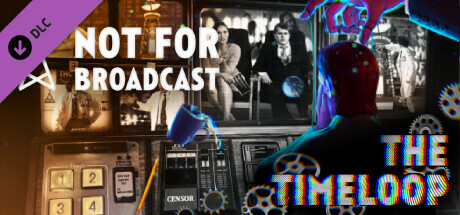
Outstanding narrative and storytelling: The DLC is praised for its creative, engaging, and well-crafted story, featuring time loops, multiverses, and parallel worlds. Players highlight the clever writing, dark humor, and emotional depth, which surpasses the base game in many aspects.
Sharp humor and satire: The DLC maintains the base game's sharp, black, and satirical humor, with players highlighting its absurdity, wit, and ability to parody modern realities. The humor is described as engaging and frequently hilarious.
Return of beloved characters: The reappearance of fan-favorite characters from the original game, such as Alan James and Boseman, adds depth and satisfaction. Players appreciate the continuity and expanded lore for these characters.
Engaging and innovative gameplay: The DLC introduces fresh mechanics like clue-hunting, time loops, and multiverse exploration, which are praised for being witty, satisfying, and replayable. The shift away from the base game's core loop is widely appreciated.
Unique and creative universes: Players enjoy the variety of alternate universes, such as the musical, medieval, and 'Blades' segments. These universes are praised for their creativity, unpredictability, and memorable moments (e.g., the 14-minute song).
Common complaints
Disjointed and unfocused story: The narrative was criticized for lacking a clear focus, feeling disjointed, and failing to deliver meaningful satire or themes. Some segments were described as underfunded or poorly executed, contributing to a lackluster experience.
Lack of player agency and linearity: The DLC was described as overly scripted and linear, with limited freedom in choices and actions. Key mechanics like the rating scale were removed, reducing interactivity and player influence on outcomes.
Repetitive and monotonous gameplay: Players frequently criticized the DLC for repetitive content, sluggish pacing, and a lack of engaging mechanics. Many felt the gameplay deviated from the core editing loop of the base game, making it feel tedious and uninspired.
Frustrating puzzle design: Players expressed frustration with puzzle-solving, particularly due to unclear hints, illogical outcomes, and the need to replay segments to find clues. Some puzzles were described as tedious or requiring excessive patience.
Inconsistent tone and immersion issues: The DLC suffered from immersion-breaking details, such as illogical story elements and segments that felt forced or out of place. Some players noted that the tone shifted awkwardly, detracting from the overall experience.
Gameplay and performance
Narrative-driven FMV gameplay: The game prioritizes storytelling over interactivity, featuring a linear or branching narrative with cinematic focus. Players engage in passive observation, clue-hunting, and puzzle-solving within a structured, character-driven plot.
Clue-hunting and replayability: Players must replay segments to find clues, decipher codes, or solve puzzles (e.g., song lyrics, bell mechanics). Attention to detail is required, and some segments are designed to be replayed for full comprehension.
Time loop puzzle mechanics: The game heavily features time-loop mechanics where players must solve puzzles by sifting through repeated footage, experimenting with actions (e.g., unplugging machines), and finding clues to escape the loop. This is a core gameplay element in the DLC.
Music and humor segments: Unique gameplay elements include musical-themed universes, absurd humor, and satirical storytelling. These segments add variety but may feel gimmicky to some players.
Multiverse and parallel worlds: The narrative-driven gameplay explores multiverse concepts, including alternate universes with distinct themes (e.g., musicverse, dominaverse). Players interact with these worlds through wire-changing mechanics and puzzle-solving.
Recommendations
Highly recommended for fans: The DLC is strongly recommended for fans of the original game, offering a satisfying conclusion and innovative experience. It is praised for its emotional impact and value, making it a must-play for those who enjoyed the main game.
Value for money praised: The DLC and Complete Edition are frequently recommended for their value, with the base game's price (e.g., $9) described as a 'steal.' The season pass is also noted as worth purchasing for fans.
Best-in-class additional content: The DLC is highlighted as one of the best examples of how to create additional content, with reviewers praising its depth, emotional impact, and innovation. It is often cited as the best DLC in the series.
Play after main story: Reviewers suggest playing the DLC after completing the main story to fully appreciate its narrative and emotional impact. Going in blind is also recommended for the best experience.
Base game style preferred over DLCs: Some feedback suggests that the sequel (NFB2) should emulate the style of the base game rather than the DLCs, indicating a preference for the original gameplay approach.
Extra review signals
Monetization: The user reviews for *Not For Broadcast*'s DLCs, particularly *The Timeloop*, overwhelmingly praise the quality, creativity, and value of the additional content. There is no evidence of predatory monetization practices such as pay-to-win, real-money gacha, or aggressive FOMO tactics. Instead, users highlight the fair pricing, high production value, and the absence of exploitative mechanics. The primary monetization model appears to be one-time purchases for high-quality expansions, with users expressing satisfaction and even a desire for bundling options like a season pass. The feedback suggests a positive and fair monetization approach.
Other review notes
Narrative-driven adult storytelling: Players describe the game as a bedtime story for adults, emphasizing its strong narrative focus and emotional tone rather than traditional gameplay mechanics. This suggests a unique, story-first approach that resonates with its audience.
DLC size comparable to base game: The DLC is noted to be as substantial as the base game, indicating significant post-launch content. This may appeal to players seeking extended value but could also raise expectations for quality and depth.
Developer's emotional connection: The game is frequently called a 'love letter' from developers to players, highlighting a perceived personal and heartfelt investment in the project. This may enhance player goodwill and engagement.