- Graphics are highly praised
- Visual and audio combination works
- Story is bland and clichéd
- Combat feels stiff and unresponsive
- Poor optimization causes stuttering
- Frequent crashes disrupt gameplay
Emotions
Archetypes
Hardware
What players like:
Common complaints:
Gameplay feedback:
Performance notes:
Recommendations:
Other player notes:
Similar games
Blend with other games 85%Wandering Sword
 81%Xuan-Yuan Sword: Mists Beyond the Mountains
 81%The Legend of Heroes: Sen no Kiseki II KAI -The Erebonian Civil War-
 81%The Legend of Heroes: Trails of Cold Steel IV
 80%The Legend of Heroes: Zero no Kiseki Kai
 80%Tales of Symphonia
 80%Sea of Stars
 80%Immortals Fenyx Rising™ - Myths of the Eastern Realm
 80%The Legend of Heroes: Sen no Kiseki III
 79%The Legend of Heroes: Trails in the Sky the 3rd
 79%Darksiders II Deathinitive Edition
 79%古龙风云录
Review evidence
Why players say this
Review evidence
Why players say this
Steam review verdict
Great graphics and audio-visual synergy are let down by a bland story, stiff combat, and severe performance issues including stuttering and crashes.
What players like
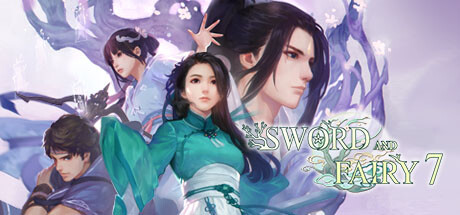
Graphics are highly praised: Multiple clusters highlight the game's excellent graphics, beautiful environments, and appealing visual design. Players consistently mention first-rate visuals, beautiful character models, and breathtaking scenery.
Visual and audio combination works: Players appreciate the combination of great visuals and high-quality audio, including music and voice acting. This synergy enhances the overall atmosphere.
DLC is must-buy content: The DLC is strongly recommended as must-buy due to its satisfying ending and emotional depth. It adds significant value to the main game.
Environments are beautiful and explorable: Players love the gorgeous environments, which are screenshot-worthy and enjoyable to explore. The visual design of the Xianxia sect areas is especially noted.
DLC enhances story experience: The DLC is highly praised for its excellent writing, thoughtful continuation, and satisfying ending. Players feel it rounds out the main story and provides emotional payoff.
Common complaints
Story is bland and clichéd: Many reviewers find the main story predictable, flat, and lacking memorable moments, with several noting it feels like plain water. This is the most frequently cited issue across clusters.
Combat feels stiff and unresponsive: Many players report that combat animations are stiff, with clumsy wind-ups and recovery, leading to a lack of impact and fluidity. This issue is mentioned across multiple clusters, indicating a pervasive problem.
Focused heavily on weak romance: The romance subplot is widely criticized as forced, clichéd, and poorly written, overshadowing the main story. Reviewers feel the romantic elements are abrupt and lack logical progression.
Gameplay is boring and dull: Numerous reviewers find the overall game unengaging and even sleep-inducing, with gameplay mechanics failing to capture interest. This sentiment is echoed across several clusters, suggesting a fundamental enjoyment issue.
Story lacks memorable moments: Reviewers note the absence of a clear climax and major twists, making the plot feel flat and unexciting. This results in low immersion and forgettable narrative beats.
Gameplay and performance
Puzzle elements are core: Numerous reviews highlight the presence of puzzles, minigames, and platforming segments integrated into the gameplay. These puzzle and minigame elements appear frequently and are central to the game's design.
Action RPG with skills: The game is broadly classified as an action RPG featuring real-time combat enhanced by skills and special moves. Combat relies on basic attack chains, skills, and spell usage as the player progresses.
Real-time combat system: Many players note a shift from traditional turn-based combat to real-time action-oriented combat. This includes dodging, magic, and controlling multiple characters, marking a significant departure from the series' roots.
RPG with heavy story focus: The game is described as a story-driven RPG with extensive cutscenes and dialogues. Its emphasis on narrative and Chinese fantasy elements is a distinct characteristic.
Boss fights with spectacle: Reviewers note that boss fights are present and feature spectacular effects and difficulty settings. These encounters are a memorable part of the experience.
Poor optimization causes stuttering: Many players report stuttering and frame drops across various hardware configurations, indicating widespread optimization problems. These issues occur even on high-end systems, suggesting lack of polish in the game's performance.
Frequent crashes disrupt gameplay: Players experience frequent crashes during gameplay, including after boss fights and during cutscenes, which significantly hinder progress. Some crashes require restarting the game, adding frustration.
Frame drops during cutscenes: Cutscenes are particularly prone to frame drops and stuttering, which breaks immersion. This issue is reported across different GPUs, from RTX 5080 to older models.
Specific areas have severe lag: Certain in-game areas, such as Yanbo Spring and locations in the Icefield and Demon Realm, cause extreme frame drops even on low settings. This indicates map-specific optimization problems.
Ray tracing degrades performance: Enabling ray tracing leads to significant frame drops, VRAM spikes, and even crashes on some systems. Disabling ray tracing stabilizes performance, indicating unfinished ray tracing implementation.
Recommendations
Buy only at a discount: Multiple users suggest waiting for a significant price reduction, emphasizing that the game's full price is not justified. One cluster specifically recommends an 80% or deeper discount for ideal value. Another advises not buying even on sale, indicating a split on the game's worth at any price.
Mixed overall worthiness: There is no consensus on the game's quality, with one cluster calling it generally worth playing despite flaws, while others flatly discourage purchase or play. The split suggests polarizing aspects that deter some players. The game is seen as decent, not a masterpiece, by those who lean positive.
Targeted for xianxia genre fans: The recommendation is strongly aligned with interest in the xianxia genre and the Xianjian IP specifically. Players who enjoy Chinese fantasy stories or CRPG styles are likewise encouraged, but this audience is narrower than general RPG fans.
Recommended for series veterans only: The game appears to cater almost exclusively to nostalgic players of the original franchise. Feedback notes it is not suitable for new players or those without prior series experience. Even the core recommendation is heavily restricted to fans of the IP.
DLC enriches experience: The DLC is heavily endorsed by some for enhancing the story, but another warns it is long and boring. The recommendation to buy the DLC with the base game appears common due to added story depth. Value including the DLC is a selling point.
Buying context
Community fair range: $10.00 - $15.00.
Game completion: 30.0h.
Story completion: 20.0h.
Endgame: 7.0h.
The game is enjoyable during the first few hours, but later becomes rough with noticeable budget cuts and declining quality, leading to a drop in fun.
Friction: Tedious boss fights; Lack of customization in equipment progression; Inability to change difficulty mid-game; Difficult jumping puzzles (叶灵纵).
Player profiles
Veteran IP Loyalist: Prioritizes narrative and atmosphere, lowers difficulty to enjoy as an interactive scenic tour, tolerates mechanical flaws for emotional payoff. Motivation: Supporting the IP and experiencing the continuation of the saga that defined their childhood. Stance: buy.
Casual Sightseer / Newcomer: Leisurely exploration, appreciates scenery and music, avoids hard combat difficulty, enjoys the romantic storyline and world-building. Motivation: Discovering a beautiful xianxia world with an engaging love story and accessible role-playing. Stance: sale.
Gameplay-Focused Critic: Prioritizes responsive combat, meaningful exploration, and polished mechanics; frustrated by poor dodge, lack of challenge, and excessive cutscene padding. Motivation: Seeking tight action-RPG gameplay and technical polish comparable to contemporary action titles. Stance: no buy.
Platform notes
Performance is highly inconsistent across VRAM tiers: 8-11GB VRAM users fare well, while lower and higher VRAM groups report significant issues, and the 12-15GB range shows mixed results.
Windows <8GB VRAM: negative. Low-VRAM users suffer frequent VRAM exhaustion, crashes, and stutter even at medium settings.
Windows 8-11GB VRAM: positive. Most reports indicate smooth performance on high settings, though the DLC had crashes and one user experienced lag.
Windows 12-15GB VRAM: mixed. Mixed reports: some praise the visuals and stability, but many complain about poor optimization, stutter, and low frame rates.
Steam Deck: The game is reported as playable on Steam Deck, but overwhelming PC reviews highlight severe optimization issues including frame drops, crashes, and black screens. These problems are likely to affect Steam Deck performance as well. UI and character model quality are also criticized, potentially diminishing the experience on a handheld device. Overall, while the game is not completely broken, it requires tinkering and patience to run smoothly.
Extra review signals
External guides: The primary user complaints involve a game-breaking side quest bug that necessitates external guides for resolution, and overly complex mini-games that require external explanations. These issues align with a moderate external data dependency for learning systems and quest outcomes (Tier 3).
Other review notes
DLC essential for full story: Multiple clusters indicate that the DLC is necessary to experience the complete story, including a true ending that significantly expands the base game. While it is paid, it is considered cheap and adds fulfilling conclusion.
Favorable and unfavorable comparisons: Reviews compare the game to previous series entries and other titles, sometimes evoking nostalgia and finding it lacking against top-tier games. Specific mentions include being inferior to Gujian 3 and Xuan-Yuan Sword VII.
Part of Xianjian series: The game is identified as the seventh installment in the Xianjian series, with a legacy that includes references to previous entries and lore. It is also noted as the latest game in the franchise.
Mixed expectations for future: Reviewers express hope for a sequel or remake, but also note that the developer disbanded and IP rights were sold, so an eighth installment may not come. This creates uncertainty about the franchise's future.
Nod to series history: The game includes side quests, easter eggs, and lore references from previous titles, enriching the experience for longtime fans. This integration of history is noted as a positive aspect.