- Fun core gameplay loop
- Excellent co-op experience
- Variety of traps enjoyable
- Roguelike elements enhance replayability
- Insufficient content and maps
- Downgrade from previous titles
Emotions
Archetypes
Hardware
What players like:
Common complaints:
Gameplay feedback:
Performance notes:
Recommendations:
Other player notes:
Similar games
Blend with other games




Review evidence
Why players say this
Review evidence
Why players say this
Steam review verdict
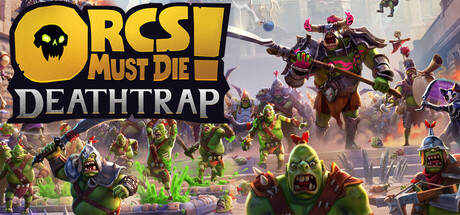
Fun core gameplay, excellent co-op, varied traps, and roguelike replayability are let down by too little content and maps and a clear downgrade from earlier titles.
What players like
Fun core gameplay: Players consistently describe the game as fun and enjoyable, praising its engaging gameplay loop. This is the most frequently mentioned positive aspect, highlighting the game's broad appeal.
Excellent co-op experience: Co-op play is highly praised, with many noting it is more fun than playing solo and that four-player co-op is a standout feature. The multiplayer collaboration adds significant enjoyment.
Variety of traps is enjoyable: Players love experimenting with the many traps available, finding them fun and effective. The abundance of traps encourages creative strategies.
Roguelike elements enhance replayability: The roguelike/roguelite elements are well-received, adding variety and replayability to each run. Players find these mechanics fit well and make the game more exciting.
Skill tree and progression system: The skill tree is large and sensible, with character progression and upgrades that are enjoyable and abundant. This system adds a satisfying sense of growth.
Common complaints
Insufficient content and maps: Multiple clusters highlight a lack of maps, characters, and overall game content. Players frequently mention only a few maps and a thin content offering.
Downgrade from previous titles: Many players feel the game is a step backward compared to earlier entries in the series, citing reduced fun and quality.
Story is non-existent: The game is criticized for having virtually no story or plot, unlike previous games in the franchise.
Too few traps available: The game offers fewer traps and trap options compared to previous entries, limiting strategic variety.
Repetitive gameplay experience: The game quickly becomes repetitive due to limited maps and enemies, leading to boredom after a few runs.
Gameplay and performance
Four-player co-op support: Many reviews highlight that the game supports cooperative play for up to four players, often as a core design focus.
Tower defense hybrid: The game blends tower defense with action hack-and-slash combat, often incorporating roguelite mechanics.
Roguelite structure: The game incorporates roguelite elements, often forming the main progression structure rather than a traditional campaign.
Traps and upgrades: Players can place various traps and upgrade them across categories like damage, speed, and cost.
Multiple game modes: The game features various modes including endless, challenge, and endurance, each with distinct wave-based gameplay.
Low FPS and Drops: Players experience low frame rates and sudden drops, especially during later waves with many enemies and effects. Even high-end systems struggle to maintain smooth performance.
Frequent Game Crashes: Players frequently report crashes during runs, on specific maps, and after consecutive missions. Some find that disabling TSR anti-aliasing stops crashes on the Hedge Maze and Patio Garden maps.
Poor Optimization Overall: Many reviewers state the game is poorly optimized, running worse than previous titles despite simple cartoony graphics. Performance issues are widespread and affect gameplay.
Constant Disconnections: Disconnects occur randomly and frequently, kicking players from matches and preventing rejoining. This leads to lost progress and frustration in multiplayer sessions.
High Hardware Demands: The game uses excessive GPU and CPU resources, causing overheating and high temperatures even on modern hardware. It runs poorly on minimum-spec GPUs like the GTX 1080.
Recommendations
Best with friends co-op: Many reviewers highlight that the game shines in cooperative play, especially with four players. It is often not recommended for solo players.
Not a true Orcs Must Die: Fans of the Orcs Must Die series may be disappointed, as the game deviates from the classic formula. Many suggest playing earlier entries instead.
Poor updates and abandonment: Some reviewers do not recommend the game due to lack of care, updates, and perceived developer abandonment. They cite the game's current state as a reason to avoid it.
Series fans may enjoy: Despite mixed feelings, some fans of previous Orcs Must Die games find this entry worthy and recommend it to those who enjoyed earlier titles. It can be a worthy successor for some.
Tower defense fans will enjoy: Fans of the tower defense genre are likely to appreciate the game, especially those who also enjoy FPS and roguelike elements. It is often described as a must-have for tower defense enthusiasts.
Buying context
Community fair range: $15.00 - $25.00.
Game completion: 42.0h.
Session length: 2.5h.
Endgame: 40.0h.
Reports largely describe a rough early period with a steep trap/map learning curve, limited barricades, and solo-hostile maps before the game clicks once players understand effective trap setups and gain upgrades. Co-op players often enjoy it sooner, but the clearest evidence supports enjoyment arriving after early friction is resolved.
Friction: Steep learning curve around trap placement and map strategy; Limited barricades and large maps designed around co-op; Solo play feels miserable or poorly balanced; Unclear tutorial and missing explanations; Grind-heavy and RNG-dependent roguelite progression; Repetitive maps and limited content variety.
Unlock drivers: Figuring out trap interactions and effective trap setups; Learning map layouts and choke points; Acquiring some permanent upgrades and meta-progression; Playing co-op with friends; Further progression and extra barricades from threads.
Player profiles
Co-op Squad Defender: Plays in 3-4 player groups, splits lanes, coordinates barricades and traps, and enjoys social runs over solo balance. Motivation: Shared chaotic defense with friends and coordinated killbox building. Stance: buy.
Classic Solo Series Veteran: Builds careful solo trap corridors, optimizes pathing and barricade use, and expects meaningful difficulty and score systems. Motivation: Preserving classic Orcs Must Die solo trap strategy, endless replay, and campaign progression. Stance: no buy.
Roguelite Progression Grinder: Chases skill-tree completion, experiments with trap and hero upgrades, and repeats runs to grow power. Motivation: Unlocking and optimizing builds through repeatable roguelite progression. Stance: buy.
Platform notes
Windows 8-11GB VRAM reports smooth DLSS performance, while the 12-15GB cohort is mixed between strong frame rates and serious optimization or crash issues; the 16GB+ VRAM cohort reports crashes.
Windows 12-15GB VRAM: mixed. Reports include strong DLSS frame rates and playable performance, but also notable endgame slowdowns, poor AMD optimization without FSR, and mid-match crashes.
Windows 16GB+ VRAM: negative. The available feedback reports crashing, with no positive performance evidence in this cohort.
Windows 8-11GB VRAM: positive. The game is reported to look good and run smoothly with Nvidia DLSS options.
Steam Deck: The Steam Deck experience is mixed but high-friction. Some users report smooth gameplay and working co-op, yet direct Deck reports note sub-20 FPS in busy scenes and poor low-setting visuals. A Linux/Ubuntu launch failure despite a Playable listing, controller/menu navigation bugs, missing FSR/DLSS, and numerous progress-losing crash reports create substantial barriers. No external launcher, small-text, battery-drain, or anti-cheat issue was evidenced; the dominant blockers are performance, Linux compatibility, controls, and stability.
Linux and Proton: Linux feedback is sparse but mostly positive: one user reports a completely problem-free Nobara Linux experience, while another vaguely suspects Linux may be related to an unspecified issue. There is no evidence of Proton tweaks, launch workarounds, anti-cheat blockers, crashes, or graphical glitches tied to Linux.
Extra review signals
Monetization: The audit finds no direct evidence of predatory monetization in this game. Multiple reviews explicitly confirm no cash shop, no pay-to-win system, and no microtransactions. Paid DLC and release-day DLC concerns are present, but they remain traditional paid-content or value issues under the scoring rules. Gacha and gambling language is tied to gameplay RNG or speculation, while base-price and generic cash-grab comments are excluded. Final score is 15, within the fair/pure range.
External guides: The dominant feedback is an instructional-data gap: players report weak onboarding, missing explanations of systems and enemy/status mechanics, and reliance on external wikis or forums. There is no explicit farming/drop-rate, inventory/crafting, or navigation/bug evidence that would trigger a higher-priority tier.
Other review notes
Franchise comparisons vary widely: Reviewers frequently compare the game to other Orcs Must Die entries, with opinions ranging from favorable to unfavorable and noting a new feel or style.
Unfavorable series comparison: Many reviewers compare this entry unfavorably to earlier Orcs Must Die titles, calling it a downgrade or step backward in the franchise.
Positive comparisons to OMD3: A subset of reviewers compare the game favorably to Orcs Must Die 3, describing it as more polished or different but still good.
Update drought criticism: Some players complain that the game has not received updates for nearly a year and developers have gone silent.
Frequent developer updates praised: Reviewers note that developers regularly update the game and respond to community feedback, improving the experience over time.