- Beautiful visuals and audio
- Satisfying combat and fights
- High replayability through scaling
- Poor dodge mechanics
- Difficulty too high
- Weak story and pacing
Emotions
Archetypes
What players like:
Common complaints:
Gameplay feedback:
Performance notes:
- -
No data available
Recommendations:
Other player notes:
- -
No data available
Similar games
Blend with other games






Review evidence
Why players say this
Review evidence
Why players say this
Steam review verdict
Stunning visuals and rewarding combat offer great replayability, but clunky dodging, punishing difficulty, and a weak story detract from the experience.
What players like
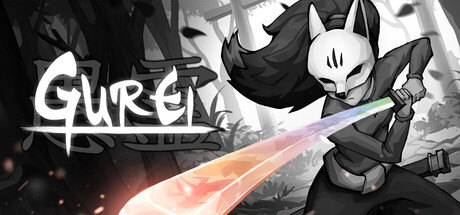
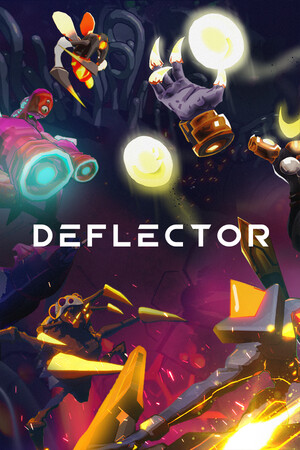
Beautiful visuals and audio: The game's visuals and music are consistently praised for being beautiful, top-notch, and atmospheric, with excellent art and sound effects.
Satisfying combat and fights: Combat is satisfying, with top-notch, weighty mechanics including a comfortable parry system, solid boss fights, and distinct, challenging bosses with personality.
High replayability through scaling: Dynamic boss scaling and non-linear boss order with power unlocking provide high replayability, keeping the experience fresh even after multiple playthroughs.
Well-crafted and designed game: The game is well-crafted with a well-designed gameplay loop, smooth controls, and elegant design that avoids content bloat, making it a very good experience.
Unique and well-executed mechanics: The game features clever, unique mechanics that encourage strategic thinking over memorization, with creative ideas and rich abilities that have unique uses.
Common complaints
Poor dodge mechanics: Dodging suffers from long startup, lack of invincibility frames (iframes), and unresponsive controls. Attacks are often undodgable, and dash recovery leaves the player vulnerable.
Difficulty too high: The game is extremely hard, often compared to or exceeding Elden Ring. Players report frustration from mid-game onward due to spiky difficulty and punishing mechanics.
Weak story and pacing: The game has almost no story, starts abruptly with direct boss selection, and has a pace that fails to maintain interest. More animations and a complete narrative are needed.
Limited attempts system: The game restricts the number of attempts per boss, combined with a limited life system and high retry cost. This forces repetitive grinding and feels archaic.
Stiff and awkward controls: The action system feels stiff and unresponsive, with awkward attack and jump mechanics compared to games like Hollow Knight. Controls take time to get used to.
Gameplay and performance
Side-scrolling boss rush with lives: The game is a 2D side-scrolling boss rush with 11 bosses, allowing free order selection and ability acquisition, but with limited lives and a full restart on loss.
Boss order shapes difficulty and strategy: Player-selected boss order affects difficulty, skill acquisition, and resource management, with narrative integration and strategic formulation.
Platforming and movement mechanics: Game features platforming, dash, auto-jump on boss head, dodge with startup, climbing, and head-jump mechanics for movement and combat.
Dynamic difficulty scaling system: Bosses scale with player strength and number of bosses defeated, creating a dynamic difficulty system that escalates with new mechanics per defeated boss.
Limited lives with full restart: Limited lives system with a death limit forces a full restart upon loss, adding high stakes and challenge.
Recommendations
Highly recommended for genre fans: Players consistently praise this game as a standout title in its genre, emphasizing its high quality and value for money. Many describe it as a must-play for fans of 2D boss fights and Souls-like challenges.
Unique and varied boss design: The bosses are frequently described as unique, varied, and worth the investment. This reinforces the game's appeal to boss rush enthusiasts seeking fresh encounters.
Good value with compact design: Several reviews note the game's compact design is a strength, offering a polished experience without unnecessary content bloat. The $15 price point is frequently cited as great value.
Rewarding challenge for players: Players who enjoy challenging gameplay and a sense of accomplishment find this game rewarding. Even those with personal reservations still recommend it for its core experience.
Buying context
Game completion: 25.0h.
Story completion: 4.1h.
Session length: 0.5h.
For some players, the game starts slow with tutorial-like early fights, but enjoyment and the core addictive loop kick in after gaining mastery and encountering more varied enemy patterns.
Friction: initial fights feel like a tutorial; early lack of reliable special abilities; challenging difficulty requiring multiple attempts.
Unlock drivers: becoming proficient with mechanics; encountering new enemy moves; learning to enjoy the music during smoother play.
Player profiles
Challenge-Seeking Veteran: Methodical and adaptive; studies boss patterns, manages stamina and dodge timing, exploits mechanics like GT (Guard Timing) and order-dependent difficulty scaling. Motivation: The joy of overcoming escalating difficulty through self-discovered optimal boss order and mechanical mastery. Stance: buy.
Experimental Order Optimizer: Experiments with different boss sequences to find the easiest or most efficient route; uses acquired skills to counter subsequent bosses; replays to discover optimal order. Motivation: Strategic freedom to choose and optimize boss order to tailor difficulty and unlock abilities progressively. Stance: buy.
Aesthetic Appreciator with Reservations: Casual or exploratory; values atmosphere, music, and art but may disengage if gameplay depth doesn't sustain interest; not primarily motivated by punitive challenge. Motivation: Enjoyment of the game's aesthetic and artistic presentation, balanced against frustrations with progression or difficulty design. Stance: sale.