- Stunning art style and immersive music.
- Versatile combat centered around pillar weapon.
- Classic Metroidvania with unique gameplay elements.
- Rewarding exploration within interconnected map.
- Punishing save system leads to progress loss.
- Repetitive boss battles lack inspiration.
What players like:
Common complaints:
Gameplay feedback:
Performance notes:
Recommendations:
Other player notes:
Similar games
Blend with other games





Review evidence
Why players say this
Review evidence
Why players say this
What players like
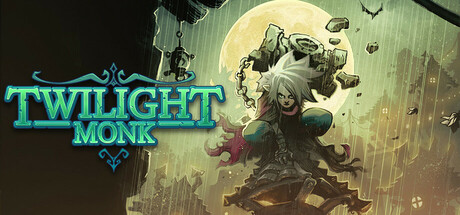
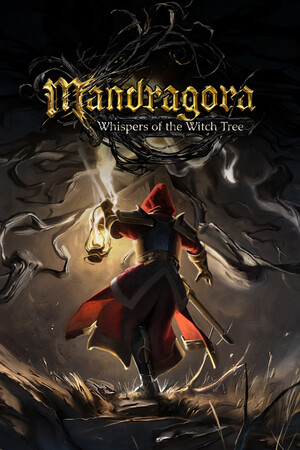
Stunning art style and music: The game features a stunning and unique hand-drawn art style, often compared to classic games, complemented by a well-made and memorable soundtrack. This combination creates a visually appealing and immersive atmosphere, with detailed environments and character designs that enhance the overall experience.
Versatile combat with pillar weapon: The combat system is rhythm-based and versatile, centered around a unique stone pillar weapon that can be used for attacks, platforming, and combos. Players can customize their combat styles with amulets and skills, adapting to different enemy types and creating diverse builds.
Classic Metroidvania with unique elements: The game incorporates classic Metroidvania elements with well-designed exploration and backtracking, reminiscent of SNES/PSX-era games. It successfully blends side-scrolling action with RPG elements and unique mechanics, creating a familiar yet refreshing experience.
Balanced and approachable difficulty: The game offers a balanced and approachable difficulty curve, making it beginner-friendly while still providing a decent challenge for experienced players. Frequent save points and gradual progression allow players to overcome challenges without excessive frustration.
Rewarding exploration with secrets: The game encourages exploration by rewarding players with secrets, hidden areas, and various collectibles. These hidden chambers and engaging exploration elements stimulate players' desire to explore and guide players to advance the main game.
Common complaints
Punishing save system; progress loss: The game's manual save system, coupled with a lack of autosaves and sparse save points, leads to significant progress loss upon death. This forces players to replay large sections, re-watch unskippable cutscenes, and re-collect items, leading to frustration and a feeling that the game doesn't respect the player's time.
Uninspired, repetitive boss battles: Boss battles suffer from repetitive attack patterns, lack of interesting mechanics, and can often be brute-forced with enough stats. Some late-game bosses are more irritating than genuinely challenging, and the lack of save points before boss fights exacerbates the frustration of repeated attempts.
Poor map design; navigation issues: The game lacks essential map features like custom markers and a clear player position indicator, making navigation and backtracking tedious, especially in the large and somewhat empty map. The lack of guidance and accessibility features found in modern games may not appeal to all players.
Uncomfortable, unremappable controls: The game lacks customizable key bindings and controller rebinding options, making the default controls awkward and uncomfortable for many players. This is a significant accessibility issue that impacts the overall enjoyment of the game.
Game contains disruptive bugs: Players have reported encountering various bugs, including getting stuck in walls or water, and issues with achievements. These technical issues can disrupt the gameplay experience and lead to loss of progress.
Gameplay and performance
Large, interconnected Metroidvania map: The game features a large, interconnected world map in a Metroidvania style, blending side-scrolling exploration with top-down or isometric map sections. This design encourages exploration and backtracking to discover hidden areas, items, and dungeon entrances.
Pillar weapon central to gameplay: The primary weapon, often called 'Phantom Pillar' or 'Shi Gandang', is central to both combat and traversal. It can be thrown, planted as a platform, or used for defense, and upgraded to grant new abilities like double jump. Mastering its use is key to navigating the environment and defeating enemies.
Energy system for special attacks: The game includes a secondary energy system (Ember) used for special attacks and martial skills, which can be replenished by defeating enemies or destroying objects. Gold can be used to upgrade skills, buy maps, or acquire temporary buffs.
Collectibles drive progression and exploration: The game features a progression system with collectibles like health fragments, soul shards, and amulets that unlock new abilities and customization options. Hunting quests and ability-gated exploration encourage post-game content.
Unlockable movement abilities: Players unlock movement abilities like double jump and slide, which are well-integrated into the level design and combat. Some movement, like walking and enemy charging, includes acceleration.
Poor optimization, high GPU usage: The game suffers from poor optimization, leading to high GPU usage even during less demanding moments like pausing. Some players report needing to lower settings significantly to achieve smooth performance, despite having powerful hardware. Additionally, the game doesn't seem to utilize the CPU effectively.
Recommendations
Mixed reception; potential with polish: The game receives mixed reviews, with many reviewers noting both positive aspects and flaws. Some recommend it with reservations, hoping for future improvements to address issues like the save system, keybindings, and grinding. Others find it to be a worthwhile Metroidvania experience despite its shortcomings.
Unique, compelling Metroidvania experience: Reviewers praise the game's unique blend of art, action, and Eastern fantasy elements, setting it apart in the Metroidvania genre. The distinct weapon system, martial arts aesthetics, and immersive world contribute to a rewarding and passionate combat experience that many find compelling.
Controller recommended for optimal play: The game is recommended to be played with a controller for a better experience. This suggests that the game's control scheme is better suited for a controller than a keyboard and mouse.
RPG elements surprise players: The game initially appears to be a Castlevania clone, but it evolves into an RPG with Castlevania-style gameplay after the first quest. This unexpected genre blend may appeal to players seeking a unique experience within the Metroidvania framework.
Large map; save frequently: The game features a large map, so players should save often. This is a practical tip for players to avoid losing progress due to the map size.
Other review notes
Adequate story, humorous writing: The game features an adequate story with some humor, set in a kingdom threatened by a corrupted monk and a demon god. The narrative provides a basic framework for the gameplay.
Large, CRPG-style map: The game features a large map, resembling a top-down CRPG style. This allows for extensive exploration and navigation.
Area changes respawn enemies: Enemies respawn when changing areas. This can be tedious if you're trying to explore, but convenient if you want to farm for experience or items.
Leveling restores health: Leveling up fully restores your character's health. This is a useful mechanic to keep in mind, especially when you're low on health and near a level up.
Game contains some bugs: Some players have reported encountering bugs, such as strange physics interactions and issues with specific items. These bugs can potentially disrupt gameplay.