- Innovative and influential gameplay mechanics
- Revolutionary parkour and traversal system
- Timeless art direction and visuals
- Clunky and unresponsive controls
- Poorly designed and frustrating combat
- Frequent technical issues and crashes
Emotions
What players like:
Common complaints:
Gameplay feedback:
Performance notes:
Recommendations:
Other player notes:
Similar games
Blend with other games








Review evidence
Why players say this
Review evidence
Why players say this
What players like
Innovative and influential gameplay: The game is credited with pioneering first-person parkour mechanics and influencing subsequent titles in the genre. Its unique blend of movement, platforming, and minimalist design is often cited as groundbreaking.
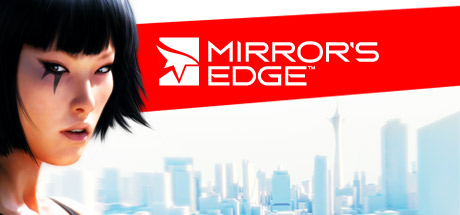
Timeless art direction and visuals: The game's art direction, minimalist aesthetic, and dystopian visuals are frequently praised for their uniqueness and longevity. Players highlight how the sterile whites and bold colors create a visually striking experience that remains appealing over a decade later.
Revolutionary parkour mechanics: The game is celebrated for its fluid, intuitive, and satisfying parkour system, which set a benchmark for movement-based games. Players emphasize the unmatched sense of speed, flow, and immersion in traversing the city.
Outstanding soundtrack and atmosphere: The game's electronic soundtrack, composed by Solar Fields, is widely praised for enhancing the atmosphere and complementing the visuals. The music creates a dynamic yet calming tone that elevates the overall experience.
Engaging and well-paced story: The narrative, though simple, is described as engaging, cinematic, and emotionally resonant. Players appreciate its short but impactful storytelling, which focuses on personal relationships and ethical questions in a dystopian setting.
Common complaints
Clunky and unresponsive controls: Players frequently report janky, finicky, or unresponsive controls, particularly during combat, platforming, and movement. Issues include unintuitive button bindings, dead zones, and inconsistent mechanics (e.g., punching/shooting sharing the same button).
Poorly designed combat system: Combat is widely criticized as clunky, stiff, and poorly implemented, with forced gunplay, unresponsive melee, and unfair enemy mechanics (e.g., instant knockdowns). Many players prefer avoiding combat entirely due to its frustration.
Unclear and frustrating level design: Level design is described as confusing, with unclear paths, excessive red objects, and poor world guidance (e.g., requiring a button to show directions). Navigation issues are compounded by blurry pathfinding and restrictive save points.
Weak and forgettable story: The narrative is criticized for being shallow, disjointed, and lacking emotional impact. Characters are underdeveloped, and the plot is predictable or nonexistent, with many players describing it as 'functional but unremarkable.'
Frequent technical issues and crashes: The game suffers from crashes (especially when alt-tabbing), frame drops, PhysX-related performance problems (e.g., single-digit FPS with glass breaking), and input drops. Some players report needing to disable PhysX entirely to avoid issues.
Gameplay and performance
Minimalist combat with disarming focus: Combat is often optional or de-emphasized, featuring melee-focused mechanics like disarming enemies and using their weapons. While some players appreciate the integration with traversal, others criticize its execution or prefer to avoid it entirely.
Runner Vision navigation system: A color-based guidance system (e.g., red/yellow/blue cues) helps players navigate levels by highlighting climbable surfaces, paths, or objectives. This feature is frequently cited as intuitive and essential for traversal.
Linear yet open-ended level design: Levels are primarily linear with point-A-to-B objectives but offer multiple pathways, environmental storytelling, and replayable elements like speedrunning. Some reviews highlight interconnected puzzles or corridor-based designs as strengths.
Chase sequences and dynamic traversal: Tense chase sequences, often involving rooftop sprints or enemy pursuits, add excitement to the gameplay. These moments require on-the-fly path planning and quick obstacle navigation.
First-person movement precision: The first-person perspective is praised for its responsive movement physics, including precise jumping, sliding, and wall-running. This precision is critical for both traversal and combat flow.
PhysX causes major performance problems: Nvidia PhysX is a recurring source of severe FPS drops, lag, and crashes, particularly on AMD GPUs and during effects like glass shattering. Disabling PhysX is widely recommended as a fix.
Default 62 FPS lock frustrates players: The game is locked at 62 FPS by default, which frustrates players with high-refresh-rate monitors. Manual tweaks (e.g., editing TdEngine.ini) are required to unlock higher framerates.
Alt-tabbing causes crashes/freezes: Alt-tabbing frequently leads to game crashes, freezes, or even PC restarts, disrupting gameplay and requiring workarounds like avoiding the action entirely.
UI and resolution scaling issues: Players report poor font rendering, menu navigation problems, and low-resolution text at modern resolutions, making the UI difficult to read or use.
Visual and audio inconsistencies: Issues include exposure problems in outdoor scenes, auditory glitches in cutscenes, and poor brightness options, detracting from immersion.
Recommendations
Universal strong recommendation: The game is widely praised as a must-play, highly recommended for its uniqueness, fun factor, and innovative gameplay. Many reviewers suggest it for all types of gamers, regardless of genre preferences.
Best purchased on sale: Reviewers frequently recommend buying the game only when it is discounted, citing its short length or value proposition as reasons to avoid full price.
Ideal for parkour enthusiasts: The game is highly recommended for fans of parkour, minimalist architecture, and movement-focused gameplay. It is praised for its unique parkour mechanics and nostalgic value.
Atmosphere and visuals praised: The game's visuals, atmosphere, lore, and cinematic experience are highlighted as key reasons to play. Many reviewers recommend it solely for these aspects.
Nostalgic and innovative appeal: The game is recommended for its nostalgic value, especially for those who played it in their childhood, as well as its innovative and bold gameplay that stands out from conventional FPS titles.
Other review notes
Nostalgia for retro gaming era: Players frequently compare the game to older generations (e.g., Xbox 360, PS3, Pentium 4) and classic titles like Sonic The Hedgehog, emphasizing its nostalgic value. The game is seen as a reminder of a bygone era of gaming.
Cultural and artistic influence: The game is praised for blurring the line between game and art, with comparisons to Stanley Kubrick films and its cultural impact as a time capsule for early 2000s animation and design.
Cult classic status and bold design: The game is celebrated as a cult classic due to its minimalist design and bold experimentation. Players highlight its unique approach to gameplay and storytelling as key to its enduring appeal.
Technical limitations of the era: Players reflect on the game's old-fashioned design, including its lack of Alt+Tab support, fixed FOV for immersion, and small file size, which were typical of early 2000s games.
Dystopian city and surveillance themes: The game's setting—a futuristic, whiteout dystopian city—is praised for its themes of surveillance and control. This resonates with players as a defining aspect of its narrative and atmosphere.