- Unique concept and world design
- Compelling and thought-provoking story
- Engaging and accessible gameplay
- Shallow and unnecessary combat
- Great value and optimal length
- Stunning art and atmosphere
Emotions
What players like:
Common complaints:
Gameplay feedback:
Performance notes:
Recommendations:
Other player notes:
Similar games
Blend with other games


![Cover for how to kill a fly [ H2KAF ]](https://shared.cloudflare.steamstatic.com/store_item_assets/steam/apps/4566700/library_600x900.jpg)
Review evidence
Why players say this
Review evidence
Why players say this
What players like
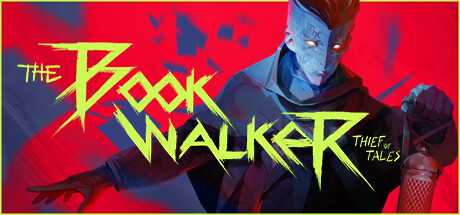
Unique Concept & World Design: The game's unique concept of 'bookwalking' and its execution are highly lauded. Players appreciate the distinct, beautifully designed book worlds, the seamless transition between 3D and isometric views, and the overall creative and atmospheric setting.
Compelling & Thought-Provoking Story: Players consistently praise the game's narrative, highlighting its originality, depth, and emotional impact. The story is well-written, engaging, and explores thought-provoking themes like creativity, morality, and censorship, making it feel like an interactive novel.
Engaging & Accessible Gameplay: The gameplay is noted for being engaging, intuitive, and well-paced. Players enjoy the simple yet effective puzzles and the relaxed turn-based combat, which complement the story without being overly challenging or tedious.
Great Value & Optimal Length: Many reviewers found the game to be an excellent value for its price, often citing its reasonable cost for the quality and unique experience it provides. Its manageable length is also seen as a positive, preventing boredom.
Stunning Art & Atmosphere: The game receives strong praise for its visual and audio presentation. The art style, particularly in the book worlds, is described as beautiful, stylish, and detailed, contributing significantly to the immersive and atmospheric experience.
Common complaints
Shallow and Unnecessary Combat: The combat system is consistently described as simplistic, unengaging, and often unnecessary, feeling like filler rather than a meaningful gameplay element. Many players felt it could be removed without detriment to the experience.
Rushed and Shallow Storylines: The game's narrative, particularly individual story arcs and the overall plot, is frequently criticized for being too short, rushed, and lacking depth. Many players felt the stories ended abruptly, leaving them unsatisfied and wanting more.
Overall Mediocre Experience: Many aspects of the game, including overall gameplay, writing, and presentation, are frequently described as average, bland, or uninspired. This leads to a general sense of disappointment and a lack of engagement for players.
Illusory Player Choices: A major point of contention is the illusion of choice, where player decisions and dialogue options have little to no impact on the story's progression or ending. This linearity significantly reduces replayability and player agency.
Underdeveloped World-Building: The game's world-building, both within the 'real' world and the various book settings, is often found to be underdeveloped and lacking in detail or explanation. This superficiality hinders immersion and understanding of the game's lore.
Gameplay and performance
Simple, Low-Impact Combat: The game features a simple, turn-based combat system that is not challenging and often feels secondary to the main gameplay. There are minimal penalties for losing battles, allowing for a smooth, narrative-focused experience.
Dual Perspective Gameplay: The game employs a dual perspective: first-person in the 'real world' hub and an isometric, top-down view within the 'book worlds'. This visual distinction reinforces the core mechanic of traversing different realities.
Short, Linear Gameplay: The game is relatively short, typically taking 5-7 hours to complete the main story. Its gameplay is linear, with simple puzzles and minimal challenge, making it a quick and straightforward experience.
Simple, Intuitive Puzzles: Puzzles in the game are generally straightforward and intuitive, requiring minimal effort to solve. They are integrated into the story progression rather than serving as significant challenges.
Protagonist's Backstory & Goal: The protagonist, Etienne Quist, is a disgraced writer sentenced to 30 years of servitude and prohibited from writing. He is forced into illegal 'bookwalking' to steal artifacts from books to reduce his sentence.
Performance issues in 3D view: The game experiences significant performance issues, particularly in 3D first-person sections and the apartment area, leading to frame rate drops, stutters, and increased PC temperature. Players suggest capping framerates as a workaround.
Excellent handheld performance: Players report excellent performance on handheld devices like the Steam Deck and Legion Go, with stable framerates and good text readability, making it a highly recommended experience for portable gaming.
Minimal bugs and crashes: Most players experienced a largely bug-free game, with only minor issues like dialogue avatar misalignment or a rare game-freezing bug where worlds merged.
Ambient music, slow transitions: The game's music is described as ambient and lacking impact, with sound effects often taking precedence. Additionally, slow scene transitions contribute to a feeling of waiting more than playing.
Startup and loading crashes: Some users reported critical issues such as game crashes on startup or freezing during level loading, especially when alt-tabbing, indicating instability for certain setups.
Recommendations
Highly Recommended Game: The game is widely recommended by players, often praised for its narrative, unique setting, and overall enjoyable experience. Many consider it a worthwhile purchase, especially for fans of story-driven games.
Buy on Sale: While generally recommended, many players suggest purchasing the game during a sale or at a discounted price. They feel the full price might be too high for the content offered, but it's a good value on sale.
Desire for Sequel/DLC: Players express a strong desire for a sequel, DLC, or further expansion of the game's universe and mechanics. They see significant potential for future titles from the developers.
Niche Audience Game: The game is not for everyone, particularly those seeking complex gameplay, deep puzzles, or significant plot variability. It's best suited for players who prioritize story and atmosphere over challenging mechanics.
Great for Book Lovers: The game is particularly appealing to book lovers, readers, and those who enjoy interactive fiction or choose-your-own-adventure style narratives. Its strong emphasis on story and dialogue resonates with this audience.
Other review notes
Isometric Point-and-Click: The game is primarily an isometric point-and-click adventure, often compared to visual novels or Telltale-style linear story games. Players who typically dislike reading in games or isometric views found themselves enjoying 'Bookwalker' due to its unique plot and engaging narrative.
Indie Russian Development: Players noted that the game was developed by a small, three-person Russian studio, creators of 'The Final Station'. This information is often shared with a sense of support for indie and domestic projects.
Lack of Voice Acting: A common observation is the absence of full voice acting, with characters often speaking in muffled 'Sim-lish'. This, along with the game's point-and-click adventure style, contributes to a perception of it being a more budget-friendly or visual novel-like experience.
Good Bundle Value: Many players discovered the game through Humble Choice or other bundles, finding it to be a charming and enjoyable experience for its price point, despite some finding it 'kind of meh'.
Accessible Achievements: The game features 37 achievements, with a mix of story progression, challenges, side missions, and specific actions. Players noted that achieving 100% completion is relatively easy, often requiring a second playthrough for certain achievements.