- Story and characters well-received
- Weapon variety and customization appreciated
- Gameplay is fun and enjoyable
- Dissatisfying lock-on system
- Poor optimization and performance
- Sequel inferior to predecessor
Emotions
Archetypes
What players like:
Common complaints:
Gameplay feedback:
Performance notes:
Recommendations:
Other player notes:
Similar games
Blend with other games




Review evidence
Why players say this
Review evidence
Why players say this
Steam review verdict
Engaging story and characters with fun gameplay and weapon customization, but the lock-on system, poor optimization, and being a weaker sequel hold it back.
What players like
Story and characters well-received: Reviewers praise the storytelling, character interactions, and likable characters, with mentions of improved presentation and character development. This enhances the narrative experience.
Weapon variety and customization appreciated: Reviewers appreciate the wide selection of weapons and the customization options for loadouts, which allow for different playstyles. This is seen as a key positive feature.
Gameplay is fun and enjoyable: Many reviews describe the core gameplay as fun, enjoyable, and good, highlighting the mech combat and overall experience. This is a common positive theme.
Graphics and art design praised: Reviews frequently mention the graphics, art design, and visuals as good-looking, stunning, and an improvement over the previous game. This includes cutscenes and environments.
Flying and movement feel great: Players enjoy the flight mechanics, high-speed movement, and sense of speed, describing the controls as responsive and the experience as exciting. This is a core gameplay strength.
Common complaints
Dissatisfying lock-on system: The lock-on mechanic is heavily criticized for its short range, dropout when enemies move behind the player, and the tedious need to keep enemies in a central circle or box. This harms combat fluidity and makes aiming difficult, leading to missed attacks even at close range.
Poor optimization and performance: Chronic frame rate drops and performance issues persist even on lowest settings, never reaching consistent 60fps. Optimization is widely criticized, with occasional crashes and severe stuttering hampering the experience.
Game is a major downgrade: Multiple clusters indicate the game significantly underperforms compared to its predecessor in gameplay, story, and content. Players feel it lacks the intangible themes and length of the original, making it less replayable and overall disappointing.
Weak and fragmented story: The story is considered disjointed, incomplete, boring, and lacking character development. Players find it hard to follow and feel it lacks the depth and polish of the previous installment, with an abrupt and confusing ending.
Lack of content and features: The game offers limited weapons, minimal customization, no loadout saving, and no weapon upgrades, reducing depth and replayability. Players also note that customization options are basic and lack meaningful choices.
Gameplay and performance
Lock-on combat system: Combat relies on a lock-on system with a reticle and central circle, requiring players to keep enemies within range and line of sight. Auto-lock can drop when enemies move behind, and lock-on distance is short, limiting engagement range.
High-speed mech combat: The game is consistently described as a high-speed mecha action game with arcade-style combat, featuring fast-paced mech battles and flying. Players navigate dynamic encounters with multiple enemy types and high-speed maneuvers.
Lock-on mechanics and aiming: The game features both lock-on and manual aiming options, with semi-auto lock-on and a target box. Missile lock and melee are easier to use due to lock-on reticle, while continuous lock-on and fire is no longer possible.
Weapon variety and customization: Players can equip a variety of weapons, including missiles, guns, and melee, with customization options for dual wielding and armament changes. However, weapon selection is limited compared to the predecessor, with customization being underwhelming.
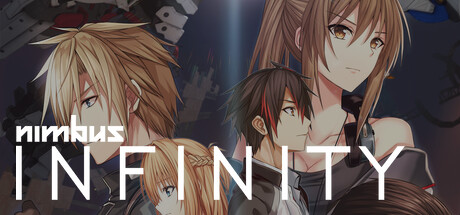
2D anime story segments: The story is presented with 2D anime-style cutscenes and visual novel-lite narrative sections, including a hub world between missions. The narrative is set in the Project Nimbus universe, about twenty years after the predecessor.
Chronic frame rate drops: Many players report persistent frame rate issues even on low settings, affecting overall gameplay. Specific instances include drops during combat and with many on-screen elements.
Poor overall optimization: Reviews consistently criticize the lack of optimization, citing low frame rates and high GPU load despite modest graphical settings. The game is demanding even on mid-range PCs.
Frequent crashes occur: The game crashes often, including on capable hardware and during later missions, with fatal errors reported. This disrupts progress and is a major stability concern.
Low FPS on low settings: Players with average GPUs see FPS in the 30-50 range even on the lowest graphical settings. This indicates scaling issues and poor optimization.
Crashes on capable PCs: Crashes occur despite hardware exceeding minimum requirements, such as PCs that run other games on high settings. This points to software-level instability.
Recommendations
Mixed recommendation overall: Clusters show a split between positive and negative recommendations. Some players endorse the game, while others advise waiting or avoiding it.
Delay purchase until optimized: Recommendations to wait are common, focusing on optimization issues and the incomplete current state of the game.
Positive recommendation from fans: Fans of Project Nimbus and arcade mech combat largely recommend the game, though some suggest treating it as a separate experience.
Recommend for early access supporters: Some advise buying now to support development, viewing it as an investment or to provide feedback for future improvement.
Prefer predecessor Project Nimbus: Several players recommend buying Project Nimbus instead or in addition, citing it as a better mech game and providing context.
Buying context
Community fair range: $10.00 - $12.00.
Game completion: 2.8h.
Story completion: 2.8h.
Players consistently find the game unfun from the very start due to clunky combat, weightless weapons, repetitive missions, and a short boring story. No evidence shows enjoyment improving over time.
Friction: unintuitive combat and navigation mechanics; weightless gun and melee feel; repetitive mission objectives; boring and short story; difficulty high on all settings; enemy recognition problems.
Player profiles
Disappointed Project Nimbus Veteran: Expects polished gameplay; compares every aspect to the predecessor. Motivation: Seeking a worthy successor to Project Nimbus. Stance: no buy.
Early Access Advocate: Forgiving of bugs; enjoys providing feedback and monitoring updates. Motivation: Supporting game development and helping shape the final product. Stance: buy.
Anime Mecha Enthusiast: Immersive; values aesthetic presentation and flight sensation. Motivation: Enjoying anime-style mecha action and atmosphere. Stance: buy.
Other review notes
Sequel inferior to predecessor: Multiple reviewers compare this game unfavorably to Project Nimbus, stating it is worse in nearly every aspect including content, length, and polish. The consensus is that the sequel does not live up to the original.
Early access status concerns: Reviewers note the game is in early access despite being a sequel, with some saying the Steam page didn't indicate the campaign was early access. Others mention the low completion quality and that three years have passed since alpha.
Short campaign length criticized: The campaign is very short, lasting only about 2-3 hours, with only around 10-11 missions. This is a significant disappointment for players expecting a longer experience.
Lack of Japanese voice acting: Several reviewers point out the absence of Japanese voice acting, which was present in the previous game, and express a desire for its addition. This is a common request among the feedback.
Story and presentation issues: The story is described as fragmented and ties to the previous game only through mech design and a character cameo. Visual novel-style segments and a cliché high schooler plot are noted, and the script feels auto-translated.