- Fun and addictive gameplay
- Excellent co-op multiplayer experience
- Base game worth the price
- DLC pricing excessively high
- Excessive DLC and monetization
- Numerous bugs and instability
Emotions
Archetypes
Hardware
What players like:
Common complaints:
Gameplay feedback:
Performance notes:
Recommendations:
Other player notes:
Similar games
Blend with other games




Review evidence
Why players say this
Review evidence
Why players say this
Steam review verdict
Fun, addictive gameplay and an excellent co-op experience make the base game worth its price, but excessive DLC pricing, aggressive monetization, and frequent bugs and instability hold it back.
What players like
Fun and addictive gameplay: Players consistently describe the game as fun, enjoyable, and highly addictive, often noting its strategic and engaging nature.
Excellent co-op experience: The cooperative mode is widely praised as the game's standout feature, with players highlighting how well it works for groups and the chaotic fun it produces.
Base game worth the price: Many players find the base game offers excellent value and is worth its price, providing plenty of fun and content on its own.
Great solo or with friends: The game is enjoyable both in single-player and multiplayer, though many find it even better with friends.
Top-tier deckbuilder: Reviewers frequently call it one of the best deckbuilding games, praising its fusion with RPG elements and solid mechanics.
Common complaints
DLC pricing excessively high: Reviewers widely complain that DLC prices are exorbitant, often exceeding the base game cost multiple times, and feel like a rip-off.
Too much DLC and monetization: Players are frustrated by the sheer volume of DLC and aggressive monetization tactics, feeling the game is milked with endless paid content.
Poor DLC value for money: DLC content is frequently seen as minimal relative to its price, with many stating the base game alone is sufficient and DLC offers little additional value.
Paywalled content and events: Many in-game features, characters, and events are locked behind DLC payments, forcing players to buy DLC to access full content.
Forced Paradox launcher issues: The addition of the Paradox launcher is widely criticized as unnecessary, unstable, and intrusive, with forced account requirements and ads.
Gameplay and performance
Co-op multiplayer with friends: The game supports cooperative play with friends, including online co-op for up to four players with crossplay and drop-in/drop-out support. It can be played solo or with a partner or a full party.
Co-op roguelite deckbuilder: The game is a cooperative roguelite deckbuilder, blending deckbuilding with roguelike runs and party RPG mechanics. It supports both solo and co-op play.
Core deckbuilding gameplay: Deckbuilding is the central system, where players build decks of cards to play. The game combines deckbuilding with strategic combat and many card combinations.
DLC adds characters and content: DLC expansions add new characters, areas, acts, maps, events, and boss fights. Each new DLC typically introduces one or two new characters with different playstyles.
Multiple difficulty levels: The game offers selectable difficulty levels, including a Madness difficulty progression with many tiers. Difficulty scaling and challenge options are available.
Multiplayer desync issues: Numerous reports describe frequent out-of-sync errors in multiplayer, often softlocking battles or resetting turns. Desyncs occur in towns, during combat, while shopping, and in specific boss encounters.
Long loading and startup times: Load times are described as horrendous, with startup taking over 5 minutes and intro scenes taking a long time to exit. Some players report infinite stalls on Steam OS.
Crashes during gameplay: Frequent crashes occur under normal use, during multiplayer, and during runs, sometimes crashing the entire PC. Recent updates have increased crash frequency.
Severe performance lag: Players experience tremendous lag in towns during co-op, freezes from curse stacking, and general sluggishness when many actions occur. Performance is poor even on capable hardware.
Stability degraded by updates: The game has become less stable with each update, becoming unplayable for months after releases. The most recent patch has broken many aspects and made the game unplayable.
Recommendations
Strongly recommend for deckbuilder fans: Reviewers consistently recommend the game to players who enjoy deckbuilding and roguelike card games, frequently comparing it to Slay the Spire and Monster Train. This is the most frequent positive recommendation theme.
DLC unnecessary to enjoy game: Multiple reviewers state the DLC is optional and not required to enjoy the base game, with some recommending skipping it entirely or only buying on sale. DLC monetization is a recurring concern.
Buy base game before DLC: Reviewers advise purchasing the base game first and deciding on DLC later, often suggesting to try the base experience before investing further. This reflects concern over DLC value and pricing.
Best played with friends: Reviewers repeatedly emphasize that the game is far more enjoyable in co-op with friends, with some making recommendations conditional on having a group to play with. Solo play is often discouraged.
Not recommended in current state: Many reviewers explicitly refuse to recommend the game due to game-breaking bugs and its unfinished state, some waiting until developers fix the issues. This is a major negative sentiment driver.
Buying context
Community fair range: $14.99 - $19.99.
Game completion: 76.0h.
Session length: 2.5h.
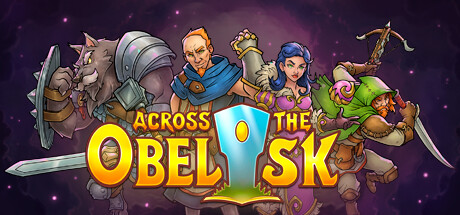
Across the Obelisk often starts slowly and can feel overwhelming, but it becomes much more enjoyable once the mechanics click and early unlocks broaden deck options. Co-op is the most common condition that makes the fun start sooner.
Reported time to anchor: 3h.
Friction: Steep learning curve for deck-building and roguelike newcomers; Overwhelming amount of information and icons in the first hours; Managing four characters and decks alone is cumbersome; Slow early progression requires unlocking cards and town upgrades; Long runs and slow combat can make sessions drag; Weak or missing tutorial explanations for many card effects.
Unlock drivers: Learning the mechanics, icons, and card effects; Unlocking cards and town upgrades that improve starting decks; Co-op lets players split the load of controlling four characters; Meta-progression and perks make later runs feel more powerful; Using the save-preset deck feature speeds up run setup.
Player profiles
Social Co-op Deckbuilder: Coordinates one or more heroes per player, plans routes and card picks together, and prioritizes multiplayer stability and group fun. Motivation: Shared tactical deckbuilding and progression with friends in a cooperative roguelike campaign. Stance: buy.
Solo Build Optimizer: Manages four character decks solo, plans map routes and shops carefully, and experiments with character and card combinations. Motivation: Mastering complex deck synergies and long-term progression through repeated optimized runs. Stance: buy.
Curious Genre Newcomer: Learns through repeated runs, often plays casually or with friends, and relies on gradual unlocks rather than deep pre-existing deckbuilding knowledge. Motivation: Entering the deckbuilder genre through an approachable fantasy RPG with co-op options and steady unlocks. Stance: buy.
Platform notes
The Windows <8GB VRAM cohort predominantly reports crashes, startup failures, and black-screen issues, with only isolated reports of the game working.
Windows <8GB VRAM: negative. Most users report frequent crashes, startup failures, and black screens, with poor optimization making the game difficult to run on lower-end systems.
Steam Deck: The Steam Deck feedback is dominated by the forced Paradox launcher introduced in late 2023, which creates account gating, launch failures, long startup delays, and save-access problems for some users. Steam Deck playability is also inconsistent: some players run the game well after remapping controls, while others report a broken or annoying experience. A separate repeated issue is the lack of text and UI scaling, with card text described as minuscule and sometimes unreadable on the handheld screen. These launcher and readability problems place the experience in the broken range despite positive reports from users willing to tinker.
Linux and Proton: Linux compatibility is mixed and workaround-heavy. The central Linux-specific problem is the Paradox launcher, which multiple users say broke native Linux and Steam Deck compatibility, caused crashes, or required restarts. Some users can still play through Proton, launcher-skipping launch options, or SteamOS compatibility-mode adjustments, and several reviews report no problems on Linux with Proton. The result is not universally broken, but it is far from out-of-the-box smooth.
Extra review signals
Monetization: The reviews show a heavily criticized monetization model built around numerous paid DLCs, many described as overpriced and low-content. More seriously, several reviewers report that DLC characters or content are needed to win or are visibly locked inside the base-game map, and some describe the complete bundle as misleading. Positive reviews confirm the base game can be enjoyed without DLC, but the direct pay-to-win and in-game paywall reports push the monetization risk above ordinary expansion pricing.
External guides: The reviews broadly focus on external-data dependency for instructional purposes: wiki and guides are needed to understand event outcomes, major quest lines, character and pet unlocks, enemy deck composition, status effects, and missing in-game encyclopedia entries. There is no clear primary complaint about farming drop rates or loot tables, nor about inventory management or crafting requirements. The dominant issue is learning systems and finding content, placing the audit in Tier 3.
Other review notes
Frequent Slay the Spire comparisons: Many reviews compare the game to Slay the Spire, with opinions ranging from a shallow imitator to a deeper, more customizable alternative. Darkest Dungeon is also frequently cited as a reference point.
Paradox publishing and acquisition: Paradox Interactive is the publisher and acquired the game in 2023, which reviewers associate with a shift in update and monetization approach. Some negative reception is tied specifically to the acquisition and publisher practices.
Base game has ample content: Reviewers highlight that the base game alone offers over 100 hours of content and a long lifespan. DLC is therefore considered optional rather than necessary for enjoyment.
Active post-release development: The developers continue to release content updates, hotfixes, and new DLC. Reviewers note that the game is still being actively supported rather than abandoned after launch.