- Challenging yet rewarding puzzle design
- Immersive VR experience enhances gameplay
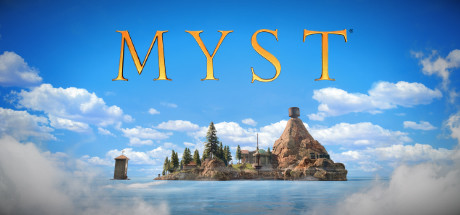
- Nostalgic yet modernized remake experience
- Buggy and unstable performance issues
- Short length with high price point
- Lack of guidance and tutorials for players
Emotions
What players like:
Common complaints:
Gameplay feedback:
Performance notes:
Recommendations:
Other player notes:
Similar games
Blend with other games






Review evidence
Why players say this
Review evidence
Why players say this
What players like
Challenging yet rewarding puzzles: The puzzles are a core strength, praised for their logical design, variety, and satisfying difficulty. Players enjoy the mental challenge, the integration of puzzles into the environment, and the sense of accomplishment upon solving them.
Nostalgic yet modernized experience: The game successfully blends nostalgia for long-time fans with modern improvements, such as updated graphics, controls, and accessibility options. Players appreciate the preservation of the original’s magic while making it accessible to new audiences.
Immersive VR experience elevates gameplay: The VR adaptation is frequently praised for enhancing immersion, allowing players to feel deeply engaged with the game world. Many reviews highlight how VR transforms the experience into something magical and emotionally impactful, especially for long-time fans.
Rich lore and engaging narrative: The game’s story, world-building, and lore are frequently highlighted as immersive and intriguing. Players enjoy uncovering the narrative through exploration, puzzles, and environmental storytelling, which adds depth to the experience.
Free movement improves navigation: The shift from rigid, click-based movement to free movement (WASD) is widely celebrated. Players find it more intuitive, immersive, and comfortable, especially in VR, where it enhances spatial awareness and exploration.
Common complaints
Buggy and unstable performance: Frequent crashes, glitches (e.g., stuck doors, black screens), and VR-specific issues (e.g., unresponsive controls) plague the experience. Performance problems are especially noted on Linux and VR platforms.
Short length and high price: The game is criticized for its short playtime (4-6 hours) and perceived overpricing. Many feel the content does not justify the cost, especially compared to other modern titles.
Lack of guidance and tutorials: The game provides minimal in-game guidance, leading to confusion and frustration. Players struggle with unclear mechanics, no hint system, and limited save slots, making progress difficult.
Poor CGI character models: The replacement of FMV with stiff, plastic-like 3D character models is widely disliked. Players feel the CGI detracts from immersion and prefer the original live-action footage.
Translation and localization issues: Poor translations (e.g., awkward overlays, missing subtitles) break immersion. Some puzzles become unplayable due to language barriers, and non-English speakers face accessibility challenges.
Gameplay and performance
Sound and accessibility design: Sound plays a key role in puzzles (e.g., auditory clues for locks) and immersion. The game includes subtitles, color accessibility options, and configurable controls to accommodate different playstyles, including VR-specific interactions.
VR and 3D movement integration: The remake introduces free 3D movement (WASD/mouselook) and VR support, replacing the original point-and-click mechanics. VR interactions include teleportation, smooth movement, and tactile puzzle-solving (e.g., gripping levers), though some puzzles were redesigned for compatibility.
Core puzzle-based gameplay: The game revolves around solving environmental, logic-based, and observation-driven puzzles. Players interact with switches, levers, and notes while exploring surreal landscapes to progress. Puzzles range from simple input-based challenges to complex, multi-step problems requiring note-taking and pattern recognition.
Note-taking and exploration tools: Players rely on in-game notebooks, photo modes, and screenshot systems to document clues, map mazes, and track puzzle solutions. These tools are critical for solving puzzles that require connecting scattered information or revisiting earlier discoveries.
Multiple ages and open-ended exploration: The game features distinct worlds (e.g., Mechanical Age, Rime) with unique aesthetics, puzzles, and environmental storytelling. Exploration is non-linear, encouraging players to wander off-path to uncover hidden areas, Easter eggs, and lore via journals or notes.
Frequent crashes and freezes: Crashes and freezes are a recurring issue, especially during specific interactions, in VR, or when using ray tracing. Some users report softlocks or unplayable states due to these bugs.
Performance optimization and stability: The game is generally well-optimized, running smoothly on various hardware, including M1 MacBooks and older systems. However, occasional performance drops, crashes, and freezes are reported, particularly in VR. Workarounds like menu resets or config tweaks are suggested.
DLSS and ray tracing trade-offs: DLSS improves performance by 10-15% but causes blurriness, while ray tracing can lead to crashes. Users recommend disabling DLSS for sharper visuals or adjusting settings for better stability.
Visual and audio bugs: Users report lighting flickers, blurry visuals, jagged edges, and audio issues like sounds passing through walls or spatialization problems in VR. Some graphical effects are missing in VR for performance reasons.
Menu and UI glitches: Cursor disappearance, menu access issues (especially on Index controllers), and non-functional puzzle viewers are reported. Some users experience the game hiding behind a black screen or warping outside map bounds.
Recommendations
Strong recommendation for puzzle fans: The game is highly recommended for enthusiasts of puzzle games, intellectual challenges, and atmospheric experiences. Many reviews emphasize its value for both newcomers and veterans of the series.
VR enhances immersion but has flaws: The VR version is praised for its immersive experience but criticized for clunky controls, hardware compatibility issues, and occasional bugs. It is recommended conditionally for VR enthusiasts.
Conditional price recommendation: Reviewers frequently suggest purchasing the game on sale or at a lower price (e.g., €10-15) due to its length or niche appeal. Full price is often deemed less justifiable.
Best modern version of Myst: This remake is widely regarded as the best way to experience Myst, especially for newcomers or those seeking a modernized version with VR support. Some prefer older editions for authenticity.
Nostalgic appeal for returning players: The game is praised for its nostalgic value, offering a modernized yet faithful experience for fans of the original. It serves as a great entry point for the series.
Other review notes
Historical impact of Myst: Myst is recognized as a defining game of the CD-ROM era, influencing adventure and puzzle games. It was the top-selling PC game from 1993-1996 and inspired many subsequent titles due to its innovative design and storytelling.
Modern remake success: The remake of Myst has been praised for modernizing the original experience while preserving its core gameplay mechanics. Players appreciate the updates, such as the Rime age and AI-upscaled FMV.
Playtime and achievements: Players discuss the game's playtime (approximately 7 hours) and the automatic unlocking of achievements for most endings. This provides clarity on the game's length and completion mechanics.
Nostalgia and personal connections: Many players express deep personal nostalgia and emotional connections to Myst, often citing childhood memories or familial influences. The game holds sentimental value for long-time fans of the series.
Comparisons to other games: Players frequently compare Myst to its sequels (Riven, Obduction) and other modern games in the genre, such as Outer Wilds. These comparisons highlight its lasting influence and unique qualities.