- Rick and Morty-style humor highly praised
- Polished and fun gameplay experience
- Seamless VR and non-VR compatibility
- Repetitive and shallow gameplay mechanics
- Divisive and repetitive humor elements
- Excessive and intrusive dialogue present
Emotions
What players like:
Common complaints:
Gameplay feedback:
Performance notes:
Recommendations:
Other player notes:
Similar games
Blend with other games 85%Rick and Morty: Virtual Rick-ality
 82%High On Life
 81%Bad Cheese
 79%Sir Whoopass™: Immortal Death
 78%Quantum Conundrum
 78%Super Chipflake Ü: Quest for the Uncooked Schnitzel
 78%The Midnight Walk
 78%GORN 2
 78%Journey To The Savage Planet
 78%Cyanide & Happiness - Freakpocalypse (Episode 1)
 78%SUPERHOT VR
 78%Bugsnax
Review evidence
Why players say this
Review evidence
Why players say this
What players like
Rick and Morty-style humor: The game's humor closely mirrors the style of *Rick and Morty*, with absurd, crude, and meta-commentary that resonates strongly with fans of the show. This is a defining feature for many players.
Polished and fun gameplay: Players consistently praise the game's well-executed gameplay, highlighting its smooth performance, intuitive controls, and engaging mechanics. The mix of platforming, combat, and light puzzles is particularly well-received.
Seamless VR and non-VR compatibility: The game works well in both VR and non-VR modes, offering a polished experience regardless of the player's setup.
Innovative VR platforming mechanics: The game introduces unique VR gameplay elements, such as second-person perspective and hybrid control schemes, which enhance immersion and set it apart from typical VR experiences.
Strong emotional and narrative moments: Despite its absurd humor, the game delivers surprising emotional depth and a well-crafted story, blending comedy with memorable character moments.
Common complaints
Repetitive and shallow gameplay: Players consistently report that the gameplay loop is repetitive, simplistic, and lacks depth, particularly in combat, platforming, and progression systems. The mechanics feel unengaging and fail to sustain interest beyond short sessions.
Divisive and repetitive humor: The game's humor is polarizing, with many players finding it forced, crude, or repetitive. Jokes often drag on, and the comedic style may not appeal to fans of the source material or those seeking more nuanced writing.
Excessive and intrusive dialogue: Long, unskippable monologues and constant character chatter disrupt gameplay flow. Dialogue sequences often feel forced, overwhelming, or difficult to follow due to pacing or content.
Offensive or uncomfortable content: Some players find the game's humor, sexual content, or excessive swearing off-putting or uncomfortable, limiting its appeal to broader audiences.
Unrefined combat and controls: Combat is criticized for being rudimentary, repetitive, and lacking depth (e.g., no combos, limited mechanics). Controls are described as finicky, busy, or poorly optimized for certain situations.
Gameplay and performance
Hybrid platformer gameplay: The game blends platforming, puzzle-solving, and combat mechanics, often in a 3D or third-person perspective. This mix is a core part of the experience, though complexity varies from simple to well-implemented.
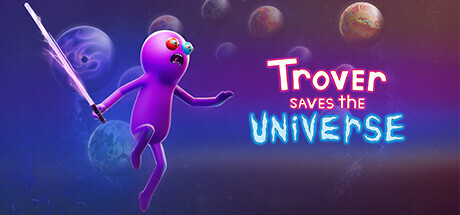
Unique chair-based control scheme: Players control a seated alien (Chairopian) who manipulates Trover, an alien hero. This meta-narrative setup creates a distinctive second-person or third-person gameplay dynamic.
VR integration and design: Originally designed for VR, the game includes VR-exclusive mechanics (e.g., teleportation, throwing objects) and supports both VR and non-VR modes. This enhances immersion but may limit accessibility.
Collectibles and achievements: Power Babies (collectibles) unlock upgrades or real-life rewards, while achievements encourage replayability. Some collectibles are time-consuming to find, adding depth for completionists.
Dialogue-heavy interactions: Dialogue is a key feature, with long monologues, moral choices, and yes/no responses that pause gameplay. Some players may find the pacing disrupted by extensive text.
Hardware Compatibility Problems: Issues arise with specific hardware, including crashes on Pico 4 Ultra, compatibility problems with 12th Gen CPUs, and performance drops on recommended hardware. Some users report no issues on high-end systems.
Minor Graphics and Audio Bugs: Users report minor issues like pixelation, clipping, and audio glitches (e.g., fixable by refocusing the game window). These do not severely impact gameplay but reduce polish.
Game Launch Failures: Frequent reports of the game failing to start or launch on Steam, often requiring workarounds like the OPENSSL_ia32cap launch option. This affects both VR and non-VR versions.
Performance Optimization Gaps: While the game runs smoothly on high-end systems, wireless adapters add CPU load, and modern GPUs show performance improvements, suggesting optimization could be better targeted.
Bug-Free Experiences on Supported Hardware: Some users report zero technical issues on Windows 10, indicating the game can run flawlessly under optimal conditions.
Recommendations
Appeal beyond Rick and Morty fans: Though primarily targeted at 'Rick and Morty' fans, the game is also recommended for those who enjoy experimental storytelling, absurd humor, or VR experiences, broadening its appeal to a niche but diverse audience.
Humor-driven experience: The game's appeal hinges on its humor, particularly absurd, black, and derisive comedy. Reviews emphasize that enjoyment depends on whether the player appreciates this style, with many recommending it solely for its comedic value despite other flaws.
Recommended on sale only: Many reviews advise purchasing the game only during a sale, citing limited replayability, niche appeal, or humor fatigue. A lower price point is often suggested as a prerequisite for recommendation.
Best experienced in VR: The game is frequently highlighted as a standout VR experience, with reviews suggesting it is significantly enhanced in virtual reality. Some note it offers replay value and is a must-have for VR owners.
Free DLC and future content: The inclusion of free DLC and excitement for future content, including potential sequels or horror-themed games, is mentioned as a positive aspect, adding value to the purchase for some players.
Other review notes
Tone akin to Psychonauts and Rick and Morty: Players frequently compare the game's humor and tone to *Psychonauts* and *Rick and Morty*, noting its absurd, cynical, and black comedy style. This appeals to fans of these franchises.
Unique dog-saving storyline: The game's narrative revolves around rescuing dogs from an evil entity, with a bizarre premise involving a dog embedded in a villain's eyes for power. This creative and darkly humorous concept stands out in player discussions.
Mature humor unsuitable for kids: The game's humor is explicitly mature, with players warning it is not appropriate for children. This aligns with its *Rick and Morty*-esque tone.
Developer neglect post-launch: Criticism is directed at the developer for lacking updates and compatibility fixes, suggesting abandoned support. This frustrates players expecting long-term improvements.
All DLC will be free: The developer has committed to making all DLC free, which players view as a positive and player-friendly decision.