- Rich character writing and story
- Emotionally impactful experience
- Excellent music and atmosphere
- Disappointing single ending
- Game feels boring and repetitive
- Poor gameplay design issues
Emotions
Archetypes
What players like:
Common complaints:
Gameplay feedback:
Performance notes:
Recommendations:
Other player notes:
Similar games
Blend with other games





Review evidence
Why players say this
Review evidence
Why players say this
Steam review verdict
While its rich character writing, emotional impact, and excellent music create a memorable atmosphere, the disappointing single ending, repetitive gameplay, and poor design make it feel boring and flawed.
What players like
Rich character writing: Players consistently praise the realistic, well-developed characters with individual arcs and deep emotional resonance. The characters are described as relatable, vividly portrayed, and central to the game's impact.
Emotionally impactful story: The story is described as deep, thought-provoking, and touching, with strong emotional impact that resonates with players. It captures themes of teenage angst, friendship, and growing apart, akin to Takeshi Kitano's films.
Excellent music and atmosphere: The music is praised as pleasant, memorable, and perfectly fitting the melancholic, mood-piece atmosphere. It effectively complements the game's emotional tone and nostalgic feel.
Engaging and varied combat: The combat system is repeatedly highlighted as fun, satisfying, and surprisingly enjoyable, with a cool block system and multiple fighting styles including boxing and Muay Thai. It successfully blends classic beat'em up mechanics with RPG elements.
Immersive gameplay experience: Players note the game is highly immersive, offering a detailed school life simulation with classes, exams, and activities that draw them into the world. The atmosphere and nostalgic elements enhance this immersion.
Common complaints
Disappointing and single ending: The ending is widely disliked for being abrupt, unsatisfying, and lacking alternative endings. It is often described as heartbreaking and emotionally painful, with no player choice impact.
Game feels boring and repetitive: The game is widely criticized for being boring and tedious, with repetitive daily routines and slow pacing that make it uninteresting to play.
Poor gameplay design: Gameplay is considered poor and nearly nonexistent, with bad game design, repetitive mechanics, and shallow, unreplayable content.
Lack of explanation and tutorials: The game fails to explain its systems, mechanics, and mini-games, leaving players confused and making the experience tiring.
Unsupportive friends in ending: Players feel that in the ending, friends abandon responsibility and Ringo is left to face everything alone, which is disappointing.
Gameplay and performance
Beat-em-up combat with RPG: The core gameplay is a beat-em-up brawler combined with RPG elements, featuring three-button combat (punch, kick, block) and learned moves from trainers, similar to Kunio-kun or Persona/Shenmue.
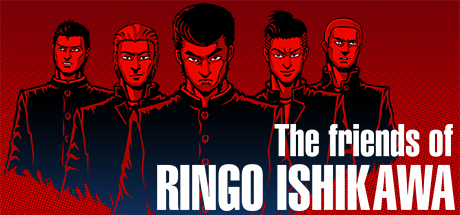
High school life simulation: The game is described as an open-world life simulation set in a Japanese high school, where players experience daily school routines, classes, and activities as a delinquent or exemplary student.
Diverse daily activities: The life simulation includes a wide variety of daily activities such as studying, fighting, working part-time jobs (e.g., video rental store), exercising at the gym, fishing, and hanging out with friends.
Open world with free choice: Players are placed in an open-world sandbox with a time system and no explicit objectives, encouraging self-exploration and setting personal goals through daily activities and interactions.
Weekly exams with scholarships: Exams are held every Saturday, and achieving high scores rewards the player with scholarships (e.g., 10,000 yen), providing income and encouraging studying.
Graphics settings cause distortion: Adjusting graphics settings leads to screen distortion, implying bugs or poor implementation of graphical options. This can severely impact visual experience and gameplay.
Awful port quality: The game is described as a poor port, indicating significant technical issues compared to the original version. This suggests the port lacks optimization and may suffer from performance problems.
Recommendations
Strongly recommended by many: Multiple clusters express strong recommendations, with praise such as 'strongly recommended' and 'highly recommended' from various reviewers. These recommendations are consistent across different clusters, indicating widespread positive sentiment.
Recommend for specific audiences: Clusters 22, 62, 63, 65, 71, 80, and 82 target the game at specific groups, including those interested in high school life, delinquent culture, or fans of similar media like Yakuza or Persona. This suggests a niche appeal.
Not for everyone but rewarding: Clusters 12, 13, 69, 81, 85, and 87 describe the game as not for everyone, with caveats about repetitive gameplay, random story beats, or needing a specific taste. However, they also see potential for a good experience if the player's preferences align.
Guide recommended for story: Cluster 10 suggests following a guide to fully enjoy the game, while Cluster 11 mentions replaying for missed story content. Cluster 23 even recommends watching a walkthrough for the story.
Best played in one sitting: Clusters 35, 83, and 84 recommend setting aside a day for a single-sitting playthrough, implying the game's length and structure suit a focused, immersive session.
Buying context
Community fair range: $2.00 - $15.00.
Game completion: 13.0h.
Story completion: 13.0h.
The game requires a learn-and-adapt period before becoming engaging, but its repetitive design and lack of traditional progression cause fun to drop off by the end.
Friction: Repetitive environments and routine by design; Controls and gameplay are not outstanding; Late unlock of desired trainer; No traditional progression or payoff; Feeling of busywork after extended play.
Unlock drivers: Learning the layout and mechanics; Adjusting expectations to accept repetition and narrative beats; Exploring open world events at one's own pace.
Player profiles
Narrative-Driven Explorer: Follows story events passively, reads dialogue, explores to trigger narrative scenes, may neglect gameplay loops for story progression. Motivation: Experience a heartfelt, cinematic story about youth and friendship. Stance: buy.
Cultural & Atmospheric Immerser: Explores the town for atmospheric details, enjoys the music and setting, interacts with NPCs to soak in the vibe, may ignore completionist goals. Motivation: Immersing in Japanese delinquent culture, atmosphere, and retro aesthetics. Stance: buy.
Freedom & Progression Seeker: Optimizes daily schedule, grinds for stats and money, seeks out all activities and upgrades, may replay to experience different paths. Motivation: Achievement through progression, freedom to shape daily routine. Stance: sale.
Extra review signals
External guides: User feedback consistently shows that the game's minimalist guidance forces players to rely on external guides, wikis, or walkthroughs to understand objectives, avoid missing events, and grasp game systems. This dependency often leads to spoilers and reduced immersion, highlighting a critical instructional data gap.
Other review notes
Envy of Japanese youth: The reviewer expresses envy towards Japanese high school youth, which is a personal sentiment unrelated to gameplay mechanics or content quality.