- Engaging Idle Game with Depth
- Satisfying Micromanagement and Strategy
- Abundant Content and Progression
- Limited player control
- Offline time paywalled
- No Pay-to-Win Monetization
Emotions
Archetypes
What players like:
Common complaints:
Gameplay feedback:
Performance notes:
Recommendations:
Other player notes:
Similar games
Blend with other games





Review evidence
Why players say this
Review evidence
Why players say this
Steam review verdict
An engaging, deep idle game with satisfying micromanagement, strategy, and abundant progression plus no pay-to-win, though limited control and paywalled offline time hold it back.
What players like
Engaging Idle Game with Depth: Players overwhelmingly praise the game as a fun, unique, and refreshing take on the idle genre. Many highlight its depth, strategic layers, and satisfying progression, making it one of the best idle games available.
Satisfying Micromanagement and Strategy: Players enjoy the strategic depth of managing task queues, optimizing skill routes, and min-maxing progression. The ability to actively micromanage or let the game idle provides flexibility that appeals to both active and passive players.
Abundant Content and Progression: Reviewers frequently note the massive amount of content, including numerous skills, tasks, collections, pets, quests, and unlockables that provide a long-term grind. The game constantly offers something to work toward and rewards incremental progress.
Helpful Developer and Community: The developer is consistently described as friendly, responsive, and dedicated to the game's improvement. The community, both in-game and on Discord, is active, welcoming, and helpful, enhancing the overall experience.
Optional PvP and Group Content: PvP is optional and asynchronous, and group content like raids and clan wars can be engaged with voluntarily. Solo players can also access group content using clones, making it accessible to all playstyles.
Common complaints
Limited player control: Players feel they cannot directly dictate their character's actions, as tasks are randomly assigned and characters choose distant nodes. This lack of agency makes the world feel meaningless and the gameplay frustrating.
Offline time paywalled: Multiple clusters highlight that offline progress is capped at 8 hours and additional AFK time is locked behind paid DLC packs. This monetization approach is widely criticized as undermining the idle game experience.
DLC pricing too high: Reviewers consistently complain about the high cost of DLC packs, particularly the $30 AFK Time Pack and the Wing pack. The price differences between DLCs are seen as unjustified given their in-game benefits.
Pay-to-win leaderboard advantage: Buying DLCs that grant extra offline time provides a competitive advantage on leaderboards, contradicting claims of no pay-to-win features. Early buyers get ahead, and maxed players are likely those who paid.
Slow early game pacing: The game starts very slowly with a lot of walking and automatic activities. This slow pace and initial confusion may deter some players.
Gameplay and performance
Core Idle Gameplay Loop: Players consistently describe the game as an idle game where tasks, travel, and skilling progress in real time, with optional active play. The core loop involves waiting and managing skilling actions, appealing to fans of incremental and idle genres.
Casual And Accessible Gameplay: The game offers a casual, hands-off experience that can be played alongside other activities, with numbers increasing passively. This accessibility is a key reason for its broad appeal.
Leaderboard Competitive Elements: Leaderboards are present and cater to competitive players, adding a ranking system to the idle and grinding experience. This feature is noted across several clusters, indicating its importance to the community.
RuneScape-Inspired Idle Systems: Multiple reviews highlight the game as an idle take on RuneScape-style systems, featuring skilling, grinding, and character progression reminiscent of the classic MMO. This niche appeal is a strong draw for players familiar with RuneScape.
Grinding-Focused Progression: Grinding is a central mechanic, with players repeatedly performing tasks to advance. This appeals to those who enjoy incremental progress and long-term goals.
Connection issues disrupt gameplay: Players report persistent disconnections and reconnections every 2-3 minutes, as well as an inability to connect to the server at all. These connectivity problems severely hinder the gaming experience.
Smooth performance and stability: A number of users report that the game runs smoothly and lacks constant bugs or crashes. This indicates that for some, the game is technically stable and enjoyable.
Game fails to launch in Russia: Some players in Russia are unable to launch the game, likely due to regional restrictions or technical issues. This prevents access entirely for affected users.
Recommendations
Positive recommendations and support: Many reviewers simply recommend the game and support the developer. Clusters 2, 3, 25, and 31 give positive recommendations without detailed criticism.
Recommended for idle game fans: Multiple reviewers state the game is best suited for players who already enjoy idle or incremental games. Cluster 1 and Cluster 37 recommend it specifically to genre fans.
Try the free demo first: Several reviewers suggest trying the free demo before buying since it covers up to level 35. Clusters 5, 7, and 24 all mention the demo as a low-risk way to test the game.
Not for everyone: The game is not recommended for all players, especially those seeking more involvement. Clusters 9, 18, 26, and 27 suggest it may not appeal to everyone or is not ready for purchase.
Refunds and negative recommendations: A few reviewers are refunding and recommending against the game. Clusters 12, 15, and 16 cite reasons such as not launching in Russia, while Cluster 13 calls it trash.
Buying context
Community fair range: $10.00 - $15.00.
Session length: 4.5h.
Endgame: 10000.0h.
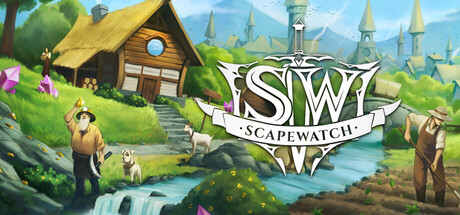
Scapewatch appears to click after early friction: the slow, menu-heavy opening and walking can delay enjoyment, while raids and tier progression are cited as the real hook once skills are developed.
Friction: Slow-paced early game; Lots of walking with low movement speed; High learning curve from menus and mechanics; Tutorial can break and block onboarding; Idle-versus-active pacing may feel inverted.
Unlock drivers: New tutorial helps onboarding; Community guides explain menus and mechanics; Moving up a tier every 10 levels feels rewarding; Getting a few skills up unlocks raids, the real hook.
Player profiles
Competitive Leaderboard Min-Maxer: Actively rerolls tasks, rearranges skill queues, and maintains near-100% uptime to stay ahead on the rankings, treating the DLC offline time as a minor tool rather than a shortcut. Motivation: Climbing leaderboards and shaving every second of inefficiency off an optimal skilling route. Stance: buy.
RuneScape-to-Idle MMO Veteran: Compares systems to established idle MMOs and approaches the game through skilling progression, drawing on years of prior MMO habits. Motivation: Recapturing the RuneScape skilling grind they already love in a lighter, idle-friendly format. Stance: buy.
Casual Numbers-Go-Up Relaxer: Drops in for brief sessions like a lunch break to micromanage routes and watch progress accumulate without sitting through active grinding. Motivation: Relaxing with steady, satisfying progress while doing everyday tasks during short breaks. Stance: buy.
Extra review signals
Monetization: The reviews show a paid base game plus real-money DLC/supporter packs that sell additional offline progression time. Many users call this pay-to-win because leaderboards reward longer offline accumulation, though some defend the packs as optional QoL and note the solo developer's promises. There is no evidence of loot boxes or gacha, but the paid offline-time advantage is direct post-purchase monetization and is repeatedly described as a competitive paid advantage. The score reflects a Pay-to-Win pattern rather than cosmetic-only monetization.
Other review notes
Supporter Packs Offer Offline Time: Supporter packs provide additional offline time, typically 8 hours per pack, and some also include cosmetic options. These packs are optional and do not affect core gameplay balance.
Comparisons to RuneScape and Idle Games: The game is frequently compared to RuneScape, OSRS, and other idle games like Melvor Idle, often described as an idle version of RuneScape. It is noted to be more interactive than typical idle games.
Price and Value Concerns: The base game costs $14.99, and some supporter packs are priced higher than the game itself, leading to mixed opinions. Some reviewers find the packs reasonably priced, while others consider them expensive.
Solo Developer Behind Game: The game is developed by a single person, specifically the solo indie developer PuzzleDrop. This is mentioned across many reviews as a notable positive.
Active and Responsive Developer: The solo developer is highly active in the community, frequently releases updates, and responds to feedback. Patches are regular and improve the game consistently.