- Sister character severely underdeveloped
- Ending disappointing and unsatisfying
- High overall game enjoyment
- Little sister character adored
- Art style highly praised
- Music quality excellent
Emotions
Archetypes
What players like:
Common complaints:
Gameplay feedback:
Performance notes:
- -
No data available
Recommendations:
Other player notes:
Similar games
Blend with other games 84%MAMIYA
 84%NOeSIS02_羽化
 84%CORPSE FACTORY
 84%NOeSIS01_诉说谎言记忆物语
 84%Doki Doki Literature Club Plus!
 83%The Way We All Go (2015)
 83%Sweetest Monster
 82%Crimson Gray: Dusk and Dawn
 82%BAD END THEATER
 82%Z.A.T.O. // I Love the World and Everything In It
 82%Slay the Princess — The Pristine Cut
 82%YOU and ME and HER: A Love Story
Review evidence
Why players say this
Review evidence
Why players say this
Steam review verdict
Despite an underdeveloped sister and a disappointing ending, the game remains highly enjoyable thanks to an adored little sister character, beautiful art, and excellent music.
What players like
Overall game enjoyment high: Players describe the game as pleasurable, neat, relatable, and interactive. Many express gladness for having played it, indicating a strong positive overall experience.
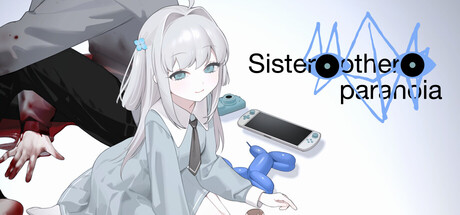
Little sister character adored: The little sister is consistently praised as cute, endearing, and sensible, often calling out the protagonist. This character adds charm and positivity to the narrative.
Art style highly praised: Players frequently commend the art as beautiful, praiseworthy, and a significant plus. The art style is considered a standout feature of the game.
Music quality excellent: The music is praised as very good, enjoyable, and fitting the scenes well. It contributes greatly to the overall atmosphere and is often mentioned alongside the art.
Philosophical themes explored: The game is noted for its philosophical depth and serious thematic exploration, appealing to players who enjoy deeper narratives.
Common complaints
Sister character underdeveloped: The sister character lacks depth, screen time, and meaningful interaction, serving more as a plot device than a developed character. This reduces her emotional impact on the story and the true ending.
Ending disappointing and unsatisfying: Reviewers find the ending lacking emotional payoff, with a rushed or confusing true ending that fails to provide a sense of completion or satisfaction. The weak development of the sister character reduces the impact of the final moments.
Protagonist unlikable and pretentious: The protagonist is seen as arrogant, cynical, and self-pitying, making it hard for players to sympathize with him. His pretentious demeanor detracts from the overall experience.
Game too short: The game's short length limits character development and leaves players feeling unsatisfied. Reviewers expected a longer experience based on the developer's previous work.
Character development insufficient: Beyond the sister, the cast as a whole lacks depth and development, leaving characters underdeveloped and not fully realized. This contributes to the story's overall lack of impact.
Gameplay and performance
Visual novel format: The game is consistently described as a text-heavy visual novel with first-person, stream-of-consciousness narration and internal monologue. It emphasizes narrative over traditional gameplay mechanics.
Unreliable and twisted perspective: The protagonist's perspective is irrational, distorted, and paranoid, making the narrator unreliable. This affects how the story is presented and understood.
Multiple endings available: The game features multiple endings, including bad, normal, true, and suicide endings. Some routes require a second playthrough or specific interactions to unlock.
Mind-reading protagonist ability: The protagonist possesses telepathic or mind-reading abilities, often used to manipulate or ruin those around him. This power is central to the narrative, though it may be delusional rather than real.
True ending unlock method: The true ending is unlocked by returning to the main menu and clicking or petting the sister character's head after completing the first playthrough. This hidden interaction triggers the sibling's true route.
Recommendations
Sister character lacks screen time: Multiple reviewers warn that the sister character, a primary draw for many, has very limited presence. Players expecting a sister-focused story are repeatedly advised to skip or refund quickly.
Strong narrative writing praised: Despite mixed reception, the writing itself is often praised as literary, artistic, and thought-provoking. The game is recommended for those who appreciate metaphors, literature, and the author's style.
Dark and heavy content warning: The game contains strong, heavy, and potentially unpleasant content, not suitable for those in low spirits or with fragile mental states. Reviewers emphasize the need for a stable mindset and caution for sensitive players.
Niche audience only: Feedback consistently stresses the game is not for everyone, requiring a specific mindset or taste for dark, heavy, or denpa-style content. Many suggest it appeals only to those who connect with the protagonist's worldview.
Psychological and philosophical depth: Several reviewers highlight the game's exploration of psychological, social, and philosophical themes, appealing to those interested in human psyche and society. It is recommended for fans of psychology, philosophy, and dark narratives.
Buying context
Game completion: 4.0h.
The game initially offers an addictive nihilistic pleasure for some players, but later becomes formulaic and boring; others find it a slog from the start.
Friction: verbose writing; slow pacing; self-important tone.
Player profiles
Pretentiousness Critics: Reading critically, analyzing narrative themes while rolling eyes at self-important writing. Motivation: Critiquing and finding entertainment in the protagonist's pretentious portrayal. Stance: sale.
Philosophical Explorers: Reflective and analytical, looking for meaning beyond surface-level storytelling. Motivation: Engaging with societal and psychological themes. Stance: buy.
Denpa Enthusiasts: Immersed in the game's strange vibe, accepting of misanthropic tone, looking for resonance. Motivation: Experiencing the unique denpa atmosphere and meta-narrative. Stance: deep sale.
Other review notes
Visual novel by Nyalra: Multiple reviews identify the game as a visual novel from developer Nyalra, who made previous works like Needy Girl Overdose. It is noted as a small, short, and niche work.
Compared to Needy Girl Overdose: Many reviews compare this game to the developer's previous work, Needy Girl Overdose (or 'Twitch Girl'), noting similarities in theme but differences in tone and gameplay. Some find this game less strong, while others praise the improved text.
Psychological horror with literary references: The game is described as a psychological horror with a peculiar worldview, referencing works by Dostoevsky, Gogol, Dazai, and Jung. It is compared to classic denpa titles like Saya no Uta.
Multiple endings with hidden true ending: The game features multiple endings, including a bad end, good end, and a hidden true ending unlocked by clicking the sister's head on the main menu. The true ending reveals a twist about the protagonist's mind-reading ability.
Unique and niche appeal: The game is described as a niche, stream-of-thought visual novel with a rare style, often compared to other denpa or psych horror games but with its own peculiar appeal. It is not for everyone.