- Co-op multiplayer supported
- Massive enemy hordes
- Retro arcade FPS remake
- Huge weapon arsenal
- Frame drops and stuttering
- Gameplay is repetitive and tedious

Emotions
Archetypes
Hardware
What players like:
Common complaints:
Gameplay feedback:
Performance notes:
Recommendations:
Other player notes:
Similar games
Blend with other games 92%Serious Sam Classic: The First Encounter
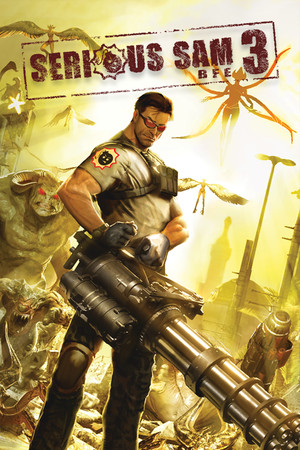 90%Serious Sam 3: BFE
 89%Serious Sam HD: The Second Encounter
 89%Serious Sam Classic: The Second Encounter
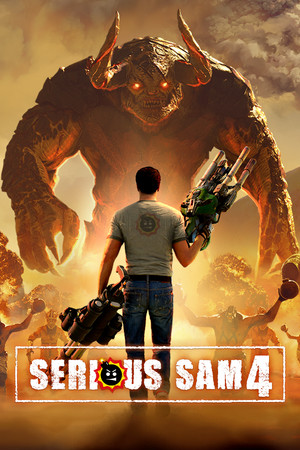 88%Serious Sam 4
 83%Serious Sam: Siberian Mayhem
 82%Serious Sam Classics: Revolution
 82%Shadow Warrior Classic Redux
 82%Crimsonland
 82%BRUTAL JOHN 2
 81%Guns, Gore and Cannoli 2
 81%DUSK
Review evidence
Why players say this
Review evidence
Why players say this
Steam review verdict
This retro arcade FPS remake delivers co-op chaos, massive enemy hordes, and a huge weapon arsenal, but frame drops, stuttering, and repetitive, tedious gameplay hold it back.
What players like
Co-op enhances fun: Players consistently report that cooperative play is much more enjoyable, often describing it as the best way to experience the game. Playing with friends multiplies the chaos and prevents boredom.
Overall awesome game: Reviewers frequently describe the game as awesome, brilliant, and very good, highlighting its broad appeal and high quality within its genre.
Game has aged well: Despite being old, the game remains impressive and fun, playing briskly and cheerfully even decades after release. Many consider it timeless and still holding up incredibly well.
Versatile weapon arsenal: The game offers a large and varied arsenal, including shotguns, miniguns, rocket launchers, and more, providing diverse combat options.
Classic gameplay unchanged: The gameplay and atmosphere remain largely the same as the original, maintaining the same great experience that fans remember. This consistency is appreciated by long-time players.
Common complaints
Game feels outdated: Many reviewers consider the game old and outdated, noting it feels dull and monotonous after many years.
Gameplay is repetitive and tedious: Feedback frequently mentions that the game becomes boring quickly, with repetitive gameplay and tedious progression.
Multiplayer suffers from low population: Multiplayer is stressful because there are few players, leading to empty servers and high ping.
Repetitive music and style: Players note that the music becomes repetitive and the game's style grows tiresome by the end.
High difficulty is brutal: Players report that the game is extremely challenging even on normal difficulty, and the highest difficulty level overwhelms with enemy numbers, forcing many retries.
Gameplay and performance
Co-op multiplayer supported: Players highlight the availability of cooperative play, often supporting up to 16 players and enhancing the experience with friends. Some note that co-op can be buggy but it remains a popular feature.
Massive enemy hordes: The game is known for throwing hundreds or even over a thousand enemies at the player at once, creating chaotic and intense battles. This high enemy density is a core part of the experience.
Retro arcade FPS remake: The game is a remake or remaster of a classic 2001 FPS, preserving the old-school arcade feel. It is often called a boomer shooter due to its retro style.
Huge weapon arsenal: Players praise the large variety of weapons available, from classic guns to over-the-top inventions. The arsenal is a significant part of the game's appeal.
First-person shooter: It is a classic first-person shooter, often described as an old-school FPS. The gameplay revolves around shooting from a first-person perspective.
Frame drops and stuttering: Players frequently mention frame rate drops and stuttering even on powerful hardware. This includes drops on empty spaces and during autosaves.
Crashes and stability issues: Numerous reports describe crashes, freezes, and stability problems that can make the game unplayable. Issues include GPU crashes and server-related crashes.
Strong performance on high-end PCs: Many users report smooth performance at high frame rates and resolutions on modern gaming rigs. Locked 60 FPS and 4K 120 FPS experiences are mentioned.
Low system requirements: Multiple reports highlight that the game runs on very weak hardware, including low-end PCs and toasters. This suggests excellent accessibility for players with older or budget systems.
Multiplayer connection problems: Co-op and multiplayer modes suffer from connection errors, drops, and high ping. Some players cannot load multiplayer at all.
Recommendations
Strong co-op recommendation: Many reviewers highlight co-op as the ideal way to play, especially with friends. Playing together enhances the experience and provides a great way to blow off steam.
Positive general recommendation: Many reviewers simply recommend the game without specific caveats. It is described as highly recommended and worth playing.
Recommended for series fans: Fans of the Serious Sam series and old-school FPS games are likely to enjoy this title. It is especially praised as one of the best in the franchise.
Great for shooter fans: Fans of meaty, bloody shooters and run-and-gun action will find this game highly enjoyable. It is recommended for those who appreciate immediate and fun shooters.
Buy on sale only: A common sentiment is that the game is worth purchasing only during a sale. Reviewers suggest grabbing it at a low price.
Buying context
Community fair range: $1.00 - $4.00.
Game completion: 6.0h.
Session length: 4.0h.
The game is reported as fun immediately, especially in co-op, with no tutorial or progression gate; some players later find it repetitive.
Friction: Empty multiplayer servers make online modes hard to enjoy; Multiplayer achievements are hard to obtain; Spawn/trigger bugs and need for a 60 FPS lock; Repetitive enemy spam and huge empty levels; Small field of view.
Unlock drivers: Co-op makes the solo challenge easier and the game more fun; Locking frame rate to 60 FPS fixes stuck spawns; Playing one difficulty higher in co-op improves pacing; Co-op respawn-on-death flow avoids constant loading.
Player profiles
Co-op Campaign Party Player: Plays campaign co-op with higher difficulty, respawns instead of reloading, and enjoys LAN or online team chaos. Motivation: Shared chaotic run-and-gun co-op sessions with friends. Stance: buy.
Old-School FPS Nostalgia Veteran: Runs and guns through hordes, seeks secrets, plays high difficulties, and compares series entries. Motivation: Relive classic arena FPS nostalgia and fast, uncompromising run-and-gun action. Stance: buy.
First-Time Classic Shooter Newcomer: Plays solo on Normal or Hard, learns arena movement and weapon switching, and may try co-op. Motivation: Discover a celebrated old-school shooter without prior nostalgia. Stance: buy.
Platform notes
The provided Windows cohorts report positive game performance, with no significant instability or poor-performance evidence in the included snippets. The 12-15GB VRAM cohort specifically notes smooth 4K 120 FPS play.
Windows <8GB VRAM: positive. The single included low-VRAM report is recommended and describes the game as a wonderful FPS, with no performance problems mentioned.
Windows 12-15GB VRAM: positive. All included reports are recommended and describe solid technical performance, including one report of extremely smooth 4K play at 120 FPS.
Steam Deck: Feedback is dominated by positive Linux and SteamOS compatibility evidence: a native 64-bit Vulkan build, automatic Xbox controller recognition, and playability with default Proton. No reports were found for small text, external launchers, battery drain, anti-cheat errors, or frequent crashes on Steam Deck. A single legacy disc install and launch complaint is historical and does not apply to the current Steam build. The audit therefore lands in the Seamless tier.
Linux and Proton: The Linux/Proton feedback is overwhelmingly positive. Serious Sam Fusion provides a native 64-bit Vulkan Linux build, and at least one reviewer reports it works with the default Proton configuration. Reviewers mention no Linux-specific launch failures, anti-cheat or DRM blockers, or required workarounds. Generic mentions of fullscreen, performance, or crashes are not tied to Linux, Proton, SteamOS, or Wine, so they do not indicate Linux compatibility friction.
Other review notes
HD remaster of classic: Multiple clusters describe the game as an HD remaster or remake of the original 2001 title, with modernized graphics and updated UI. Clusters 1 and 2 emphasize this core identity, while clusters 20 and 31 reinforce it as an enhanced re-release.
Built on Serious Engine 3: The HD version runs on Serious Engine 3, which enables the graphical enhancements. Clusters 9, 12, and 27 consistently mention this engine as the foundation for the remaster.
Compared to Doom and Quake: Reviewers frequently compare the game to classic FPS titles like Doom, Quake, and Duke Nukem 3D. Clusters 5 and 10 draw these parallels to old-school shooters.
Game length varies widely: Playtime ranges from about 4 to over 50 hours depending on playstyle. Clusters 6 and 21 report different completion times, indicating varied experiences.
Originally released in 2001: The original game was released in 2001, making it over two decades old. Clusters 13 and 25 confirm this release year.