- Excellent remake quality and fidelity
- Outstanding horror atmosphere and tension
- Beautiful sound design and music
- Touching story about sisterly bond
- Poor optimization causes stuttering issues
- Combat feels slow and clunky

Emotions
Archetypes
Hardware
What players like:
Common complaints:
Gameplay feedback:
Performance notes:
Recommendations:
Other player notes:
Similar games
Blend with other games






Review evidence
Why players say this
Review evidence
Why players say this
Steam review verdict
An excellent remake with tense horror atmosphere, beautiful sound and a touching sisterly story, though poor optimization causes stuttering and combat feels slow and clunky.
What players like
Excellent Remake Quality: Players consistently praise the remake as high quality, well done, and a pleasant surprise that honors the classic original. Many describe it as worth playing and satisfying overall.
Outstanding Horror Atmosphere: The game delivers a genuinely terrifying, creepy, and eerie atmosphere that many reviewers highlight as a standout feature. Visuals and ambience combine to create a perfectly dreadful mood.
Fantastic Overall Game: Many players describe the game as amazing, beautiful, and excellently done, with great gameplay and presentation. It is widely regarded as a very good experience.
Beautiful Sound and Music: The sound design, soundtrack, and music are repeatedly praised for enhancing the atmosphere and vibes. Reviewers find the audio elements outstanding and perfectly suited to the game.
Touching Story and Characters: The narrative and characters are described as emotionally moving, deep, and very touching. Players find the story magnificent and the characters likeable.
Common complaints
Poor Optimization and Stuttering: Reviewers frequently report disappointing optimization, stutters even on good PCs, and slowdowns in later sections. Performance issues significantly affect playability.
Combat Feels Slow and Clunky: Many players describe combat as slow, clunky, frustrating, and monotonous. This drags down the overall gameplay experience.
Costumes Require Excessive Points: Unlocking costumes requires 3 million points each, which forces extensive grinding and feels insulting as a reward. Players repeatedly criticize the astronomical cost for a single outfit.
Tanky Enemies and High Difficulty: Enemies have high stats and are very tanky, making combat tough. Early game difficulty is notably high.
60fps Frame Rate Lock: The game is locked to 60fps, which players find odd and limiting. Multiple mentions highlight this as an unnecessary restriction.
Gameplay and performance
Photography-based ghost combat: Combat focuses on photographing ghosts with a Camera Obscura, where photo quality and timing determine damage. Players use the camera to exorcise spirits throughout the game.
Multiple endings with replay: The game features six endings that are unlocked through multiple playthroughs, including a true ending. New Game+ provides carry-over progression, encouraging repeated runs.
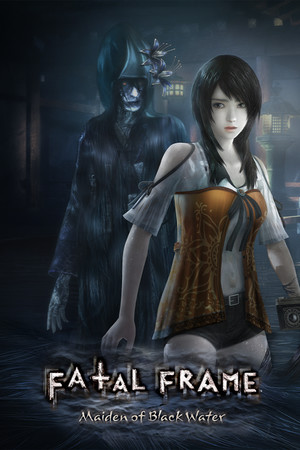
Remake of Fatal Frame II: This is a remake or remaster of Fatal Frame II: Crimson Butterfly (Project Zero 2), originally a PS2 title. It updates graphics and adds new endings.
Horror exploration with jump scares: The game is a horror exploration game featuring jump scares and a chilling atmosphere. Ghosts appear suddenly during exploration, adding to the tension.
Costume unlock point shop: Outfits and cosmetics are unlocked via a point shop, requiring points earned across multiple playthroughs. Some costumes demand a large amount of points.
60 FPS cap frustration: Many players report that the game is natively locked at 60 FPS on PC, limiting performance on high-refresh monitors. This cap is a frequent complaint and is seen as a major drawback.
Poor optimization widely reported: Numerous players describe the game as poorly optimized, with issues such as slowdowns and bad performance on lower-end PCs. This is a common theme across multiple clusters.
Frame drops and stutters: Frame drops occur randomly even on high-end hardware, and stutters are frequently reported. These issues detract from the overall smoothness of the game.
Cutscenes capped at 30 FPS: Cutscenes run at 30 FPS while gameplay is capped at 60 FPS on PC, and the PlayStation version is capped at 30 FPS overall. This inconsistency is often mentioned in reviews.
Steam Deck runs well: Many users report that the game works great on the Steam Deck, with crisp visuals and rare performance dips. This is a positive highlight for portable play.
Recommendations
Solid for Survival Horror Fans: The game is highly recommended for fans of the survival horror genre, fitting well into any survival horror library. Reviewers consider it a worthwhile addition for those who enjoy classic atmospheric horror.
Great Entry Point for Newcomers: Many reviewers recommend this game as an excellent starting point for players new to the Fatal Frame series. It serves as a welcoming introduction that helps newcomers get into the franchise without prior experience.
Recommended for Japanese Horror Fans: Reviewers strongly recommend the game to fans of Japanese horror games and those who enjoy titles like Silent Hill. It is praised for delivering an authentic J-Horror experience.
General Positive Recommendations: Many reviewers simply give strong positive recommendations without specific caveats, urging others to play the game. The overall sentiment is that it is definitely worth playing.
Not Recommended by Some: A minority of reviewers do not recommend the game, citing reasons such as annoying combat mechanics or that it is only for diehard fans. These negative opinions are less common but notable.
Buying context
Community fair range: $30.00 - $40.00.
Game completion: 77.0h.
Story completion: 15.0h.
Endgame: 60.0h.
The game often starts rough because early combat is slow, tedious, and limited by weak tools and late tutorials, but many players report it clicks once they become familiar and unlock or upgrade more combat options; a substantial minority still finds it repetitive or never satisfying.
Friction: Very slow, tedious early combat; Rough opening hours; Early enemies are HP sponges, aggressive, and can heal while the camera is weak; Combat tutorial arrives after a ghost battle and prompts are poorly timed; Significant learning curve for new combat mechanics; Early-game balance was seen as unfair before patches.
Unlock drivers: Getting familiar with the combat system; Unlocking more combat-related upgrades; Upgrading the Camera Obscura; Patches fixing early-game balance and film grain; Learning new mechanics and controls through modern tutorial tips.
Player profiles
The Nostalgic Series Veteran: Compares every system against the PS2/Wii originals, debates combat and balance changes, hunts new endings and side stories, and often replays multiple entries in the series. Motivation: To relive a beloved classic and see how faithfully (or how boldly) the remake reinterprets the original they grew up with. Stance: buy.
The Survival-Horror Connoisseur: Explores thoroughly, reads notes and documents for lore, analyzes level design and pacing, and frames the game through comparisons to other horror titles. Motivation: To enjoy a polished, atmospheric entry in the survival-horror genre and judge its design against the classics they already know well. Stance: buy.
The Completionist Grinder: Runs multiple playthroughs, farms points by replaying late chapters, follows guides for snaps and endings, and optimizes save-scumming for efficient unlocks. Motivation: To fully complete the game—every ending, achievement, ghost entry and outfit—treating the title as a checklist to be mastered. Stance: sale.
Platform notes
Across the largest Windows hardware cohorts, performance reports mostly skew negative, especially on lower-VRAM and 8–11GB VRAM systems where optimization, stuttering, and the 60 FPS cap dominate. Two higher-memory cohorts show mixed results, with some users running the game smoothly while others report crashes or unstable frame rates.
Windows 12-15GB VRAM / 16-31GB RAM: negative. Most reports cite poor optimization, stuttering, and a 60 FPS cap; only isolated users say it runs well on higher-end hardware.
Windows 8-11GB VRAM: negative. The cohort is dominated by complaints about unstable frame timing, forced upscaling, stuttering, and the 60 FPS cap, with little evidence of smooth performance.
Windows <8GB VRAM / <16GB RAM: negative. Performance complaints clearly dominate, including awful optimization, frame-timing issues, instability, and the 60 FPS lock, though a few users manage to run it acceptably.
Steam Deck: The Steam Deck audit shows a playable but compromised experience. The game can reach 30fps on Deck, but users commonly need minimum settings, FSR 2, Proton Experimental or GE Proton, and sometimes manual GPU clocks or Lossless Scaling. Stability is mixed: some report smooth 30fps, while others face crashes after cutscenes, black screens with regular Proton, forced upscaling, frame pacing issues, and 30fps cutscenes. No external launcher or anti-cheat barrier appears in the feedback. Because Proton Experimental or equivalent tinkering is commonly required, friction meets the Tinkering Required band, but the game is not fully broken.
Linux and Proton: The Linux/Proton picture is workable but not frictionless. Users report cutscene crashes, black pre-rendered videos under default Proton, and instability with newer GE Proton versions, so stable play often depends on Proton Experimental, specific GE Proton builds, launch options, and community fixes such as Lyall's Fix. Positive reports show the game can run well on Steam Deck and desktop Linux once configured, which keeps the overall assessment in the tinkering-required range rather than broken.
Extra review signals
Monetization: The reviewed feedback is dominated by complaints about cosmetic costume DLC that is sold separately and priced aggressively, and about an expensive in-game 'photo point' upgrade economy. Photo points are earned through gameplay, not purchased with real money, so this is RNG/grind rather than monetization. The only signal that could indicate real-money spending is a claim that charms are sold as a pay-to-win mechanic, but the reviewer explicitly ties this to pushing pre-orders, which the scoring criteria exclude from MTX evidence on its own. No review provides direct evidence of an in-game cash shop, paid gacha, loot boxes, currency obfuscation, or purchasable power after the base purchase. Under the override rules, DLC costumes, pre-order bonuses, and in-game grind cannot push the score above 20.
External guides: The reviews show a broad external-data dependency, but the decisive complaint is Tier 1 resource grinding. Multiple users explicitly cite point farming, drop rates, and repeated resource acquisition for camera and charm upgrades, which triggers the strict priority rule. Secondary themes include inventory and collection spreadsheets, unclear tutorials, and navigation problems.
Other review notes
Remake of Fatal Frame II: Reviewers consistently identify this game as a remake of the classic Fatal Frame II: Crimson Butterfly. Many compare it directly to the original PS2 version, noting it recreates one of the greatest horror titles of that era.
Remake of a classic horror game: The game is widely described as a remake of a 2003 PS2 horror classic and one of the best in the saga. It is particularly noted for reinterpreting a Wii horror title as well.
First Fatal Frame experience: Several reviewers mention this is their first entry into the Fatal Frame series, while others are long-time fans who have played all previous games. The remake serves as both an introduction and a tribute to veterans.
Multiple endings and new endings: The game features several endings unlocked across multiple playthroughs, including new perfect endings added specifically for this remake. Reviewers appreciate the additional endings and side stories.
Hope for more remakes: Many reviewers express hope for remakes or remasters of the first and third Fatal Frame games, as well as future entries in the series. The quality of this remake fuels desire for more.