- Dual gas station/store management loop highly satisfying.
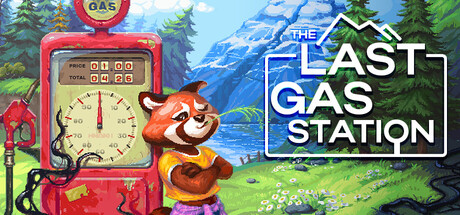
- Pixel-art visuals and mystery-driven story praised deeply.
- Relaxing, polished experience with thoughtful design choices.
- High replayability with frequent updates and content additions.
- Upgrades increase workload without meaningful automation benefits.
- Fuel mechanics and lack of hiring create tedious repetition.
Emotions
What players like:
Common complaints:
Gameplay feedback:
Performance notes:
Recommendations:
- -
No data available
Other player notes:
- -
No data available
Similar games
Blend with other games 75%Rest Area Simulator
 75%Discounty
 75%Convenience Stories
 74%Fuel Harvest Together
 74%Supermarket Simulator
 73%Tobacco Shop Simulator
 73%My Café Manager Simulator
 73%Laundering Simulator - Clean Cash and Laundry
 73%inKONBINI: One Store. Many Stories
 73%Definitely Not Fried Chicken
 73%Night Rolls Cozy Store
 73%Exotica 2: Pet Shop Simulator
Review evidence
Why players say this
Review evidence
Why players say this
What players like
Satisfying dual management gameplay loop: The core gameplay revolves around managing both a gas station and convenience store, with tasks like pricing, upgrades, and customer interactions. Players describe the loop as fluid, engaging, and varied, with mini-games and progression systems breaking repetitiveness.
Stunning pixel-art visuals praised: Players consistently highlight the game's high-quality, detailed pixel-art style, describing it as gorgeous, immersive, and cozy. The art direction is frequently rated as a standout feature, contributing to the game's atmospheric charm.
Mystery-driven storyline with depth: The game features an intriguing narrative centered around mystery elements, including potential aliens, government conspiracies, and hidden lore. Players appreciate the story's depth, humor, and replayability incentives like uncovering secrets.
Relaxing, stress-free experience: The game is frequently praised for its calm, well-paced, and non-stressful design. Players highlight the absence of forced timers and the comfortable retro-style gameplay as key contributors to its relaxing atmosphere.
Thoughtful design and polish: Reviewers emphasize the game's deep care for player experience, citing no major bugs, improved pacing over the demo, and accessible mechanics. The scaling progression and lack of linear frustration are also noted as strengths.
Common complaints
Upgrades increase workload instead of automating: Progression systems are counterintuitive, as upgrades introduce *more* manual tasks (e.g., '수동 세차장') rather than reducing workload. Players expect automation ('기름 자동화') to streamline gameplay, but it often backfires by adding busywork without clear rewards.
Fuel mechanics feel unrealistic and tedious: Players report that the fuel tank capacity (250L) is unrealistic for a gas station, and constant refill requests ('기름 발주 요청') become repetitive and disruptive to gameplay flow. This creates an unnecessary chore rather than a meaningful management task.
No employee hiring to delegate tasks: The absence of a hiring system forces players to handle all tasks manually, even as the workload scales. This omission is particularly frustrating in late-game scenarios where busyness feels unrewarding (e.g., no bonuses for efficiency).
Limited world and exploration options: Players express disappointment in the game’s scope, citing only one explorable street and a lack of open-world elements (e.g., compared to *Stardew Valley*). This makes the environment feel confined and underdeveloped.
Poor layout causes excessive running: Building and station layouts force players to constantly run between distant locations, creating artificial frustration. This design choice disrupts immersion and makes tasks feel unnecessarily time-consuming.
Gameplay and performance
Gas station and store management core: The game centers on running a gas station with fuel refilling, repairs, and cleaning minigames, alongside managing a convenience store. Players engage in shopkeeping tasks with interactive mini-games tied to progression.
Story and mystery elements: Progression ties into a narrative layer with mystery events, unlockable lore, and conspiracy theories. Players uncover story-driven content (e.g., dictaphone collectathons) while earning money and decorating their station.
Dynamic customer interactions and pricing: Features real-time customer dialogue trees and dynamic pricing systems (e.g., discounts for litter cleanup). Players balance service quality, pricing strategies, and parallel tasks like serving multiple customers.
Progression via upgrades and expansions: Players progress by earning money to unlock upgrades, expand the gas station, and restore abandoned facilities. The loop follows a satisfying 'earn → upgrade → repeat' structure with gradual mechanic unlocks.
Day/night cycles and time management: Includes day/night cycles for time management, with parallel tasks like serving customers, running errands (e.g., gas/oil deliveries), and balancing economic strategies without rigid time constraints.
Limited external monitor support: The game does not support external monitors, such as ultrawide screens, when docked on Steam Deck. It also only recognizes the Deck's native resolution in fullscreen mode.
Runs well on Steam Deck: Players report that the game runs smoothly and performs well on the Steam Deck.
Buying context
Game completion: 10.5h.
Story completion: 10.5h.