- Compelling story and characters
- Enjoyable gameplay with improved graphics
- Authentic 1960s atmosphere
- Numerous technical issues and bugs
- Repetitive and grindy gameplay
- Lost traditional Mafia identity
Emotions
What players like:
Common complaints:
Gameplay feedback:
Performance notes:
Recommendations:
Other player notes:
Similar games
Blend with other games







Review evidence
Why players say this
Review evidence
Why players say this
What players like
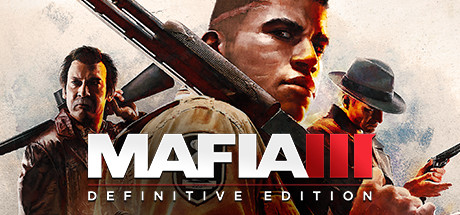
Compelling Story & Characters: The story, characters, and overall narrative presentation are consistently highlighted as the game's strongest assets. Players praise the compelling plot, well-developed characters, and immersive storytelling, often stating these elements compensate for any gameplay shortcomings.
Enjoyable Gameplay & Improved Graphics: Players generally find the game enjoyable, citing satisfying gunplay, improved graphics (especially in the Definitive Edition), and overall solid gameplay mechanics. Many were pleasantly surprised by the game's quality, especially given initial negative reviews.
Series Evolution & Improvements: The game is seen as a significant evolution for the Mafia series, offering more content, improved gameplay fluidity, and better graphics compared to its predecessors. Reviewers appreciate its unique approach while still connecting to the established lore, particularly through characters like Vito.
Authentic 1960s Atmosphere: The game excels in its atmospheric portrayal of 1960s New Bordeaux (New Orleans), authentically depicting the era's social issues, including racism and corruption. The detailed world-building and immersive environment contribute significantly to the player's experience.
Excellent DLC Content & Value: The included DLCs are highly praised for adding significant value, variety, and often superior storytelling compared to the main game. They are seen as essential for breaking up repetition and enhancing the overall experience, making the game a great value, especially on sale.
Common complaints
Numerous Technical Issues & Bugs: Players consistently report a high volume of technical issues, including frequent crashes (especially on startup or when switching to fullscreen), persistent bugs (some game-breaking and unfixed for years), poor optimization leading to low FPS and stuttering, and various graphical glitches. These issues significantly hinder playability and overall enjoyment.
Repetitive & Grindy Gameplay: The core gameplay loop, particularly the district takeover and side missions, is overwhelmingly repetitive and monotonous. Players feel forced into a constant grind of similar tasks (e.g., clearing outposts, destroying businesses, interrogating informants) to progress the story, leading to boredom and artificial lengthening of the game.
Lost Mafia Identity: Many long-time fans feel the game deviates significantly from the established 'Mafia' series identity. It's criticized for abandoning the linear, character-driven storytelling and unique atmosphere of its predecessors in favor of a generic open-world, GTA/Ubisoft-style formula, leading to a loss of charm and immersion.
Weak Story & Characters: The story and characters are frequently criticized for being underdeveloped, unengaging, and predictable. The main protagonist, Lincoln Clay, is often described as one-dimensional and difficult to empathize with, while the narrative itself is perceived as thin, stretched out by repetitive gameplay, and lacking emotional depth or memorable antagonists.
Empty Open World: The open world is widely considered empty, lifeless, and lacking meaningful activities outside of the repetitive main objectives. Players feel there's little to do or explore, and the design choice to make it open-world ultimately detracts from the narrative and overall experience.
Gameplay and performance
Repetitive Territory Takeover Loop: The core gameplay loop revolves around taking over districts by performing repetitive tasks like damaging businesses, interrogating informants, and eliminating sub-bosses to lure out and defeat main bosses. Players then assign these territories to their underbosses, influencing the game's ending.
Revenge Story & Racial Themes: The central narrative follows Lincoln Clay, an African-American Vietnam veteran, on a brutal quest for revenge against the Italian mafia who betrayed and murdered his adoptive family. The story prominently features themes of racial discrimination in 1968 New Bordeaux.
Departure from Traditional Mafia: Mafia III significantly deviates from previous Mafia titles by adopting an open-world, GTA-like structure focused on territory control, rather than the linear, story-driven Italian Mafia narratives of its predecessors. This change in formula has led to mixed opinions among fans of the series.
Open World Structure: The game features a large, seamless open world that allows for free exploration and a non-linear progression of missions. While it offers freedom, some players noted that the open-world activities often lead to repetitive quest structures.
Effective Stealth Mechanics: Stealth mechanics are a viable and often enjoyable approach to missions, allowing players to clear areas using silenced weapons and takedowns. While effective, some found the AI predictable, limiting the variety of stealth encounters.
Numerous Bugs & Glitches: The game is plagued by numerous bugs, ranging from minor visual glitches and audio issues to critical problems like mission progression blockers, infinite loading screens, and frequent crashes.
Fullscreen Mode Issues: A common and severe issue is the game's inability to run properly in fullscreen mode, often leading to crashes, black screens, or freezes. Players frequently resort to workarounds like windowed mode or disabling fullscreen optimizations.
Inconsistent Graphics Quality: Graphics quality is inconsistent, with some players noting blurriness, outdated textures, and visual artifacts. While some improvements were made in the Definitive Edition, the overall visual fidelity is considered mediocre by many.
Poor PC Performance & Optimization: Many players report significant performance issues, including low and unstable FPS, stuttering, and frequent crashes, even on high-end systems. This indicates poor optimization for modern hardware.
Startup Workarounds Needed: Some startup issues and crashes can be resolved by bypassing the game's launcher, running in compatibility mode (e.g., Windows 7), or as an administrator.
Recommendations
Divisive for Mafia fans: Player reception of Mafia III is heavily influenced by its relationship to previous Mafia titles. Many fans of Mafia I and II found Mafia III to be a departure from the series' core identity, particularly due to its open-world design and repetitive gameplay. However, some players, especially those who approached it as a standalone game or enjoyed its unique elements, found it to be a worthwhile experience, often recommending it as part of the trilogy.
Buy only on deep sale: A recurring theme is the recommendation to purchase the game only when it's heavily discounted, often as part of a bundle. Many players feel the game's full price is not justified due to its flaws, but it becomes a worthwhile purchase at a significantly reduced cost. Conversely, a strong sentiment against buying the game at all, or at full price, is also present, citing various issues.
Generally positive, worth playing: Despite its criticisms, a significant portion of players found the game to be enjoyable and worth playing. Many recommend it, often with caveats about its flaws, but emphasize that it offers a good experience, especially for its price or if approached with tempered expectations. Review scores from players often hover around average (6-7/10), indicating a mixed but generally positive reception for those who stick with it.
Repetitive gameplay and bugs: The game is widely criticized for its repetitive gameplay loop, particularly the side quests and open-world activities, which many found tedious and unengaging. Technical issues like bugs, glitches, and crashes are also frequently mentioned, significantly detracting from the experience for many players. Some even suggest skipping the game entirely or watching story compilations instead of playing.
Strong story and characters: One of the most consistently praised aspects of Mafia III is its compelling story, particularly the revenge narrative and the strong main character. Many players highlight the narrative as the primary reason to play the game, often suggesting that it compensates for other gameplay shortcomings. The rich setting and atmosphere also contribute to the story's appeal.
Other review notes
Deviates from Mafia series' identity: Many players compare Mafia III unfavorably to its predecessors, Mafia I and II, noting a significant departure in gameplay style. They feel it leans more towards a generic open-world GTA or Ubisoft-like experience rather than the linear, story-driven Mafia identity.
Missed potential and unpolished: Players frequently mention that Mafia III had immense potential but ultimately fell short due to unfulfilled promises, monotonous mission design, and a lack of polish. Many feel it was a missed opportunity to create a truly great game.
Persistent technical and launch issues: A significant number of players report technical issues, particularly with fullscreen mode, crashes on startup, and general instability. Many resorted to community-found fixes and workarounds to get the game running smoothly, indicating poor optimization and lack of developer support.
Lengthy gameplay experience: Players generally agree that the game offers a substantial amount of content, with main story playthroughs ranging from 25-45 hours and total playtime, including side content and achievements, extending well beyond 50 hours.
Mixed reception for protagonist: Player opinions on the protagonist, Lincoln Clay, are mixed; some find him a compelling anti-hero, while others find his motivations and character less engaging than previous Mafia protagonists like Vito Scaletta and Tommy Angelo.