- Easy to learn
- Fun and addictive
- Innovative Mahjong roguelike
- Missing mahjong elements
- Hard mode too difficult
- UI needs polish
Emotions
Archetypes
What players like:
Common complaints:
Gameplay feedback:
Performance notes:
Recommendations:
Other player notes:
Similar games
Blend with other games


Review evidence
Why players say this
Review evidence
Why players say this
Steam review verdict
An easy-to-learn, addictive Mahjong roguelike with an innovative twist, but it omits key Mahjong elements, the hard mode is punishing, and the UI could be smoother.
What players like
Easy to learn: The game is highly approachable for players with little or no mahjong knowledge, simplifying rules without losing core fun. It lowers the traditional mahjong barrier, making it playable and enjoyable for beginners.
Fun and addictive: Players consistently describe the game as fun, engaging, and addictive, often losing track of time. The festive atmosphere and replayability contribute to its strong appeal.
Innovative Mahjong roguelike: The game successfully blends traditional Mahjong mechanics like chi and pong with roguelike and deckbuilding elements. This novel combination provides a unique, strategic, and highly engaging solo experience.
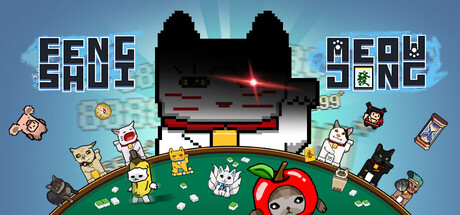
Appealing cat memes: Cat meme elements are a standout feature, adding charm, humor, and therapeutic cuteness to the game. The cats are considered the soul of the game, enhancing its overall appeal.
Engaging feng shui system: The integration of feng shui and five-element mechanics adds a layer of strategic depth. The item placement system and elemental bonuses are considered interesting and well-designed, enhancing the gameplay experience.
Common complaints
Missing mahjong elements: Players note the lack of classic mahjong features like kong (gang), seven pairs, and thirteen orphans, which reduces the mahjong feel and limits strategic variety. Clusters 8, 9, 14, 92, 132, 135, 157 all cite missing hands or mechanics.
Hard mode too difficult: Multiple reviews report hard mode has an unreasonable difficulty curve and steep jump from normal, causing pressure and frequent failures. Clusters 1, 5, and 100 all highlight this issue.
UI needs polish: The UI is described as ugly, rough, and in need of improvement, with cluttered visuals and lack of prominence for key information. Clusters 2, 22, 28, 29, 86, 161 all mention UI or visual presentation issues.
Steep learning curve for beginners: New players without mahjong knowledge find the game hard to learn, with a steep learning curve and difficulty winning with advanced combinations. Clusters 3 and 126 mention the many tile types and rule complexity, while clusters 84 and 85 indicate winning hands are hard to remember, similar to a straight flush.
Game heavily luck-dependent: Many reviews state the game relies too much on luck, with randomness affecting run quality and leading to frustrating defeats. Clusters 6, 20, 47, 74, 95 all emphasize this, and cluster 6 even calls the gameplay 'heavily luck-dependent'.
Gameplay and performance
Mahjong-roguelike hybrid gameplay: The game is consistently described as a blend of mahjong tile mechanics with roguelike progression and deck-building elements. It combines traditional mahjong hands with roguelike randomness and strategic builds.
Balatro-like roguelike adaptation: Reviewers frequently compare the game to Balatro, noting that treasures function like Jokers and the scoring loop is similar. It is widely seen as a mahjong version of Balatro with innovative twists.
Core mahjong pattern mechanics: Gameplay involves matching tiles into pairs, triplets, sequences, and other patterns to score points. Players must adjust cards to form effective hand combinations.
Cat-themed mahjong game: The game prominently features cats as a selling point, combining mahjong gameplay with cat themes. Reviewers mention the inclusion of various cats and known characters.
Traditional mahjong rules retained: The game retains traditional mahjong tile patterns and includes chi and pong mechanics. It is playable without prior mahjong knowledge, making it accessible yet authentic.
Performance degrades over time: Multiple players report that the game initially runs well but suffers from frame rate drops and slowdowns during prolonged play sessions. This suggests a memory leak or optimization issue that worsens over time.
Great on low-end hardware: Some users highlight the game's impressive optimization, noting it can run smoothly on potato PCs, even better than Doom. This contrasts with those experiencing performance issues, indicating variability across systems.
In-game animations slow tempo: A player complains that animations inserted during gameplay interrupt the flow and reduce the pace. This feedback is about game pacing rather than technical performance.
Recommendations
Great for Mahjong beginners: Multiple reviewers highlight the game as accessible and enjoyable for players unfamiliar with Mahjong rules. It is recommended for casual players and beginners, though veterans may find it less traditional.
Recommended for roguelike fans: The game's roguelike elements are a major draw, with reviewers recommending it to fans of roguelike strategy games and roguelike card games. Its blend of roguelike mechanics and Mahjong is seen as engaging.
Casual and relaxing: The game is suitable for laid-back players and those who want a relaxing experience. Reviewers recommend it for short sessions, quick rounds, and casual play.
Highly recommended overall: Reviewers strongly recommend the game, praising its general quality and value. It is described as definitively worth playing and buying.
Good for Mahjong players: The game is recommended for Mahjong enthusiasts and players familiar with the rules. It offers a new experience for traditional Mahjong fans, despite being different from the classic game.
Buying context
Community fair range: $3.00 - $6.00.
Game completion: 26.0h.
Session length: 2.5h.
The game is instantly fun and addictive, with a quick tutorial that helps even total beginners understand the scoring system right away, leading to immediate engagement.
Friction: Weak new player guidance; Randomness in treasure acquisition; Plain art style or UI; Repetitive cat meowing sound effects.
Unlock drivers: Completing the tutorial.
Player profiles
Casual Mahjong Newbie: Freely combine tile patterns, ignore win conditions, chase high scores for instant satisfaction. Motivation: Easy to learn, adorable cat theme, and no need to understand traditional mahjong rules to enjoy scoring combos. Stance: buy.
Roguelike Deckbuilder: Experiment with different card/treasure builds, optimize treasure placement across eight directions, and focus on long-term growth. Motivation: Building synergistic combinations, exploring diverse strategies, and mastering the strategic depth over repeated runs. Stance: buy.
Traditional Mahjong Purist: Focus on authentic mahjong patterns, compare to traditional rules, and analyze treasure/balance decisions. Motivation: Evaluating the game's adaptation of mahjong mechanics and seeking a faithful yet balanced experience. Stance: sale.
Other review notes
Similar to Balatro: Many reviewers compare the game to Balatro, describing it as a mahjong-based version with similar roguelike mechanics. The comparison highlights the core gameplay loop of building hands and scoring points, but with notable differences in execution.
Cute cat theme: The game's theme centers on cats, featuring minimalist art style and cute cat visuals, including cat meme elements and companion characters. This aesthetic appeals to many players.
Eight distinct decks: The game features eight different decks, each with unique bonuses, providing high replayability and variety in playstyles. The full version includes six new decks compared to the demo.
Low price, good value: The game is praised for its low price point, offering good value for the content and playstyles available. Reviewers note it is reasonably priced, making it an accessible purchase.
Five elements and feng shui: The game incorporates Chinese cosmological elements like the five elements, feng shui, and yin-yang, which are integrated into the mahjong mechanics and theme. This adds a unique cultural flavor to the gameplay.