- Detailed astronomical information and educational value.
- Freedom to explore and procedural generation.
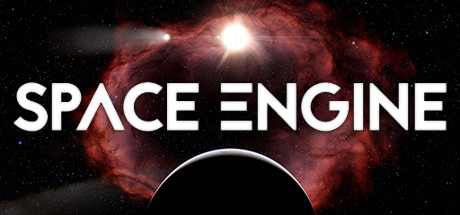
- Stunning visuals and comprehensive universe model.
- Ideal for space and astronomy enthusiasts.
- Procedurally generated planets lack realism.
- Camera bugs, crashes, and unclear controls.
Emotions
Archetypes
Hardware
What players like:
Common complaints:
Gameplay feedback:
Performance notes:
Recommendations:
Other player notes:
Similar games
Blend with other games





Review evidence
Why players say this
Review evidence
Why players say this
What players like
Detailed Astronomical Information: The game provides detailed information about celestial objects, including orbital parameters, planetary geology, and other astronomical data. This makes it a useful tool for both education and exploration.
Educational Value: The game is highly recommended for space and astronomy enthusiasts due to its educational content. It helps users learn about the solar system, celestial bodies, and various astronomical phenomena, making it suitable for educational purposes.
Freedom to Explore: Players have the freedom to explore the entire universe, including galaxies, stars, and planets. The game offers a vast and fun exploration experience, allowing players to visit and interact with various celestial bodies.
Procedural Generation of Celestial Bodies: The game offers procedural generation of celestial bodies, creating unique and detailed planets, stars, and other cosmic objects. This feature allows for endless exploration and discovery of varied and realistic celestial phenomena.
Stunning Visuals and Graphics: The game features astonishing and realistic visuals, including impressive graphics with photorealistic scenes and jaw-dropping sights. The visual fidelity and rendering are highly praised for their breathtaking quality.
Common complaints
Procedurally generated planets lack realism: Many planets in the game are procedurally generated and lack realistic atmospheric effects, often resulting in repetitive and unrealistic appearances.
Camera bugs and general bugginess: The game suffers from various bugs, including camera issues where the camera moves by itself, contributing to an overall buggy experience.
Lack of interactivity and purpose: The game is criticized for its monotonous gameplay and lack of a compelling story or purpose, making it seem boring to some players.
Frequent game crashes: The game is reported to crash frequently, indicating poor coding and stability issues.
Texture and object loading issues: Players experience bugs where textures fail to load, and objects disappear, affecting the visual quality and gameplay experience.
Gameplay and performance
Procedural Generation of Celestial Bodies: The game features a highly detailed procedural generation system for creating celestial bodies such as planets, stars, and galaxies. This includes realistic simulations using astrophysics equations, detailed planetary geology, and the ability to explore and edit these bodies.
Immersive Exploration of the Universe: Players can explore a vast universe with billions of planets, stars, galaxies, and nebulae. The game allows for immersive travel through various cosmic bodies and events, providing a rich and detailed exploration experience.
Realistic Universe Simulation: The game offers a realistic and scientific simulation of the universe, including accurate astronomical data and interactive simulation experiences. It serves as both a planetarium and a space simulator.
Planet Customization and Landing: Players can name, create, and land on planets, with tools for customization and editing. This feature enhances the exploration and interaction with celestial bodies.
Open-Ended Space Exploration: The gameplay is centered around open-ended exploration of space, allowing players to discover and study different planets, galaxies, black holes, and nebulae. It also includes educational elements about astronomy.
Optimization and performance: The game has mixed reviews on optimization, with some users reporting poor optimization and others praising its smooth and optimized performance.
Runs well on various hardware: The game runs comfortably on medium graphics and performs well on lower-end hardware, including older computers and most PCs.
Crashing issues: Several users have reported that the game crashes occasionally or constantly, which affects the overall gaming experience.
Performance issues on certain systems: There are performance issues reported on laptops, older systems, and when using high settings. Some users experience lag on lower-end devices.
Texture and rendering issues: There are reports of bugs with textures not loading and general texture rendering issues, which can impact the visual quality of the game.
Recommendations
Ideal for space and astronomy enthusiasts: The game is highly recommended for those interested in space, astronomy, and related fields. It is praised for its educational value and appeal to space enthusiasts, making it a must-try for anyone curious about the cosmos.
Recommended for a broad audience: The game is suggested for a wide range of players, including kids and adults, as well as those who enjoy quiet, reflective experiences. It is seen as a versatile game that can appeal to many different types of players.
Worth the price: Many reviews indicate that the game is worth its price, especially when on sale. Players feel they get good value for the cost, making it a worthwhile investment.
Suggested improvements and features: Players have suggested various improvements, such as better planet textures, more realistic celestial bodies, and a 'like the naked eye' feature. These suggestions indicate a desire for enhanced visual and realistic experiences.
Alternative games and comparisons: Some reviews mention alternative games like Universe Sandbox and Universe Simulator. These comparisons suggest that fans of similar games might enjoy this one as well.
Buying context
Community fair range: $25.00 - $30.00.
Session length: 3.0h.
The game initially offers an exciting and terrifying experience, particularly for space enthusiasts, but tends to become boring within 30 minutes to an hour of play.
Friction: Need to learn mechanics; Repetitive gameplay.
Unlock drivers: Initial excitement; Beauty of the game.
Player profiles
Educational Space Enthusiast: Exploring and capturing visuals, using the game as an educational tool. Motivation: Learning and visual exploration. Stance: buy.
Professional Astrophysicist: Using the game for detailed exploration and educational purposes, appreciating the scientific accuracy. Motivation: Scientific accuracy and educational value. Stance: buy.
Passionate Space Explorer: Immersive exploration, often using VR for a more engaging experience. Motivation: Passion for space exploration. Stance: buy.
Platform notes
The game generally performs well across different hardware cohorts, with most players reporting high frame rates and good optimization. However, there are some issues with crashes and performance drops in specific scenarios, particularly on lower-end hardware or when using non-Windows operating systems.
Windows <8GB VRAM: positive. The game runs well on this hardware, with high FPS on various settings, though some users report crashes and performance drops near black holes.
Windows 8-11GB VRAM: positive. The game is well-optimized, delivering high FPS at 1440p, though performance drops in demanding scenarios like near black holes.
Steam Deck: The analysis of user feedback for the Steam Deck experience reveals several critical issues impacting user satisfaction. Stability issues, including frequent crashes, are a significant concern. Compatibility problems with Linux and Proton are also prevalent, often requiring users to switch to Windows for optimal performance. Performance issues, particularly on lower-end configurations, and control difficulties further detract from the overall experience. These technical barriers collectively contribute to a less-than-ideal user experience, necessitating attention from developers to address these issues.
Linux and Proton: The game experiences significant compatibility and stability issues on Linux, with frequent crashes and rendering problems reported. Many users recommend playing the game on Windows for a better experience. Despite some positive experiences, the overall consensus indicates that the game does not work well on Linux, even with Proton GE.
Extra review signals
External guides: Users overwhelmingly praise SpaceEngine for its educational value, immersive experience, and credibility. The application is seen as an interactive encyclopedia and a tool for learning about celestial bodies, providing a beautiful and satisfying experience. The integration with Wikipedia and the detailed parameters of celestial bodies enhance its educational and professional appeal.
Other review notes
Request for gameplay enhancements: Players are requesting additional features such as a faster time speed and the inclusion of the current date within the game.
Desire for screensaver mode: Some players have expressed interest in having a screensaver mode added to the game, likely for aesthetic or practical purposes.