- Satisfying pack opening experience
- Highly addictive gameplay
- Great for simulation fans
- Bugs ruin experience
- Late-game performance issues
- Missing multiplayer mode
Emotions
Archetypes
Hardware
What players like:
Common complaints:
Gameplay feedback:
Performance notes:
Recommendations:
Other player notes:
Similar games
Blend with other games 86%Anime Shop Simulator ✨
 83%Supercar Collection Simulator
 81%KOTAMON: My Sis Found A Super-Rare Card In Her Cereal Box, So I Became A Garbage Man To Find The Entire Collection And Earn $1,000,000
 80%Tobacco Shop Simulator
 80%Cookard
 79%Blind Box Shop Simulator
 79%Weed Supermarket Simulator
 78%Plinbo: Roguelike Plinko
 78%Tabletop Game Shop Simulator
 78%Figure Shop Simulator
 78%Boba Cafe Simulator
 77%Stacklands
Review evidence
Why players say this
Review evidence
Why players say this
Steam review verdict
Pack opening is satisfying and gameplay highly addictive for simulation fans, but bugs, late-game performance issues, and missing multiplayer hold it back.
What players like
Satisfying pack opening experience: Opening booster packs and expanding collections is consistently praised as fun and rewarding. Players enjoy the anticipation and satisfaction of pulling cards, especially rare ones.
Highly addictive gameplay: Players report the game is extremely addictive due to gacha systems, engaging loops, and time passing quickly. Many mention losing track of time and finding it hard to stop playing.
Good overall game value: Players feel the game is worth the price, especially in early access. It offers good value for money and is considered a fantastic and fun game overall.
Fun and varied gameplay: The game offers lots to do, including card collecting, trading, shop management, and grading. The variety keeps the experience fresh and engaging.
Great for card game fans: The game scratches an itch for trading card game enthusiasts, including fans of Pokemon, Magic, and Yu-Gi-Oh. It provides a comfortable way to enjoy card collecting without real-world cost.
Common complaints
Bugs ruin experience: Bugs, including early access issues and general glitches, ruin immersion and make the game unplayable for some. This is a frequent complaint.
Missing multiplayer mode: Multiple players request a multiplayer or co-op mode. The absence of multiplayer functionality is a significant missing feature.
Annoying smelly customers: The mechanic of chasing smelly customers is widely disliked, as it feels annoying and adds little depth to the gameplay. Multiple clusters mention this specific frustration.
Card game unplayable: Players are disappointed that the card game component is not yet playable, despite being a core feature. This is a major missing functionality.
Slow development pace: The development roadmap is perceived as slow, with players wanting more frequent and substantial updates. The early access period has been criticized for its length.
Gameplay and performance
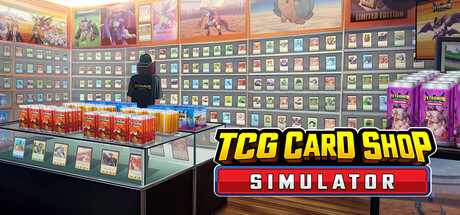
Shop management simulation: The game is described as a trading card shop simulator where players manage inventory, pricing, staff, and customer interactions, similar to other tycoon/sim titles.
Card pack opening and collection: Many reviews highlight the core mechanic of opening card packs to collect rare cards, which serves as a primary gameplay loop and revenue generator in the shop simulation.
Card grading system: A card grading mechanic allows players to send cards for evaluation, which can increase their value, adding a strategic layer to selling and collection.
Trading and selling cards: Players can buy, sell, and trade individual cards with customers, creating a dynamic economy and requiring price management skills.
Hiring and managing employees: Players can hire staff such as cashiers and stock clerks to automate tasks, improving shop efficiency and allowing focus on other activities.
Late-game performance issues: Multiple reports indicate late-game performance issues, including frame rate drops to 1 FPS, 3 FPS, or around 20-30 FPS, as well as stuttering, lag with many customers and items, and crashes at large shop sizes.
Smooth performance for some: Multiple players report that the game runs well, smoothly, and stably on various systems including Steam Deck, with optimized performance.
Crashes and loading issues: The game crashes frequently, especially after updates or at high levels, and some players cannot get past the loading screen.
Decoration feature lag: The decoration feature with cards causes lag, slow screen, and even motion sickness due to graphics strain.
High GPU temperatures: Players report that the GPU becomes very hot even at max settings, suggesting poor optimization for high-end hardware.
Recommendations
Highly recommended overall: Many reviews strongly recommend the game, with ratings of 10/10 and emphatic language like 'must buy.' This indicates broad positive reception.
Great for simulation fans: Reviews recommend the game to fans of simulation games, covering shop sims, management sims, and card collecting sims.
Recommended for TCG fans: Fans of trading card games (Pokémon, Magic, Yu-Gi-Oh) will enjoy this game, as many reviews specifically target that audience.
Great for relaxing gameplay: A large group of reviews highlights the game as perfect for relaxing, casual, or chill play, suitable even for multitasking.
For card collectors and gacha fans: Reviews recommend the game for card collectors and budget gacha players, noting its appeal to those who enjoy opening packs.
Buying context
Community fair range: $10.00 - $13.00.
Game completion: 100.0h.
Session length: 4.0h.
TCG Card Shop Simulator hooks players immediately with addictive pack-opening and shop management, but later becomes repetitive and grindy, causing enjoyment to drop.
Friction: Repetitive late-game grind; Tedious manual pricing for large stacks of cards; No multiplayer or co-op; Slow content updates; Hidden mechanics not explained to players; Balance issues in progression speed.
Unlock drivers: Opening booster packs and chasing rare cards; Upgrading shop size and unlocking new products; Satisfying progression with leveling and store expansion; Collecting and displaying rare cards.
Player profiles
Collection Completionist / Pack Addict: Grinds for profit, optimizes pricing and inventory, opens packs in bulk, and chases achievements late into the game. Motivation: Completion and the adrenaline rush of pulling rare cards from packs. Stance: sale.
Cozy Relaxed Manager: Plays at a relaxed pace, decorates the store, listens to external media, and enjoys the loop without pressure. Motivation: Stress relief and the satisfaction of building and managing a card shop casually. Stance: sale.
Multiplayer Enthusiast: Would play cooperatively, managing the shop together, trading cards, and competing in a shared economy. Motivation: Social interaction and cooperative play with friends. Stance: no buy.
Platform notes
Performance is inconsistent across hardware; mid-range and high-end systems suffer from poor optimization and crashes, while lower-end systems and the 12-15GB VRAM cohort run acceptably but with occasional stutter.
Windows 12-15GB VRAM: positive. Game runs well but can experience stutter with many items or tournaments.
Windows <8GB VRAM / <16GB RAM: positive. Runs well on low-end systems, though some users report frame drops in crowded areas.
Windows 8-11GB VRAM: negative. Users report frequent crashes, low FPS, and poor optimization, with most not recommending.
Steam Deck: The game has significant issues on Steam Deck, including a save bug that destroys progress, unreliable controller support, and severe frame drops when displaying many cards. While some users have no problems, these critical bugs make the experience broken for many players.
Linux and Proton: User reviews show that the game runs well on Linux via Proton 9, with no reported compatibility issues. No negative Linux-specific feedback was found.
Extra review signals
Monetization: The reviews overwhelmingly indicate that TCG Card Shop Simulator is a one-time purchase game with no real-money microtransactions, pay-to-win mechanics, or predatory monetization. The gacha element for opening card packs is purely cosmetic and uses only in-game currency. A single ambiguous mention of '$10' likely refers to in-game card values, not real money. The community praises the game for offering the excitement of pack opening without financial cost.
Mod reliance: No evidence of reliance on community fixes. All reviews highlight mods as optional enhancements, not required for bug fixes or performance. Game is fully playable without mods.
External guides: The primary complaint is the game's heavy reliance on external sources: hidden mechanics force wiki use, complex systems encourage spreadsheet management, and RNG elements push players to seek drop data. The game is commonly played on a second monitor, suggesting constant alt-tabbing for info.
Other review notes
PvP and tournament modes: Users propose adding player-vs-AI and player-vs-player tournament modes with card progression and trading features to enhance replayability.
Modding with shop sim: Players want to combine this game with a tabletop gaming shop simulator, integrating card gaming and shop management mechanics.