- Solid shop simulation gameplay
- Fun, relaxing collecting experience
- Satisfies painting and progression urge
- Repetitive painting and slow leveling
- Poor employee AI and performance issues
- Limited launch content and feedback ignored
Emotions
Archetypes
What players like:
Common complaints:
Gameplay feedback:
Performance notes:
Recommendations:
Other player notes:
Similar games
Blend with other games 84%Figure Shop Simulator
 84%Blind Box Shop Simulator
 81%Arcane Merchant
 80%My Café Manager Simulator
 80%Thrifty Business
 80%Another Brick in The Mall
 80%Anime Shop Simulator ✨
 79%Teddy's Haven - A Fantasy Inspired Shop Simulator
 79%Megastore Simulator
 79%Tobacco Shop Simulator
 79%Rewind 99
 79%Gamestonk Simulator: Gone Rogue
Review evidence
Why players say this
Review evidence
Why players say this
Steam review verdict
Solid shop simulation with a relaxing collecting experience and satisfying painting progression, but suffers from repetitive painting, slow leveling, poor employee AI, performance issues, and limited launch content with ignored feedback.
What players like
Solid shop simulation game: Players find the game to be a well-executed and enjoyable shop simulator, with many praising it as polished and fun. This feedback is consistent across multiple clusters.
Fun overall game: Overall, the game is considered fun and entertaining, with a broad appeal. It is generally well-received as an enjoyable experience.
Collecting and painting minis: Collecting, building, and painting miniatures is a fun and engaging part of the game. Players enjoy the creative and collecting aspects.
Better than similar simulators: The game is considered more polished and enjoyable than other shop simulators in its genre. It stands out positively when compared to similar titles.
Relaxing and chill experience: Players describe the game as relaxing, chill, and enjoyable to unwind with. The calming nature of the game is a common theme in the feedback.
Common complaints
Slow leveling and progression: Leveling is consistently described as slow, especially after level 10 or 30, with grinding becoming tedious. Players mention the XP gain slows dramatically in mid-levels, making progress feel painful.
Employee AI needs improvement: Employee AI is reported as bad, inconsistent, or not following assigned jobs. Issues include AI trying to be helpful when not wanted, focusing on one task, and having restock problems.
Painting minigame repetitive and annoying: Players frequently report that the painting minigame becomes repetitive after many attempts, is boring, and lacks pleasure. Some mention it feels too fast or is a pure reflex test with no connection to actual painting.
Not enough content at launch: Various feedback indicates a lack of content, with insufficient miniatures, missing planned features, and too early access. Some feel the game needs more improvement and potential.
Developer ignoring early access feedback: Some players report that same issues from early access remain unaddressed, with devs not fixing bugs or incorporating feedback. This leads to frustration with the game's progress.
Gameplay and performance
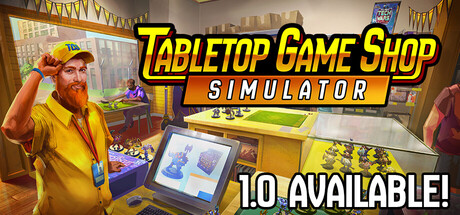
Shop simulation with tabletop gaming: The game is a shop simulation where you manage a tabletop game store, involving building, painting, and selling miniatures, with an in-game tabletop game element.
Miniature building and painting: Players can assemble, paint, and sell miniatures as a core part of the shop simulation, with a dedicated mini-game for painting.
Inventory and stock management: The game includes inventory management, restocking, and managing stock rooms, which is a key part of the shop simulation.
Wargame and battle system: There is a wargame mode with strategic battles and factions, allowing players to engage in tabletop battles with miniatures.
Mystery box and blind box mechanics: Players can open mystery boxes or blind boxes as part of the shop simulation, adding a collectible element to the game.
Performance issues and crashes: Many players report that the game suffers from frequent crashes, freezes, and frame drops during common actions like painting or moving objects, even on high-end systems like a 4080 and 32GB RAM at 2K.
Mixed performance feedback: While some players report that the game runs great or works well on Steam Deck, others experience low stability, heavy frame drops on launch, and optimization issues that cause more strain than high-settings Total War Warhammer 3, indicating inconsistent performance.
Recommendations
Good for simulation fans: Multiple clusters recommend this game to fans of store management, simulation, and tabletop games, suggesting it fits well within those genres.
Conditional recommendation: Many reviews give conditional recommendations, such as after fixes or for specific fan bases, showing mixed finality.
Good for Warhammer fans: Positive feedback highlights the game as a good fit for Warhammer enthusiasts, noting it avoids high costs.
Buying context
Community fair range: $5.00 - $10.00.
Game completion: 35.0h.
Session length: 2.0h.
Endgame: 20.0h.
The game offers an initial burst of fun through addictive pack-opening and shop management, but quickly becomes repetitive and slow-paced, with tedious painting and lack of depth leading to boredom.
Friction: tedious painting minigame; slow progression and grind; repetitive loop of restocking and opening boxes; lack of meaningful late-game content; bugs and AI stuck issues.
Unlock drivers: hiring employees to handle painting and restocking.
Player profiles
Relaxed Collector Enthusiast: Casual, idle-focused; enjoys the background grind of restocking and letting the day run out while engaging with the core loop of opening and managing inventory. Motivation: To unwind while indulging in the miniature collecting and hobbyist fantasy in a low-pressure simulation environment. Stance: buy.
Frustrated Grind-Weary Early Access Veteran: Methodical, goal-oriented; pushes through the early grind but eventually hits a wall where progression stalls, leading to burnout. Often pauses to wait for updates. Motivation: Completionist desire to unlock rare miniatures and reach high levels, but tempered by disappointment in the lack of developer response and poor pacing. Stance: no buy.
Theme-Seeking Newcomer: Exploratory, patient; willing to learn the mechanics but may be deterred by the slow early game. Often uses the demo first and appreciates the chill atmosphere. Motivation: To explore the tabletop wargaming shop fantasy, even without prior sim experience, and enjoy the visual and collection aspects. Stance: sale.
Platform notes
Steam Deck: The game is generally playable on Steam Deck, with adequate controller support confirmed in one review. However, a separate review identifies a significant performance issue (frame drops on launch) that necessitated minor adjustments, indicating tinkering is needed for a smooth experience.
Linux and Proton: No user feedback in the provided dataset mentions Linux, Proton, or any Linux-specific compatibility issues. The game appears to be a tabletop miniatures store simulation with no reported Linux/Proton friction. Based on the absence of relevant evidence, the game is assumed to run without issues on Proton/Linux.
Extra review signals
Monetization: The user feedback does not contain any direct evidence of real-money monetization such as pay-to-win, loot boxes, gacha, or paid convenience. Most complaints are about the developer's reputation, technical bugs, or general 'cash grab' labeling, which are explicitly excluded from the predatory monetization scoring. The positive review confirms the absence of such practices.
Other review notes
Desire for 3D print files: Players are expressing a desire for 3D print files and a rulebook to be provided, likely to enhance their gameplay experience with physical materials or custom components.