- Worthy sequel with improved mechanics
- Expanded lore and story depth
- Excellent music and visuals
- Undisclosed AI-generated art usage
- Overly complex stat systems
- Crashes and technical issues
Emotions
Archetypes
Hardware
What players like:
Common complaints:
Gameplay feedback:
Performance notes:
Recommendations:
Other player notes:
- -
No data available
Similar games
Blend with other games 82%Sultan's Game
 82%The Life and Suffering of Sir Brante
 82%Werewolves: Haven Rising
 81%The Last Sovereign
 81%Knights College 2
 80%Six Ages 2: Lights Going Out
 80%The Succession of Changing Kings
 80%Yes, Your Grace
 79%Detroit: Become Human
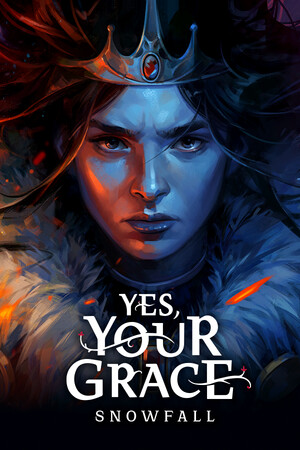 79%Yes, Your Grace 2: Snowfall
 79%Citizen Sleeper 2: Starward Vector
 79%Life is Strange 2
Review evidence
Why players say this
Review evidence
Why players say this
Steam review verdict
A worthy sequel with improved mechanics and expanded lore, but undermined by undisclosed AI art, overly complex stats, and technical issues.
What players like
Worthy sequel to first: Players consistently note that the game improves upon and expands the first game, often describing it as a worthy successor that delivers more of what fans enjoyed while also introducing new content and mechanics. This sentiment is echoed across multiple clusters with high frequency.
Expanded lore and story: The game expands on the lore of the first game, answering mysteries and adding depth to the world and narrative. This is appreciated by players who enjoyed the worldbuilding.
High overall quality: Many players consider the game to be great or amazing, with positive general feedback about the experience. These statements reflect a strong overall satisfaction with the game.
Improved gameplay mechanics: Players appreciate the new and improved mechanics, including choices that have more visible consequences, the removal of frustrating systems like stamina, and the addition of varied gameplay options. This makes the game feel more polished and strategic.
Excellent music and visuals: The soundtrack and visual design receive frequent praise for being beautiful, immersive, and fitting the game's tone. Art direction is noted as superior to the first game.
Common complaints
Undisclosed AI-generated art usage: Numerous reviews accuse the developers of using AI-generated art without disclosing it. Specific complaints include poor anatomy, repeating artifacts, and denial of AI use despite obvious evidence.
Overly complex stat systems: The calculator and stat systems (sanity, character traits) are seen as more complex and punishing than in the first game, requiring constant number management and making the game tiring.
Story less compelling than predecessor: Many reviews compare the story unfavorably to the first game (Sir Brante), finding it less immersive, less replayable, and lacking emotional impact, especially in the final chapters.
Crashes and technical issues: The game crashes frequently on Steam Deck and Linux, with some users reporting crashes every 15 minutes or in the prologue. Workarounds involve disabling animations.
Rushed or unsatisfying endings: Endings are described as too short, drawn out with unnatural choices, or lacking emotional payoff, with several players noting the final chapters feel rushed.
Gameplay and performance
Narrative RPG with choices: The game is a narrative-driven RPG where player choices have meaningful consequences, affecting the story, stats, relationships, and worldbuilding across multiple playthroughs.
Political simulation with factions: The game combines political simulation with faction management, class systems, council interactions, and empire management, requiring players to balance competing interests.
Choice-based text game: The game is heavily text-based, presenting an interactive story where decisions lead to branching paths, multiple routes, and different outcomes based on limited resources like sanity and legacy.
Visual novel elements: The game incorporates visual novel styles with political intrigue, plot twists, parallel storylines, and branching choices, often blending narrative with text-based mechanics.
Calculator-based choice system: A unique calculator system underpins choices, tracking resources and consequences in a less stressful manner than the predecessor, adding strategic depth.
Crashes on Steam Deck: Multiple reports indicate the game crashes on Steam Deck, especially in the prologue or after a few minutes of gameplay. One report suggests developer hostility to the platform.
Frequent general crashes: The game crashes frequently for several users, with one report specifying crashes every 15 minutes. A test screen popping up also causes crashes.
Linux compatibility issues: On Linux, crashes occur due to animated illustrations or video codec incompatibility; disabling animations can fix the issue. One user reports flawless performance via Proton 11.0, but others have problems.
Runs well on some systems: Contrary to crash reports, some users find the game runs flawlessly on Steam Deck or low-end PCs, with no strain on hardware. This indicates variability in experience.
Crash fixes with animations: Disabling in-game animations prevents crashes on some systems, particularly on Linux. This suggests a codec or rendering issue tied to animated elements.
Recommendations
Fans of Sir Brante: Numerous reviews target fans of the Sir Brante universe, recommending this game to those familiar with the setting and characters. It clearly appeals to the established fanbase.
Story-driven narrative appeal: Players recommend the game for its strong story and narrative depth, especially for those who enjoy choice-based and text-heavy games. The writing is a key selling point.
Play first game first: A significant number of reviews recommend playing the first game before this sequel for better context and enjoyment, though some say it's not strictly necessary. This suggests the sequel builds heavily on the original's story.
General recommendation: Several reviews give a straightforward positive recommendation without specific caveats, simply stating the game is good. This shows general approval.
Great value for money: Multiple players feel the game is well worth its price, calling it a worthwhile purchase. This indicates a good price-to-content ratio.
Buying context
Story completion: 10.0h.
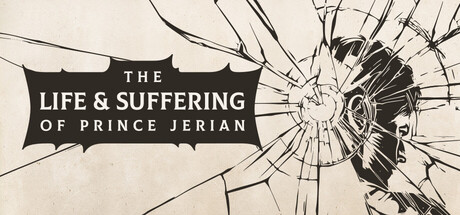
Players find Prince Jerian engaging from the start, with an improved tutorial chapter and immediate immersion in its rich lore and political depth.
Player profiles
Loyal Sequel Fan: Methodical decision-making with commitment to a chosen playstyle. Motivation: Continuation of the story and improved mechanics from the first game. Stance: buy.
Narrative Explorer: Exploratory reading and reactive decision-making based on story consequences. Motivation: Exploration of political intrigue and narrative depth in a choice-driven world. Stance: buy.
Completionist Challenger: Strategic trial-and-error, multiple playthroughs to overcome challenges. Motivation: Mastering the game's difficulty and achieving complete success. Stance: buy.
Platform notes
The Windows 12-15GB VRAM cohort shows positive performance, with players reporting smooth gameplay.
Windows 12-15GB VRAM: positive. Both available reviews from this cohort recommend the game, with one stating it 'runs great'; no performance complaints reported.
Steam Deck: The game exhibits significant stability issues on Steam Deck, primarily crashing due to the Animated Illustrations setting. A manual workaround exists (disable the setting), but experiences vary. Additionally, developer attitude toward Steam Deck support is negative, compounding uncertainty.
Linux and Proton: The game is generally compatible with Proton on Linux, with one user reporting flawless performance and others noting that a simple tweak (disabling 'Animated Illustrations') resolves crashes. One isolated report claims it does not work at all, but the majority indicate playability after a trivial setting change.