- Major improvements over Rune Factory 5.
- Emphasis on town building.
- Simplified, automated farming mechanics.
- Good performance and stability.
- Oversimplified core mechanics disappoint fans.
- Lost Rune Factory identity.
What players like:
Common complaints:
Gameplay feedback:
Performance notes:
Recommendations:
Other player notes:
Similar games
Blend with other games





Review evidence
Why players say this
Review evidence
Why players say this
What players like
Major improvement over Rune Factory 5: The game is a significant improvement over Rune Factory 5, with reviewers praising its enhanced graphics, smoother gameplay, better optimization, and overall polish. Many consider it a return to form for the series, addressing criticisms of its predecessor.
Emphasis on town building: The game shifts focus towards town building, story, and character relationships, offering a refreshing change from the series' traditional emphasis on farming. The town-building mechanics are well-executed and provide a satisfying sense of progression as players develop their village and unlock new features.
High-quality voice acting: The game features full or nearly full Japanese voice acting for major events and conversations, with well-done English voice acting also available. Reviewers praise the quality of the voice acting, which enhances character portrayals and adds to the overall immersion.
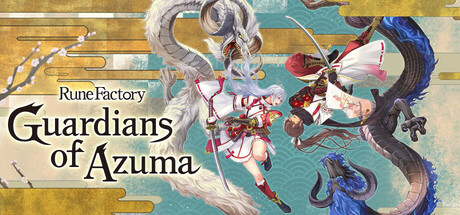
Beautiful and vibrant graphics: The game features beautiful and vibrant graphics, with reviewers praising the character expressions, environment, and overall visual appeal. The graphics are well-optimized and contribute to the enjoyable atmosphere of the game.
Appealing characters and designs: The game features appealing characters with great designs and engaging personalities, making it difficult to choose a marriage partner. The marriage candidates are well-developed and contribute to the overall enjoyment of the game.
Common complaints
Oversimplified core mechanics disappoint fans: Many reviewers express disappointment with the game's oversimplified mechanics, particularly in farming, crafting, combat, and skill progression. Long-time fans feel the depth and complexity of previous titles are missing, with core systems dumbed down or replaced by less engaging alternatives like basic stat upgrades in skill trees. This simplification diminishes the overall experience and series' charm.
Lost Rune Factory identity: Many reviewers feel that the game has lost its identity and no longer resembles a true Rune Factory title. The focus has shifted away from traditional farming and life simulation aspects, with simplified systems and a greater emphasis on story-driven guidance. This departure from the series' roots disappoints long-time fans.
Poor graphics and technical execution: The game's visuals and technical execution are frequently criticized. Reviewers cite unimpressive graphics, low-quality character models and animations, poor lip-syncing, and a generally unpolished feel. The transition to 3D is seen as a downgrade, especially with the absence of 2D character portraits and awkward cutscenes.
Awkward controls and unintuitive UI: The game's control scheme and UI are described as awkward and unintuitive. Reviewers mention unusual button mappings, frequent mis-presses, and a terrible UI design. These issues contribute to a frustrating player experience.
Restrictive, basic city-building elements: The city-building aspect is criticized for being basic and restrictive. Limited space, mandatory buildings, and inaccessible structures detract from the experience. The game's attempt to blend simulation elements feels poorly executed.
Gameplay and performance
Simplified, automated farming mechanics: Farming mechanics have been significantly simplified and streamlined, with options for automation through villagers. This shift reduces the player's direct involvement in farming, making it a less central activity compared to previous titles. Some players may find this simplification appealing, while others may miss the depth of traditional farming.
Combat system is average: The combat system is considered average, with some reviewers finding it acceptable while others criticize its execution. Some reviewers note that the combat feels better than previous Rune Factory titles, while others feel it is poorly executed. Overall, combat is not a highlight of the game.
Streamlined recipe and crafting system: Recipe acquisition has been altered, with players now finding recipes through map exploration and interacting with specific points. Crafting, alchemy, and cooking are largely handled by NPCs, reducing the player's direct involvement in these activities. This change streamlines the crafting process but may diminish the sense of accomplishment for some players.
Emphasis on villager bonding: The game emphasizes bonding with villagers through interactions and dialogue choices, similar to social mechanics in other games. Building relationships with villagers provides benefits such as stat increases and gifts. NPCs have schedules and behaviors, making the village feel more alive.
Skill tree-based progression system: The game introduces a skill tree system where players spend skill points to unlock abilities and enhance their character. This replaces the previous system of general growth through actions, offering a more structured approach to character progression. Players earn SP through daily activities, which can then be used to unlock skills in various trees.
Generally good performance and stability: Many players report the game runs smoothly on a variety of hardware, including the Steam Deck and older PCs, with some noting significant improvements compared to previous titles in the series. Some reviewers experienced no performance issues or bugs during their playthrough.
Supports upscaling technologies: The game includes upscaling technologies like DLSS and FSR, as well as frame generation, which can help improve performance on lower-end hardware and provide more options for players.
Many adjustable graphics settings: The game offers a wealth of fine-tuneable settings in the options menu, allowing players to adjust the graphics and performance to their liking. Medium settings are the default and provide better performance.
Low GPU utilization reported: One reviewer noted that the game only utilized 16% of their RTX 4080 Super GPU, suggesting potential optimization issues or bottlenecks.
Improved modeling and loading: The game uses 3D modeling, with improved smoothness and detail compared to the fifth installment. The game also does not have the frequent loading issues that were present in the fifth installment.
Recommendations
Good spin-off, not traditional RF: Many reviews highlight that this game is best approached as a spin-off, not a traditional Rune Factory title. It's considered a decent addition to the franchise, especially for those open to new mechanics, and is often recommended to both series fans and newcomers who are aware of its differences.
Recommended for specific audiences: Some reviews recommend the game to specific audiences based on their preferences. These include players who enjoy anime, Steam Deck users, those seeking a chill experience, and fans of games like Ni No Kuni.
Wait for sale, overpriced: Several reviews suggest that the game is overpriced for its quality and recommend waiting for a sale. Some reviewers express disappointment with the game's quality compared to previous entries and advise against purchasing it at full price.
Hope for future installments: Several reviewers express hope that future installments in the Rune Factory series will continue to improve and meet player expectations. They hope that the success of this game will lead to a sequel that builds upon its strengths.
Buy complete edition for candidates: One reviewer recommends buying the complete edition of the game to avoid missing out on marriage candidates. This suggests that the complete edition offers additional content or features related to romance options.
Other review notes
Spin-off, not mainline Rune Factory: Guardians of Azuma is a spin-off title, not Rune Factory 6, and experiments with new mechanics. This marks a notable shift in the series' focus, so players should expect a different experience from the mainline Rune Factory games.
General support, studio information: The reviewer expresses support for the series and surprise at its continued existence. The game is developed by 株式会社 (Kabushiki-gaisha, meaning corporation). These points are not particularly insightful or actionable.
Reviews based on limited playtime: The reviews are based on limited playtime, up to unlocking the flow of days/time or the autumn town deity. This means the reviews may not reflect the full scope of the game.
Non-romanceable characters present: The game features characters who cannot be romanced, similar to the previous game. This may be disappointing for players who enjoy romance options.
Same-sex relationships are supported: The game includes same-sex relationship options, specifically allowing for female characters to form relationships and build families. This is a welcome feature for players who appreciate inclusive representation.