- Top-tier arcade racer
- Stunning visuals and art style
- Unique twin-stick drifting mechanic
- Confusing and weak story
- High price criticized
- Dead multiplayer community
Emotions
Archetypes
Hardware
What players like:
Common complaints:
Gameplay feedback:
Performance notes:
Recommendations:
Other player notes:
Similar games
Blend with other games


Review evidence
Why players say this
Review evidence
Why players say this
Steam review verdict
A top-tier arcade racer with stunning visuals and a unique twin-stick drifting mechanic, though its confusing story, high price and dead multiplayer community hold it back.
What players like
Top-tier arcade racer: The game is frequently described as one of the best arcade racers in years, with many calling it their favorite in decades. It is praised for its fun, engaging, and unique arcade racing experience.
Great story and characters: The story is widely praised as phenomenal, interesting, and engaging, with memorable and charismatic characters that enhance the experience.
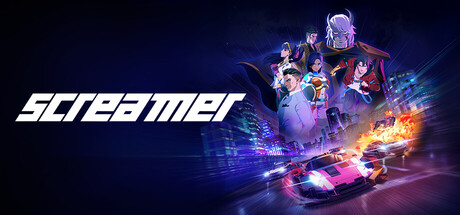
Stunning visuals and art style: Reviewers consistently compliment the excellent visuals, beautiful art style, and detailed car designs. The anime-style graphics and aesthetic are standout features.
Unique and innovative racing: Players highlight the game's originality compared to other racing titles, noting its fresh take and risk-taking mechanics that stand out in a crowded genre.
Awesome soundtrack and music: The soundtrack is frequently described as excellent, amazing, and a standout strength, with many calling it one of the best they've heard.
Common complaints
Confusing and Weak Story: The story is often described as hard to follow, nonsensical, and lacking engagement, with many flaws and an incomplete ending.
High Price Criticism: Many players find the game overpriced at full price, with the cost being steep relative to the content and experience offered.
Twin-Stick Controls Difficult: The twin-stick control scheme has a steep learning curve and feels unintuitive initially, causing frustration for some players.
Dead Multiplayer Community: The multiplayer mode is largely inactive, leading to long matchmaking times and empty lobbies.
Too Much Visual Novel: The game feels more like a visual novel than a racing game, with subpar racing and unappealing visual novel segments.
Gameplay and performance
Twin-stick arcade racing gameplay: The game is consistently described as an arcade racer with a distinctive twin-stick control scheme: left stick steers and right stick controls drift. This core driving model is central to the experience and praised for its depth and learning curve.
Dual-stick drifting mechanic: Drifting is controlled independently via the right analog stick, while the left stick handles steering. Many users highlight this dual-stick drift system as a unique and engaging mechanic that sets the game apart from traditional racers.
Visual novel story presentation: The story is delivered primarily through visual novel-style dialogue with static images and speech bubbles, interspersed with anime cutscenes. This narrative format is frequently mentioned and is a defining characteristic of the game.
Arcade and story modes: The game offers both an arcade mode for quick races and a separate story mode for narrative progression. Arcade mode includes various sub-modes like time attack, checkpoints, and custom races, providing replayability.
Split-screen multiplayer: Local split-screen multiplayer is supported for up to four players, often mentioned alongside online multiplayer. This feature is praised for enabling couch co-op and competitive play.
Good optimization reported: Many reviewers state the game is well optimized, runs great, and performs smoothly on various hardware, including mid-range and aging systems.
DLSS/FSR required for high FPS: To achieve high frame rates, especially at high resolutions or settings, upscaling technologies like DLSS or FSR are often necessary. Some find DLSS a must on Epic settings.
Unreal Engine stutters and glitches: Some players notice occasional Unreal Engine stutters, shadow glitches, and rendering issues. Frame drops and choppiness are also mentioned, particularly on AMD hardware.
Steam Deck performance mixed: Several users report the game runs well on Steam Deck, but some note that low graphics settings ruin the visual style or that it feels nerfed. Others experience launch failures and frequent file verification needs.
Crashes and stability issues: A number of users report crashes, including constant PC crashes, crashes during story mode or cutscenes, and file corruption. Some also experience one-off crashes.
Recommendations
Wait for sale: Many reviewers recommend waiting for a sale before purchasing, citing that the game is not worth full price or that a discount makes it worthwhile.
Great for arcade racing fans: The game is highly recommended for players who enjoy arcade racing games, especially those looking for a fresh alternative to mainstream titles like Forza or Need for Speed.
Worth the price: Several reviewers feel the game is worth every penny, even at full price, and strongly recommend it.
Buy if you love racing: The game is recommended for racing enthusiasts, with some calling it a must-buy for those who love racing games.
Try the demo first: Some suggest trying the demo to help decide whether to purchase, especially if unsure.
Buying context
Community fair range: $30.00 - $40.00.
Game completion: 19.5h.
Story completion: 14.0h.
Screamer's time-to-fun is mainly gated by its unusual twin-stick handling and tutorial-heavy opening; many players find it satisfying and addictive once the controls click. Some players report that it remains frustrating even after the learning curve.
Friction: Steep learning curve and unusual twin-stick controls; Tutorial-heavy story mode with long visual novel cutscenes; Slow, exposition-heavy opening and bland early story; Difficulty spikes and rubber-banding AI; Poorly explained Strike/Sync mechanics; Multiplayer sync issues and low player population.
Unlock drivers: Getting the hang of the twin-stick drift controls; Progressing through the campaign/tutorial to unlock abilities and modes; Switching to arcade modes after the introductory story levels; Playing local split-screen with friends.
Player profiles
Old-School Arcade Racing Veteran: Masters twin-stick drifting, boost and strike timing, and arcade modes while chasing fast, aggressive races. Motivation: Recapture classic arcade-racing thrills and support a non-realistic, mechanically distinct racer. Stance: buy.
Anime Story Campaigner: Plays through the Tournament campaign and side missions for cutscenes, dialogue, and character arcs, treating races as story beats. Motivation: Experience a character-driven anime story and watch the tournament plot unfold. Stance: buy.
Couch Co-op Social Racer: Runs local split-screen races and private lobbies, prioritizing party-friendly modes and customization over solo competition. Motivation: Share arcade racing fun with friends or family in the same room. Stance: buy.
Platform notes
Across the six largest hardware cohorts, performance is mostly positive on mid-range and high-end Windows systems and on Linux/Proton, while the Windows 8-11GB VRAM cohort is mixed due to frame drops, crashes, and optimization complaints.
Windows 8-11GB VRAM: mixed. Reports are split between smooth 60 FPS with upscaling and complaints about frame drops, crashes, or poor optimization.
Windows 12-15GB VRAM / 16-31GB RAM: positive. Most reports describe smooth high or 4K performance, with only occasional stutters or infrequent crashes.
Windows <8GB VRAM: positive. Most users report playable 1080p performance with lowered settings or upscaling, though some crashes, frame drops, and an online performance issue appear.
Steam Deck: The Steam Deck experience is mixed. Many users report playable frame rates on low settings with FSR, and some call the game verified or perfect on Deck. However, the audit found anti-cheat and external-service friction: Epic Online Services and kernel-level Easy Anti-Cheat are required, anti-cheat conflicts can prevent launch, and multiplayer may fail due to Easy Anti-Cheat. Visual quality also suffers from shimmering, ghosting, and low settings, while some users must switch Proton versions or tolerate a startup black screen. Under the rubric, the anti-cheat error evidence places friction in the broken tier.
Linux and Proton: The Linux/Proton evidence is predominantly positive. Multiple users report that the game runs smoothly on Linux and Steam Deck, with one reviewer explicitly stating that no Proton compatibility tweaks were needed. Additional positive signals include Bazzite compatibility, SteamOS verification, and DualSense support on Linux. The negatives are limited: one French reviewer could not get the game running under Linux, one reviewer suspected Proton/Wayland performance overhead, and another mentioned switching Proton versions. Generic Easy Anti-Cheat concerns appear in the reviews but are not explicitly tied to a Linux/Proton blocker, so they do not outweigh the positive consensus.
Extra review signals
Monetization: The reviews show a game with paid cosmetic DLC packs, including launch customization DLC, but no clear evidence of gacha, premium currency, battle pass, pay-to-win, or convenience monetization for this title. Several reviewers praise the absence of a season pass and multiple currencies, and cars and tracks are unlocked by play. Base-price complaints are common but outside the MTX scope. Other-game pay-to-win references are ignored as ambiguous or comparative.
External guides: The primary data dependency is instructional: users discuss character and vehicle stats, track-specific performance, system execution, and narrative clarity. No farming/drop-rate or inventory/crafting data needs are evident, and a minor alt-tab monitor bug does not override the primary classification. Under the strict priority scan, Tier 3 is the highest triggered category.
Other review notes
High base price criticized: Many reviewers feel the game's full price is too high for its value, often waiting for sales. This is a common complaint.
Multiple voice languages: The game features voice acting in multiple languages, with characters speaking their native languages. This adds to the immersion.
Split-screen multiplayer supported: The game includes split-screen multiplayer for 2-4 players, both in Arcade mode and online. This feature is consistently mentioned across multiple reviews.
Story length 10-15 hours: The campaign or story mode takes about 10-15 hours to complete, with some variation in reported times.
Twin-stick controls like Inertial Drift: Several reviewers compare the twin-stick control scheme to Inertial Drift. Some see it as a strict upgrade.