- Pixel art and soundtrack praised
- Boss fights and difficulty balanced
- Action-platformer gameplay fun
- Steam Deck performance excellent
- Bosses too tanky and long
- Levels and platforming frustrate
Emotions
Archetypes
What players like:
Common complaints:
Gameplay feedback:
Performance notes:
Recommendations:
Other player notes:
Similar games
Blend with other games



![Cover for NINJA GAIDEN Σ [NINJA GAIDEN: Master Collection]](https://shared.cloudflare.steamstatic.com/store_item_assets/steam/apps/1580780/library_600x900.jpg)


Review evidence
Why players say this
Review evidence
Why players say this
Steam review verdict
Beautiful pixel art and soundtrack, fun action-platformer gameplay with balanced boss fights and excellent Steam Deck performance, but bosses are overly tanky and levels cause frustration.
What players like
Pixel art is praised: Many reviews highlight the game's beautiful pixel art, describing it as gorgeous, crisp, and well-animated. This visual style significantly enhances the game's atmosphere and appeal.
Soundtrack receives high praise: Players frequently commend the game's music and soundtrack, calling it excellent, top-tier, and memorable. The audio experience greatly contributes to the overall enjoyment.
Boss fights are highlights: Boss battles are frequently highlighted as a strong aspect, being challenging yet fair and requiring strategy. They are considered a key part of the game's appeal.
Difficulty is well-balanced: Many players appreciate the game's balanced difficulty, which is challenging but fair. This balance keeps the gameplay engaging without feeling overly punishing or frustrating.
Hard mode adds challenge: Hard mode is designed to increase difficulty thoughtfully by altering enemy attacks, adding traps, and introducing new level layouts. This provides a fresh and more demanding experience for skilled players.
Common complaints
Bosses too tanky and long: Multiple reviews report boss fights dragging on due to excessive health pools, making them feel like endurance runs and breaking the game's pace. This issue persists especially in the final boss, which takes too many hits to defeat.
Levels excessively long: Many levels are described as extremely long, with some perfect runs taking up to 20 minutes, which makes them tedious and contributes to frustration. This is especially problematic in later stages, where length compounds difficulty.
Frustrating platforming sessions: Platforming, especially timed sections, is often described as frustrating and numerous, with some levels feeling dreary and repetitive. The challenge here is seen as more tedious than fun, contributing to overall frustration.
Checkpoints fail to save progress: There is widespread complaint that checkpoints do not integrate with the save system, forcing players to restart entire levels if they quit mid-stage. This makes the game inconvenient for those who cannot finish a level in one sitting.
Unfavorable comparison to Shinobi: Several players note that the game is significantly inferior to 'Shinobi: Art of Vengeance', which overshadows it in gameplay, challenge, and overall quality. This comparison leads to lower satisfaction and perceived value.
Gameplay and performance
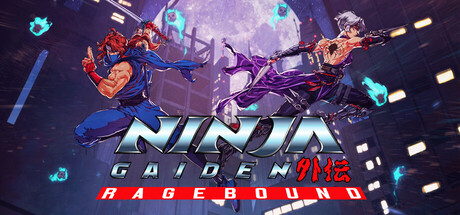
2D side-scrolling action platformer: Numerous reviews describe the game as a 2D side-scrolling action platformer, often comparing it to classic Ninja Gaiden. The gameplay combines platforming, combat, and retro-style elements.
Hard mode enhances challenge: Many reviews mention a hard mode that modifies enemy attacks, increases traps, and alters level layouts. This mode is often unlocked after beating the game and adds new enemy variants and boss mechanics.
Ninja Gaiden franchise spin-off: The game is recognized as a spin-off or new installment in the Ninja Gaiden series, appealing to fans of the franchise. It retains the series' signature difficulty and style.
Hard mode unlocks post-game: Players note that the hard mode is unlocked after completing the initial playthrough, providing additional challenges and secret content. This encourages replayability.
Not a metroidvania game: Reviews clarify that the game is not a metroidvania, but rather a linear, level-based platformer with a classic approach. It is also not a soulslike or roguelite.
Steam Deck performance is excellent: Multiple users report that the game runs smoothly on Steam Deck LCD with no tinkering, offering buttery FPS and fantastic battery life. This indicates strong optimization for the handheld platform.
Game crashes at same spot: Repeated crashes at a specific location suggest a persistent bug that can frustrate players and block progress. This high-severity issue needs attention.
Progression blocked beyond level 3-5: A bug prevents players from progressing past level 3-5, which is game-breaking and halts the experience entirely. This is a critical issue that must be fixed.
Parkour level crash on character switch: Switching characters during a parkour level causes a crash that restarts the entire level, leading to lost progress. This is a disruptive bug affecting a core gameplay mechanic.
Launch issues require compatibility mode: The game sometimes fails to start unless compatibility mode is selected, causing inconvenience and confusion. This launch inconsistency needs a stable fix.
Recommendations
Enthusiastic universal recommendation: Clusters 3, 5, 6, and 10 contain unqualified praise and recommendations for all types of players, from veterans to newcomers. This widespread endorsement indicates the game is broadly appealing and well-regarded.
Recommended for retro fans: Clusters 1 and 2 highlight strong recommendations for fans of old-school NES titles, retro aesthetics, and classic action-platformers. The frequent mention of nostalgia and genre affinity underlines the game's appeal to retro enthusiasts.
Must-play for platformer fans: Clusters 2, 12, and 16 repeatedly recommend the game to fans of 2D platformers, emphasizing its tight mechanics and classic gameplay. The high frequency of this recommendation makes it a key selling point.
Good value despite price: Clusters 7, 25, and 28 indicate the game is worth buying even at full price, but also note its short length. The hard mode and overall quality justify the cost for many players.
Challenging but rewarding: Clusters 11, 26, and 27 describe the game as challenging yet rewarding, appealing to players who seek a tough but satisfying experience. The hard mode is highlighted as a must-play for completionists.
Buying context
Community fair range: $10.00 - $15.00.
Story completion: 5.0h.
Session length: 18.0h.
Endgame: 4.0h.
Ninja Gaiden: Ragebound is initially enjoyable during the first few levels and hours but quickly becomes repetitive and tedious, with fun dropping significantly as the game progresses.
Friction: tutorial-heavy opening; restrictive early pacing; repetitive level design; long level replays upon death; tedious enemy spam; drawn-out boss fights.
Player profiles
Old-School Purist: Methodical and precise, using debuffs and practicing levels for S++ ranks. Motivation: Recapturing the authentic NES-era Ninja Gaiden difficulty and earning high rankings. Stance: buy.
Accessible Newcomer: Uses assist modes or buffs, explores levels, plays through story mode at a comfortable pace. Motivation: Enjoying a high-quality action platformer without being overwhelmed by difficulty. Stance: sale.
High-Score Chaser: Aggressive and precise, focuses on no-hit runs, utilizes advanced mechanics like guillotine jump and parry. Motivation: Achieving perfect runs and high rankings through skill and route optimization. Stance: buy.
Platform notes
Steam Deck: Ninja Gaiden: Ragebound runs smoothly at 60FPS with great battery life and responsive controls on the Steam Deck for most users, but a minority encounter game-breaking black screen crashes during character-switch sequences that require restarting the level. The game is largely playable out of the box, with the crashes being the main friction point.
Linux and Proton: Ninja Gaiden: Ragebound runs perfectly on Steam Deck and Linux via Proton. Users report stable 60 FPS, no graphical bugs, and no anti-cheat or DRM blockers. No workarounds are needed.
Extra review signals
Monetization: The user feedback focuses entirely on the game's upfront cost being perceived as overpriced. No reviews mention microtransactions, paid advantages, or any other in-game purchases, indicating the game does not employ predatory monetization.
Other review notes
Ninja Gaiden nostalgia comparisons: The game is frequently compared to classic NES Ninja Gaiden titles, evoking nostalgia for old-school players. These comparisons highlight its retro action-platformer roots.
Developed by Blasphemous team: Players repeatedly note that the game is made by The Game Kitchen, the studio behind the Blasphemous series. This association is frequently mentioned and likely influences expectations.
Short runtime praised: Many reviews mention the game is short, with playtimes ranging from 3 to 7 hours, and appreciate that it doesn't overstay its welcome. The brevity is often seen as a positive aspect.
Shinobi comparison mixed: Multiple reviews compare the game to Shinobi: Art of Vengeance, with some preferring Shinobi and others noting this game is harder. This comparison is common but yields varied opinions.
Hard mode adds challenge: The game features a hard mode unlocked after the first playthrough, which is described as significantly more difficult. This extra mode extends replayability for challenge seekers.