- Faithful and polished remake experience
- Stunning visual and audio upgrades
- Dual-campaign storytelling enhances depth
- Poor 3D modernization efforts
- Outdated and monotonous gameplay mechanics
- Clunky UI and frustrating menus
Emotions
What players like:
Common complaints:
Gameplay feedback:
Performance notes:
Recommendations:
Other player notes:
Similar games
Blend with other games 93%FRONT MISSION 2: Remake
 88%FRONT MISSION 3: Remake
 83%BATTLETECH
 83%MOBILE SUIT GUNDAM SEED BATTLE DESTINY REMASTERED
 83%Kriegsfront Tactics - Prologue
 82%Metal Bringer
 82%Mecharashi
 82%Phantom Brigade
 82%RESONANCE OF FATE™/END OF ETERNITY™ 4K/HD EDITION
 81%Daemon X Machina: Titanic Scion
 81%MechWarrior 5: Clans
 81%War Robots: Frontiers
Review evidence
Why players say this
Review evidence
Why players say this
What players like
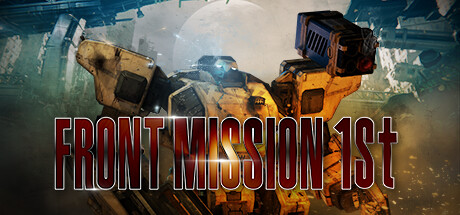
Faithful and polished remake: The remake retains the essence of the original SNES/DS versions while improving visuals, controls, and quality-of-life features. It is widely regarded as a respectful and well-executed revival of a classic tactical RPG.
Visual and audio upgrades: The remake features improved 3D models, detailed mech designs, revamped soundtracks, and immersive sound effects. The art style and music are frequently highlighted as standout elements.
Dual-campaign storytelling: The game features two distinct campaigns (OCU and UCS) with opposing perspectives that intersect, adding narrative depth and replayability. The politically grounded story is praised for its mature tone and engaging twists.
High replayability and content: With 60+ missions, New Game+ modes, hidden secrets, and extensive customization, the game offers significant replay value. Players report 30+ hours of gameplay per campaign and high engagement due to varied builds and strategies.
Engaging story and lore: The narrative is described as dark, politically intricate, and well-written, with rich character development and Front Mission universe lore. The dual-campaign structure enhances immersion and replayability.
Common complaints
Poor 3D modernization: The 3D graphics are criticized as simplistic, outdated, or mismatched with the original's aesthetic. Animations and models feel stiff, unrefined, or even comical (e.g., toy-like mechs).
Outdated and monotonous gameplay: The game lacks modern tactical depth (e.g., no overwatch, flanking, or terrain effects) and relies on repetitive mechanics. Combat pacing is slow, and strategies become predictable.
Clunky UI and menus: Menus are cumbersome, lack critical information (e.g., weapon visibility, part stats), and require excessive grinding or clicking. Customization feels repetitive and uncreative.
Poor localization and language support: Translations are riddled with errors, missing text, or nonsensical phrases (e.g., 'msg_1013_txt'). Key languages (e.g., Korean, Russian) are unsupported, and machine translations are criticized.
Unbalanced weapon and mech systems: Certain weapons (e.g., dual automatics, rockets) dominate gameplay, while others (e.g., melee, snipers) are underpowered or illogical (e.g., firearms working at melee range). Customization leads to identical builds.
Gameplay and performance
Turn-based tactical mech combat: The game features grid-based, turn-based combat with mechs (Wanzers) that have modular parts, limb destruction mechanics, and tactical positioning. Players alternate turns with enemies, emphasizing strategic planning and loadout optimization.
Deep Wanzer customization system: Players can customize mechs with interchangeable parts (arms, legs, torso, weapons, processors) to specialize in melee, short-range, or long-range combat. This system is highly praised for its flexibility and depth.
Pilot skill progression system: Pilots gain experience and specialize in melee, short-range, long-range, or evasion skills. Their abilities directly impact combat effectiveness, such as hit rates and counterattacks.
Terrain and positioning mechanics: Terrain features (e.g., high ground, cover) affect movement, accuracy, and damage. Mech types (tracks, legs, wheels) interact differently with terrain, adding tactical depth.
Difficulty settings and balance issues: The game offers multiple difficulty settings (e.g., Easy, Normal), but some modes are criticized for being unbalanced. The difficulty curve is punishing but rewarding.
Hardware-related performance problems: Players on mid-to-high-end PCs report overheating, high fan load, and performance drops during combat or extended play. Some issues are tied to specific hardware configurations (e.g., AMD GPUs).
Hardware compatibility and settings: The game runs well on low-end hardware and supports features like ultra-wide monitors and customizable controls, but some players need third-party tools (e.g., ReShade) for optimal visuals.
Performance and stability issues on Steam Deck: While some players report smooth performance, others experience frequent freezes and loading issues (e.g., stuck at 100% load bar) on the Steam Deck, impacting portability and accessibility.
Save system and autosave flaws: The autosave feature is underdeveloped, and the save system is ineffective, leading to lost progress or manual save dependencies, which exacerbates crash-related frustrations.
Localization and text display bugs: Poor German translations, missing text in endings, and inconsistent text display (e.g., cursor loss, input behavior) detract from immersion and usability, particularly for non-English players.
Recommendations
Recommended for niche audiences: The game is highly recommended for fans of robot combat, mech strategies, turn-based RPGs, and nostalgia seekers. However, it is often advised to wait for a discount or only purchase if deeply interested in the genre.
Wait for a sale or discount: Many reviewers suggest purchasing the game only during a sale, with specific mentions of good value at $11 or 30-50% off. Full price is rarely justified for non-fans.
Skip or avoid for non-fans: The game is frequently described as only worth playing for fans of the original, mech games, or tactical RPGs. Non-fans or those unfamiliar with the series may find it unengaging or outdated.
Value for content and passion: The game is praised for its content volume, respectful adaptation, and the developers' passion. It is seen as a preservation effort and a good foundation for future remakes.
Accessible for newcomers: The remake is praised for being a faithful yet accessible introduction to the series, making it suitable for players new to the franchise or genre, provided they approach it with an open mind.
Platform notes
Steam Deck: The Steam Deck experience for this game is mixed. While some users report a seamless, high-performance experience with native controls, others encounter critical stability issues, including frequent freezes, crashes during loading, and localization bugs (e.g., Chinese input crashes). The stability problems are the most severe, requiring workarounds like switching to PC, which significantly disrupts the user experience. Localization bugs and minor performance quirks are also noted but are less impactful.
Extra review signals
External guides: The user feedback highlights three primary pain points: (1) A heavy reliance on external guides to understand game mechanics, quest conditions, and achievements, indicating poor in-game documentation and tutorial design; (2) Frustration with unclear or misleading in-game explanations, particularly for core systems like repair mechanics; and (3) Severe technical issues, such as input-related soft-locks, that disrupt navigation and gameplay. The most critical issue is the game's dependency on external data for instructional purposes, which significantly impacts the user experience.
Other review notes
Multi-platform accessibility: The game is accessible across various platforms, including Nintendo Switch, PlayStation, and even in regions like Russia without restrictions. This broad availability contributes to its reach and player base.
Nostalgic personal history: Many players share personal experiences with the game across multiple platforms, including the original SNES release, emulators, and remakes. This highlights the game's long-standing appeal and emotional connection for fans.
Poor Korean localization: Players report using auto-translation as a workaround for the lack of proper Korean language support, and the localized translation is widely criticized for its quality. This affects accessibility for Korean-speaking players.
Historical series significance: The game is part of a historically significant series, with players recalling their experiences with the original title, such as completing it without guides. This underscores its cultural impact in gaming history.
Developer criticism: Players express dissatisfaction with Forever Entertainment, the developer behind the remake. This suggests concerns about the quality or direction of the remastered version.