- Incredible sense of speed
- Extremely fun and addicting gameplay
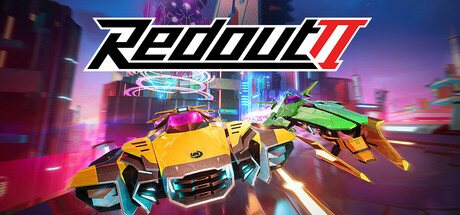
- Stunning graphics and visuals
- Problematic track design
- Soundtrack worse than original
- Dead multiplayer community
Emotions
Archetypes
Hardware
What players like:
Common complaints:
Gameplay feedback:
Performance notes:
Recommendations:
Other player notes:
Similar games
Blend with other games


Review evidence
Why players say this
Review evidence
Why players say this
Steam review verdict
Incredible speed, addicting gameplay, and stunning visuals make it a blast, but problematic track design, weaker soundtrack, and dead multiplayer hold it back.
What players like
Incredible sense of speed: Many players highlight the game's exhilarating and intense sense of speed, describing it as central to the experience. This feeling of velocity is consistently praised as thrilling and unmatched.
Extremely fun and addicting gameplay: The game is widely described as fun, addicting, and satisfying, with quick and engaging gameplay. Reviewers frequently call it amazing and loads of fun.
Stunning graphics and visuals: The game is graphically beautiful with eye-popping visuals and vibrant colors. Many note that the visuals are gorgeous and look pretty.
Improved over original Redout: The game is seen as a worthy successor with better graphics, improved handling, and more polished gameplay. It is generally considered an upgrade from the first Redout.
Best racing game ever played: Some reviewers consider it the most fun and satisfying racing game they've played in a long time, even calling it the best ever. It is praised as challenging yet rewarding.
Common complaints
Problematic track design: Tracks are criticized for being visually unintuitive, too narrow, and having poor color schemes that make them hard to see. Blind corners and impossible jumps without assists are also prevalent.
Soundtrack worse than original: Multiple reviewers state the music is a major downgrade compared to the first game, with tracks being unmemorable, generic, and lacking variety. Some even call the soundtrack trash or forgettable.
Inferior to Redout 1: Reviewers consistently say the sequel invokes less enjoyment, is a poor successor, and lacks the diversity and visual appeal of the original Redout. It is often described as worse than the first game overall.
Dead multiplayer community: Players report that multiplayer is dead, with almost no players found and bare-bones functionality. The online experience is largely deserted and basic at best.
Overcomplicated controls and mechanics: The game is not friendly to players and is incredibly overcomplicated even for an AG racer, with convoluted controls. Boost stacking has a steep learning curve, and mechanics are not obvious from the start.
Gameplay and performance
High-Speed Arcade Racing: Players consistently describe the game as a fast, challenging arcade racer with speeds exceeding 1500 km/h and precise mechanics. It offers a strong sense of speed and includes campaign, multiplayer, and time trials.
Anti-Gravity Racing Focus: The game is an anti-gravity racer with over 300 single-player events and handling that feels like flying a stunt plane. It features twin-stick steering, tight corners, and course memorization.
Boost and Overheat Mechanics: The boosting system includes normal boost, hyperboost, and stacking boosts, with an overheat risk-reward mechanic. Managing the durability bar during boosting adds strategic depth.
Assist and Difficulty Options: The game offers adjustable AI assistance, jump assistance, and multiple AI difficulty levels ranging from Zero to Nightmare. These settings affect opponent performance and rewind allowances.
Ship Customization Options: Players value the extensive ship customization, including parts, paint schemes, and performance tuning. Many note that visual and performance mods are available through unlockable parts and colors.
Steam Deck performance varies: Reports on Steam Deck range from steady 60 fps at high settings to playable 30-40 fps at low/medium settings. Some users report poor visuals and performance compared to PC, while others say it runs smoothly even at max quality.
Unreal Engine stuttering issues: Severe stutters occur at the start of races on Unreal Engine, often subsiding after one lap. Ongoing occasional stutters persist even after patches and may be exacerbated by high background detail or missing shader pre-compilation.
Track clipping and glitches: Players experience clipping issues when landing jumps, glitching through the track, and falling through the track. A bug causes respawning several kilometers ahead or behind after dying or crashing.
Optimization is inconsistent: Optimization is not always top-notch; some report poor optimization while others say it's well optimized. The game is GPU intensive and requires a good PC configuration.
Frame drops on high-end PCs: Players with powerful GPUs like RTX 3070ti and 1080ti report occasional frame drops, especially at higher resolutions and refresh rates. VRAM consumption on 8GB cards can cause stutters until settings are adjusted.
Recommendations
Fans prefer original Redout: Many reviewers believe Redout 1 is superior in every way and recommend it over this sequel. They strongly advise buying the first game instead, even when this one is on sale.
Worth the price: Multiple reviewers find the game worth its asking price, with some noting it is especially valuable when discounted. The general consensus is that it offers good value for the cost.
Appeals to anti-gravity fans: The game is recommended for fans of anti-gravity racing, including those who grew up with Wipeout or F-Zero. It also appeals to anyone who enjoys fast racing games in general.
Great for skill-based racing: Reviewers highlight that the game excels for players who enjoy precision, memorization, and subtle skill expression. It is highly recommended for fans of fast-paced, challenging arcade racing.
Strongly recommended by many: A large number of reviewers give unequivocal recommendations, stating they could not recommend it more strongly. Several say it would be unfair not to recommend it.
Buying context
Community fair range: $20.00 - $30.00.
Game completion: 45.0h.
Session length: 1.0h.
Endgame: 50.0h.
Redout 2 often becomes fun after players push through a steep learning curve, learn boost-stacking, and adapt to the controls. However, poorly gated tutorials, harsh difficulty, and grindy progression prevent that click for some players.
Friction: Steep learning curve and tricky controls; Vital boost mechanics poorly explained or gated behind later tutorials; Punishing tutorial and difficulty spikes; Grindy, repetitive campaign gates performance upgrades; Glacial progression and ship unlocking; Unfinished multiplayer and bugs.
Unlock drivers: Learning boost-stacking and mastering controls; Tutorial trials and assists teaching mechanics; Patience and practice being rewarded; Performance upgrades and ship customization; Arcade mode with all tracks and vehicles unlocked.
Player profiles
Hardcore Anti-Gravity Veteran: Disables all assisted controls, grinds out track mastery, and obsesses over boost stacking, heat management, and ship tuning to shave lap times. Motivation: Chasing an extreme skill ceiling and the rush of mastering brutal, high-speed anti-gravity racing. Stance: buy.
Frustrated Casual Newcomer: Drops in expecting a Mario Kart or Wipeout style experience, struggles with tracks, jumps, and boost/heating systems, and often quits in the first hour. Motivation: Wanted an approachable, fun arcade racer but finds the steep learning curve and opaque mechanics push them away. Stance: no buy.
Solo Single-Player Cruiser: Plays campaign and arcade modes solo, picks their own ship and track, tunes difficulty for a chill experience, and ignores multiplayer entirely. Motivation: Relaxing, self-paced progression and racing alone without needing the competitive multiplayer scene. Stance: buy.
Platform notes
Across the returned cohorts, the Windows <8GB VRAM group is mostly positive, while the Windows 12-15GB VRAM group is mixed due to substantial stutter and optimization complaints alongside solid post-tweak performance.
Windows <8GB VRAM: positive. Reports are largely positive: the game runs smoothly for some users, though one reviewer warns that Ultra settings can cause mini-freezes.
Windows 12-15GB VRAM: mixed. Performance is mixed: many users report solid FPS after tweaks or hardware upgrades, but stutter, frame-time spikes, missing official DLSS, and shader-compilation issues are frequently mentioned.
Steam Deck: The Steam Deck experience is playable but not seamless. Multiple users report the game runs only at low or medium settings with 30-40 FPS, and reports of visual quality are inconsistent, ranging from poor to smooth. Missing official FSR and DLSS support limits performance tuning, and a conditional internet or firewall requirement can prevent startup for some users. There is no evidence of Proton Experimental toggling, external launchers, small-text readability problems, anti-cheat errors, or frequent crashes, so the experience does not meet the broken tier. The score reflects required performance compromises and tinkering.
Linux and Proton: The reviews are predominantly positive for Linux and Steam Deck. Linux users report excellent performance on Arch/CachyOS with NVIDIA and no issues, while multiple Steam Deck users confirm the game runs, often smoothly or at playable frame rates. Some Deck users mention low settings or visual/performance compromises, but there is no evidence of Proton workarounds, anti-cheat blocks, launcher failures, or broad launch instability. The experience aligns with a works-well result.
Other review notes
Sequel to Redout compared: Reviews frequently compare this game to the original Redout, noting it is a sequel with significant differences. Opinions are mixed, with some preferring the original and others finding improvements.
F-Zero and Wipeout comparisons: Many reviewers compare the game to F-Zero and Wipeout, citing similar high-speed anti-gravity racing and nuanced controls. It is often described as faster and more challenging than Mario Kart.
Mixed opinions versus Redout 1: Some reviewers find Redout 2 better in every way, while others prefer the original for its clearer graphics, better music, and track design. Criticisms include less enjoyable gameplay and visual repetitiveness.
Improved handling and mechanics: Handling and racing mechanics are seen as improved over the first game, with a more high-quality feel. Many consider it a marked improvement.
Soundtrack features licensed music: The game includes a licensed soundtrack with psytrance and contributions from artists like Zardonic, Dance with the Dead, and U-Recken. Giorgio Moroder is also mentioned.