- Excellent co-op and multiplayer
- Major improvement over predecessor
- Valuable DLC expansions
- UI is a major downgrade
- Worse than the first game
- Game is buggy and unpolished
Emotions
Archetypes
Hardware
What players like:
Common complaints:
Gameplay feedback:
Performance notes:
Recommendations:
Other player notes:
Similar games
Blend with other games





Review evidence
Why players say this
Review evidence
Why players say this
Steam review verdict
Excellent co-op and valuable DLC improve on the predecessor, but a worse UI, bugs, and a step back from the first game drag it down.
What players like
Excellent co-op and multiplayer: A large portion of feedback praises the game's co-op and multiplayer modes, highlighting enjoyment with friends, solo play, and support for up to four players.
Major improvement over predecessor: Players consistently state this sequel surpasses the original across gameplay, content, characters, and combat, often calling it richer, fancier, and more satisfying.
Valuable DLC expansions: DLCs are well-received for adding substantial content like story chapters and characters, with good value for the price.
High replayability value: High replay value is frequently mentioned, driven by addictive gameplay and lots of variety.
Decent and enjoyable overall: Several reviewers acknowledge the game is decent and fun despite minor errors, indicating general satisfaction without specific highlights.
Common complaints
UI is a major downgrade: The user interface is widely criticized as clunky, unintuitive, and less functional than the original game. Players find menus confusing, overloaded, and hard to navigate, with specific bugs and poor design choices.
Worse than the first game: Many players feel the sequel is a downgrade from the original, citing worse graphics, performance, and lost charm. The game lacks visible improvements and fails to capture the feel of the first game.
Game is buggy and unpolished: The game remains full of bugs after nearly two years, with frequent crashes and glitches that ruin gameplay. It launched as a buggy mess and still lacks polish.
Multiplayer has severe issues: Multiplayer experiences are plagued by desync, bugs, and poor performance, making co-op nearly unplayable. Players report constant disconnections, lag, and a generally horrid experience with friends.
Difficulty is too high and unfair: The difficulty is very high even on easy mode, with unfair mechanics like enemies never missing attacks. This creates a steep learning curve and frustrating early hours.
Gameplay and performance
Turn-based tactical combat: The core gameplay is turn-based tactical combat with grid-based positioning (2x4) and dice rolling mechanics. It draws heavy inspiration from tabletop systems like D&D, offering strategic depth.
4-player co-op support: The game has added support for up to four players in co-op, a change from the first game's three-player limit. This allows players to control four heroes in battle, increasing party size and coordination.
Enhanced sequel gameplay: As a sequel to the first game, this version features enhanced mechanics and more tactical gameplay, often compared favorably to its predecessor.
New mechanics and classes: The game introduces many new mechanics, actions, and character classes, enhancing variety and strategic options.
Pets and companions added: New pets and companions have been added to the game, but some players feel they are too powerful, making the game feel like using a cheat code.
Frequent crashes and freezes: The game crashes frequently in various scenarios, including during battles, online play, and general gameplay. Some crashes are severe enough to require a computer restart, suggesting a possible memory leak.
Worse performance than predecessor: Many players report that the game runs significantly worse than the first game, with poor optimization causing low FPS on hardware that ran the original smoothly. Some require minimum graphics settings and windowed mode to achieve around 30 FPS.
Online connectivity issues: Players experience constant disconnections, network timeouts, and server connection issues, especially in co-op and online modes. Desync and poor server performance are also reported.
Critical progression bugs: Critical bugs block progression on PC and Steam Deck, including softlocks, infinite load screens, and save file corruption. The bug report function is also non-functional on these platforms.
General bugginess: Players report multiple minor bugs, softlocks, and random freezes that affect gameplay enjoyment, though some have been fixed post-launch.
Recommendations
Great for first game fans: Fans of the first game will likely enjoy this sequel, as it offers a similar experience. Many reviewers consider it a mandatory purchase for those who loved the original.
Best with friends: The game is strongly recommended for co-op play, especially with a full party of four. Playing with friends enhances the experience and is a key selling point.
Not worth the price: Some reviewers feel the game is overpriced and not worth its current cost. They advise against buying DLC and suggest waiting for a sale.
Buying context
Community fair range: $10.00 - $25.00.
Game completion: 100.0h.
Story completion: 80.0h.
Session length: 3.0h.
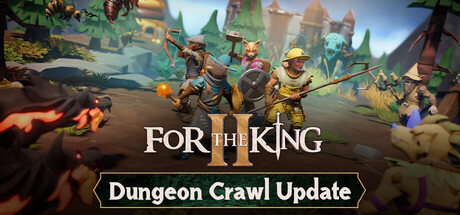
For the King II often starts as a grind-heavy, UI-poor experience that can take 20-30 minutes to become enjoyable, but once players push through the initial friction, the deep tactical combat and chaotic co-op moments deliver satisfying fun, especially with friends.
Reported time to anchor: 25m.
Friction: Repetitive 20-30 minute intro grind before meaningful content appears; Non-intuitive User Interface with poor explanations, missing skip button; Forced reset of progression every chapter (no character/gear carryover); Multiplayer input overlap and freeze bugs, clunky menus; Feeling of being undergeared and overleveled/underleveled simultaneously; Tutorial overload with pop-up messages.
Player profiles
Co-op Chaos Seeker: Casual play with friends, prioritizing shared laughs and low-stakes sessions over solo focus or deep strategy. Motivation: Social fun and shared experience with friends, especially during voice chat or couch co-op. Stance: sale.
Tactical Roguelite Veteran: Tactical optimization, seeking challenging runs with perma-death, deep strategic combat, and a sense of progression across multiple attempts. Motivation: Mastery and challenge, expecting the punishing roguelite difficulty and tactical depth of the original FTK. Stance: sale.
Solo Struggler: Plays solo with multiple characters, often frustrated by cumbersome UI, lack of polish, and steep difficulty without the social buffer. Motivation: Desire to enjoy the game's tactical and roguelite elements, but hindered by solo-specific issues with controls, pacing, and balance. Stance: no buy.
Platform notes
Across all Windows VRAM cohorts, stability problems dominate: lower VRAM cohorts suffer frequent freezes and crashes, while the highest VRAM group shows mixed results with some users able to mitigate issues.
Windows <8GB VRAM: negative. Most users report frequent game freezes and crashes regardless of recommendation status.
Windows 8-11GB VRAM: negative. Both users report constant crashes during scenes and battles.
Windows 12-15GB VRAM: mixed. Mixed feedback; some users experience crashes and low FPS but find workarounds, while others find performance poor.
Steam Deck: The game suffers from multiple critical issues on Steam Deck: unreadably small text and UI, frequent crashes and freezing, unreliable controller support, and launcher-level input bugs that block installation or login. These problems make the game deeply frustrating and barely functional without extensive workarounds.
Linux and Proton: For The King II generally works on Linux/Proton according to available reviews, with only a single report of minor bugs and a specific windowed-mode workaround for Hyprland users. No evidence of broken anti-cheat, DRM, or launch failures. The lack of negative Linux-specific complaints keeps the score low.
Extra review signals
Monetization: The game is a one-time purchase with optional DLC packs. Some DLC characters are perceived as overpowered, leading to pay-to-win accusations. There is no evidence of recurring microtransactions, loot boxes, or in-game currency shops. The monetization is limited to DLC, which some players find overpriced or prioritized over fixes. Overall, the monetization is standard for a game with expansions, but the pay-to-win perception raises concerns.
External guides: Primary user complaints center on insufficient in-game explanations for abilities and mechanics, high reliance on external wikis to avoid unfair failures, and an inconvenient encyclopedia system. These issues are classified as TIER 3 (The Student) because the core barrier is learning systems and understanding game content.
Other review notes
Missing game naming: The inability to name the hosted game is a missing feature, limiting personalization and discoverability in the multiplayer lobby.
Free week access: The reviewer experienced the game via a free trial period and shared their perspective, indicating the trial's role in capturing user attention.