- Unique throw mechanic
- Excellent roguelike experience
- Engaging and addictive gameplay
- Weapon balance is poor
- Repetitive gameplay
- Steam Deck performance issues
Emotions
Archetypes
What players like:
Common complaints:
Gameplay feedback:
Performance notes:
Recommendations:
Other player notes:
- -
No data available
Similar games
Blend with other games




Review evidence
Why players say this
Review evidence
Why players say this
Steam review verdict
Unique throw mechanic and engaging roguelike experience are let down by poor weapon balance, repetition, and Steam Deck issues.
What players like
Unique throw mechanic: The grab-and-throw mechanic is a fresh, fun, and powerful way to interact with the environment and enemies, setting the game apart from others.
Excellent roguelike/lite experience: The game is recognized as a top-tier roguelike or roguelite, offering engaging, well-crafted runs perfect for short play sessions.
Engaging and addictive gameplay: Players find the game highly engaging and addictive, with a satisfying and smooth gameplay loop that makes it hard to put down.
Great weapon variety: Players praise the diverse and distinct arsenal of weapons, as well as variety in enemies, perks, and upgrades, which keeps gameplay fresh.
Refined twin-stick controls: The twin-stick shooter controls are described as refined, tight, and fun, making the movement and shooting mechanics a standout feature.
Common complaints
Weapon balance is poor: Many players report that most weapons are underpowered, with only the Void Dagger and possibly the shotgun being effective. The Void Dagger is considered overpowered, making other weapons feel useless.
Repetitive gameplay: The gameplay becomes monotonous and repetitive after a few runs, with little content and a lack of variety in powers, enemies, and levels.
Little content overall: Players feel the game has little content, with too few levels and bosses, and a short playtime of less than 10-17 hours.
Low replayability: The game suffers from low replayability due to repetitive content and a lack of meaningful unlocks or upgrades to encourage multiple playthroughs.
Game is too easy: Several players note that the game is too easy even on harder difficulties, and the roguelike aspects are poorly implemented, making it feel boring.
Gameplay and performance
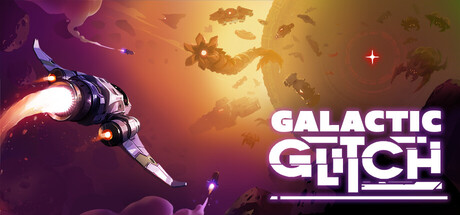
Twin-stick roguelike shooter: The game is consistently described as a top-down, twin-stick, roguelike shooter with physics-based combat and room-based progression.
Grab and throw mechanic: A core gameplay mechanic allows players to grab and throw objects and enemies, often using a gravity gun, which adds strategic depth to combat.
Roguelike with meta progression: Permanent upgrades between runs, such as ship unlocks, weapon blueprints, and skill trees, provide a sense of progression and replayability typical of roguelikes.
Upgrades and abilities system: Players can unlock various skills, upgrades, and passive boosts that affect weapons, ships, and combat capabilities across runs.
Physics-based combat interactions: The game heavily relies on physics for combat, including environmental object manipulation, projectile bouncing, and gravity effects that influence player decisions.
Steam Deck performance issues: Many players report significant performance problems on Steam Deck, including FPS drops from 60 to low 30s in certain biomes and when many particles are rendered. The game runs hot and experiences frame drops despite being a 2D title.
PC crashes on launch: Multiple players report that the game crashes on startup or requires multiple attempts to boot, often with error dialogs. This occurs on PC and remains unresolved even with driver updates or resolution changes.
General performance and stuttering: Players experience stuttering on high-end hardware like i9-7960X and RTX 3080 in endless mode, as well as general frame drops and lag. Performance has improved for some after updates, but issues persist for many.
Map lag and unplayability: Some players describe the game as super laggy and basically unplayable, with map lag and performance turning into a slideshow after full release. A minority find it generally stable.
Memory leaks and crashes: Reports of memory leaks causing system freezes and crashes, particularly on launch. Some players note crashes when clicking continue, with workarounds available via alternate launch options.
Recommendations
Highly recommended overall: Clusters indicate a strong positive sentiment toward the game, with many players recommending it at full price or on sale.
Worth full price: Several reviews state the game is worth its full price, with no need to wait for a discount.
Good value for money: Reviews consistently mention the game is worth its price, offering solid gameplay for the cost.
Great for roguelike fans: Multiple clusters highlight the game's excellence within the roguelike and roguelite genres, especially for twin-stick shooter fans.
Best on sale: Many players advise buying the game on discount, describing it as a steal or great deal at a lower price.
Buying context
Community fair range: $13.00 - $26.00.
Game completion: 50.0h.
Story completion: 10.0h.
Session length: 0.5h.
Galactic Glitch offers immediate fun for some, but many players find the early hours punishing due to slow meta-progression and high difficulty; fun significantly increases after unlocking upgrades and mastering the physics systems.
Friction: Punishing early hours with quick deaths and scarce unlocks; Slow meta-progression that requires grinding; Need for skill improvement or long playtime to feel powerful; Progression slows down after initial hours.
Unlock drivers: Accumulating meta-progression upgrades (blueprints, prototypes); Understanding game systems and physics mechanics (grab-throw); Getting a viable build online with synergies; Unlocking more weapons and abilities.
Player profiles
Physics-Centric Tinkerer: Uses grab mechanics aggressively, repurposes objects and enemies as projectiles, exploits recoil and map boundaries. Motivation: Experiencing emergent, physics-driven combat and creative enemy/environment manipulation. Stance: buy.
Build-Crafter Grinder: Focuses on unlocking content, grinding meta currency, and trying diverse weapon/ship combos. Tolerates repetition for long-term progression. Motivation: Experimenting with different weapons, upgrades, and builds while making steady meta-progress. Stance: buy.
Casual Session Scavenger: Plays in short bursts, doesn't obsess over deep builds, enjoys the core loop without heavy investment. Motivation: Quick, low-commitment fun at a very affordable price. Stance: sale.
Platform notes
Steam Deck: The game shows significant stability and performance issues on Steam Deck, with some users unable to launch or progress due to crashes, and widespread complaints of frame drops, overheating, and poor UI design. While recent developer updates have improved the experience for a subset of users, the overall deck experience remains unreliable and often frustrating.
Linux and Proton: The game runs on Steam Deck (Linux/Proton) without launch or stability issues, but performance is inconsistent. Some users report flawless framerates, while others experience significant drops, particularly in heavy particle scenes or later game stages. The performance problems are attributed to optimization rather than Proton incompatibility. No tweaks or version switches are mentioned. Overall, the game is playable but may require lower settings or tolerance for occasional stutter.