- Enjoyable gameplay and battles
- Good unit variety and customization
- Great pixel art and graphics
- Poor and cliché story
- Clunky and tedious UI
- Unreasonable difficulty spikes
Archetypes
What players like:
Common complaints:
Gameplay feedback:
Performance notes:
Recommendations:
Other player notes:
- -
No data available
Similar games
Blend with other games




Review evidence
Why players say this
Review evidence
Why players say this
Steam review verdict
Enjoyable battles and great pixel art are let down by a cliché story, clunky UI, and frustrating difficulty spikes.
What players like
Enjoyable gameplay and battles: Players consistently report that core gameplay and the battle system are enjoyable, with specific praise for combat, army management, and tactical depth. Multiple clusters highlight the fun of fighting, squad-building, and class division.
Good unit variety and customization: Players appreciate the large class division, many unit builds, and the ability to customize squads and mercenaries. This flexibility enhances replayability and strategic depth.
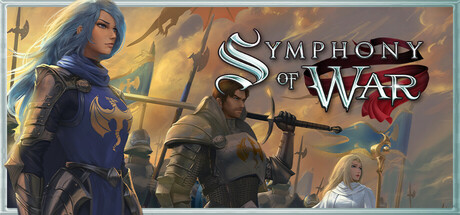
Great pixel art and graphics: The sprite work, pixel art, and overall visual style are well-received, with comments on charming art and good character design. The RPGMaker-style is also noted as appealing.
Interesting mechanics and systems: The artifact system, random affinity, unit compositions, and formation logic are cited as engaging features. These elements add layers of strategy and discovery to the game.
Fun early game experience: Multiple reviews mention that the first few hours, initial levels, and early chapters are particularly enjoyable, suggesting a strong opening that hooks players.
Common complaints
Poor and cliché story: The story is widely panned as boring, unimaginative, cliché, and fragmented, with abrupt and nonsensical plot twists. Writing quality is inconsistent, often described as simplistic, painful, or like a child's fantasy, with a predictable and disappointing ending.
Poorly explained mechanics: Many game mechanics are poorly explained or hidden, including damage, hit rate, stat growths, terrain effects, and morale. The elemental system is confusing and unintuitive, and combat outcomes rely on hidden RNG, making strategic planning difficult.
Clunky and tedious UI: The user interface is widely criticized as clunky, cumbersome, and anti-human, requiring excessive clicking for simple actions. Squad management, team formation, and equipment changes are particularly painful and time-consuming, with poor information display and lack of sorting options.
Boring and shallow gameplay: Players consistently report that the game lacks engaging gameplay, strategic depth, and tactical variety. Combat is described as bland, mindless, and repetitive, with no meaningful tactics or variability, relying instead on stat-checking and numbers.
Unreasonable difficulty spikes: The game suffers from severe difficulty spikes, especially in mid-to-late chapters like Chapter 12, where players face overwhelming enemy numbers and higher-class units. The difficulty curve is inverted or unreasonable, with some sections feeling like torture or requiring perfect play.
Gameplay and performance
Diverse gameplay mechanics: Various mechanics include main character invincibility condition, limited locations, arena training, Donar churches for reviving, morale, bond conversations, fixed story units, formation design, side quests, no counter mechanism, no unit specialties, no training battles, simple AI, single player, nerfed exploits, relationship and dialogue systems, unit pairing, and map size scaling after level 20. The player can have up to 20 units while enemies have 50 glass cannon units.
Squad and army management: Players can create squads from available characters, manage armies, hire recruits, and form teams. The game features squad-building, team formation, and army management systems with unit-based deployment.
Turn-based tactical RPG: The game is a turn-based tactical strategy RPG with squad-based combat, similar to Tactics Ogre and Ogre Battle. It combines elements of strategy and RPG genres.
Class system and diversity: The game has a class advancement system with diverse classes like front line tanks, assassins, gunners, cannons, healers, cavalry, and archers. However, class change resources are scarce, and the protagonist has limited class choices at start.
RPGMaker art style: The game has an RPGMaker art style with decent pixel art SRPG battles but mobile game style character portraits. It uses an old-fashioned standard system.
System slowdowns require reboot: Multiple players report that the game causes system-wide slowdowns that persist even after exiting the game, often requiring a full PC reboot to restore normal performance.
Frequent crashes and freezes: The game crashes frequently, including during the intro, at specific points like chapter 2's first battle, and on high-end hardware such as RTX 4080 and i9-13980HX, indicating widespread stability issues.
Stuttering after patch: After a recent patch, players experience stuttering during gameplay, suggesting that the update introduced new performance problems.
Game stuck after tutorial: The game fails to progress past the tutorial, blocking players from accessing the main content.
Missing dialogue text: Dialogue text disappears during gameplay, likely a bug that affects narrative comprehension.
Recommendations
Strongly not recommended: Several reviews strongly advise against buying or playing the game, with some citing bugs and others simply saying 'do not buy' or 'refund'.
Appeals to SRPG enthusiasts: The game appeals to fans of classic strategy RPGs like Ogre Battle, those who enjoy team building and min-maxing, and beginners who like tactical progression. It is recommended for SLG enthusiasts at a low price if graphics are acceptable.
Weak story and tactical depth: Multiple reviews state the game is not recommended for players who prioritize story or tactical depth, citing poor storytelling and UI issues.
Wait for sale: Reviews suggest waiting for a sale as the game is not worth full price, but may be acceptable at a discount.
Bug prevents play: A review advises not playing until a bug is fixed, indicating a critical issue that hinders the experience.
Buying context
Community fair range: $10.00 - $15.00.
Game completion: 60.0h.
Story completion: 40.0h.
The game has a slow, tutorial-heavy start with poor writing and a cumbersome UI, but once players engage with the deep squad management and progression systems, it becomes highly addictive and hard to put down.
Reported time to anchor: 2h.
Friction: boring and exposition-heavy tutorial in the first two hours; poor writing and simplistic dialogue early on; cumbersome UI that requires frequent reference to tutorial notes; vague progression system for units (e.g., rare upgrade materials); steep learning curve for the first 10 hours.
Unlock drivers: deep squad management and unit customization; rewarding progression systems (class promotions, artifacts, tech tree); addictive gameplay loop of building and optimizing squads; variety of unit types and formations.
Player profiles
Squad Architect: Meticulously designs squads, experiments with class combinations, and min-maxes stats to create optimal unit compositions. Motivation: Optimizing squad compositions and unit builds through deep customization and theorycrafting. Stance: buy.
Nostalgic Tactician: Plays for nostalgic feel, appreciates retro pixel art and familiar mechanics, often comparing to classic SRPGs from childhood. Motivation: Reliving classic tactical RPG experiences and scratching the itch for games like Fire Emblem, Shining Force, and Ogre Battle. Stance: buy.
Challenge Seeker: Plays on hardest difficulty with permadeath, tests strategic limits, and seeks a demanding tactical experience that rewards careful planning. Motivation: Seeking a demanding tactical challenge that tests strategic depth and decision-making under pressure. Stance: buy.
Platform notes
Steam Deck: The game is largely playable on Steam Deck with native support and good performance, but a notable minority experience crashes, and one user reports small text as an issue. The small text issue alone places the experience in the 'Tinkering Required' band, and the crash reports, while not frequent enough to classify as 'Broken', add friction.
Linux and Proton: Works Well
Extra review signals
Monetization: The game uses a traditional one-time purchase model with optional DLC expansions. No microtransactions, pay-to-win elements, or aggressive monetization are present. The only negative feedback concerns DLC content value, which does not indicate predatory practices.
External guides: The primary user complaints revolve around the need for external guides and wikis to understand complex mechanics, hidden systems, and achievement requirements. The game's tutorial is insufficient, and many details are not explained in-game, forcing players to rely on external instructional data. No evidence of farming, inventory management, or navigation issues was found, placing the feedback in Tier 3 (The Student).