- Engaging story and plot
- Clever and fair puzzles
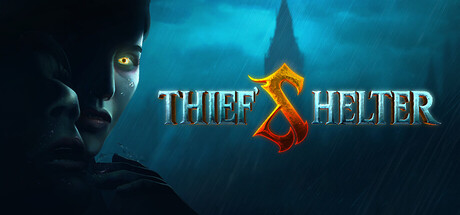
- Strong horror atmosphere
- Restrictive node-based movement criticized
- Accessibility and UI problems
- Inconsistent frustrating puzzle design
Emotions
Archetypes
What players like:
Common complaints:
Gameplay feedback:
Performance notes:
Recommendations:
Other player notes:
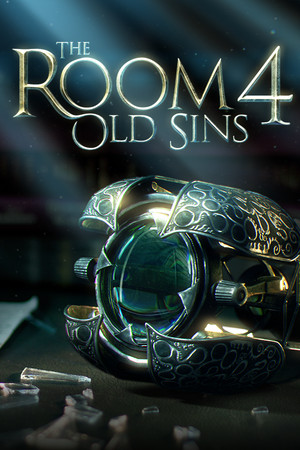
Similar games
Blend with other games


Review evidence
Why players say this
Review evidence
Why players say this
Steam review verdict
An engaging story, clever fair puzzles, and a strong horror atmosphere are undermined by restrictive node-based movement, accessibility and UI problems, and inconsistently frustrating puzzle design.
What players like
Engaging story and plot: The narrative is described as captivating, deep, and twisted, with a mystery that keeps players hooked. Some note a compelling message and emotional weight that lingers.
Clever and fair puzzles: Puzzles are frequently called interesting, logical, and fair, with many noting they are well integrated into the narrative. They provide a satisfying challenge without being overly obstructive.
Strong horror atmosphere: Reviewers consistently praise the game's creepy, unsettling atmosphere, built from sound, visuals, and environmental details. The slow psychological dread and dynamic scenes are frequently highlighted as a standout feature.
Beautiful graphics and visuals: Graphics are often described as high-quality, with realistic 3D visuals and aesthetically pleasing areas. The mansion interior and lighting are particularly noted.
Multiple endings and replayability: Multiple endings and collectibles like masks and tapes encourage repeated playthroughs. The dynamic scenes and hidden secrets add significant replay value.
Common complaints
Restrictive node-based movement criticized: Many players find the fixed-pillar movement limiting and inconvenient, with awkward navigation around obstacles and inability to move freely. Interaction is tied to designated pillars, making exploration and backtracking frustrating.
Accessibility and UI problems: Players report inability to change FOV, difficulty selecting windowed resolution, unconventional scrollbar, mouse/keyboard menus without indication, toggle switches, and stylized fonts hurting readability.
Puzzle design inconsistent and frustrating: Most puzzles rely on trial and error, difficulty spikes sharply later, and some riddles are opaque or require excessive mental effort. Interaction points are hard to find, leaving players stuck.
Weak story and character engagement: Players did not connect with the character's journey, found the protagonist unconvincing, and felt the mystery never required real deduction. Voice acting and vocalizations sometimes feel out of place.
Localization and translation issues: Several notes are untranslated, one is in very low resolution and unreadable, and localization problems cause confusion. Achievements are also not available in Chinese.
Gameplay and performance
Point-and-click detective gameplay: The game is consistently described as a first-person point-and-click puzzle adventure where players act as a detective across multiple chapters. Movement is mouse-driven with fixed-position clicking rather than free navigation.
Puzzle-focused gameplay: Puzzle solving is a core mechanic, including riddles, linear puzzles with clear objectives, and interactions like illuminating UV traces and reading notes. The puzzles are integrated into the narrative and detective structure.
Psychological horror narrative: The game blends psychological horror with mystery, featuring a changing world, hallucinations, and a deep plot focused on memory and lost truth. It is described as a slow-burn psychological adventure with atmospheric dread.
Fixed-position movement system: The player cannot move freely and instead clicks between fixed positions to observe surroundings and interact. This is similar to VR teleportation, with right-click used for movement and a dot cursor replacing the traditional pointer.
Detective mystery story: Players uncover secrets and piece together a story through investigation, with mysticism and puzzles woven into the detective narrative. The structure follows a detective mystery format.
Smooth 60+ FPS on ROG Ally: The game runs at a consistent 60+ FPS at 1080p medium-high settings on the ROG Xbox Ally, using Performance (15-17W) or Turbo (25-30W plugged) modes. This indicates solid handheld optimization on capable hardware.
Decent 2-3 hour battery life: Battery life of 2-3+ hours was observed on Performance mode, which is reasonable for a demanding title on handheld hardware. This supports practical portable play.
Excellent controller support: Controller support is praised for its Xbox layout and analog stick/mouse emulation, making it easy to play with standard gamepads. This enhances accessibility and comfort.
No stuttering reported: One player noted the absence of stuttering during play, suggesting generally stable frame pacing on their setup. However, this conflicts with another report of lag.
FSR Quality boosts smoothness: AMD FSR Quality can be enabled to improve smoothness beyond native rendering if needed. This provides a useful fallback for players seeking extra performance.
Recommendations
Broadly recommended by reviewers: Most clusters express a positive recommendation, ranging from general endorsements to strong encouragement to download and play. This indicates overall player satisfaction and a favorable reception.
Appeals to specific horror fans: The game is repeatedly recommended for players who enjoy 3D point-and-click psychological horror with demon themes and story-driven puzzle solving. Fans of Silent Hill, Observer, and What Remains of Edith Finch are highlighted as the ideal audience.
Puzzle and mystery enthusiasts praised: Reviewers recommend it for those who enjoy uncovering secrets, piecing together stories, and spending several evenings on mysteries and riddles. Puzzle game enthusiasts are specifically called out as a good fit.
Solid indie and point-and-click experience: The game is described as a decent option for fans of point-and-click adventures and a good indie title to try. It meets the expectations of players familiar with these genres.
Some negative and mixed feedback: A small number of reviewers do not recommend the game, with one requesting a refund and another stating it is not worth it even on sale. These negative opinions are relatively minor compared to positive feedback.
Buying context
Session length: 2.0h.
Reviewers describe immediate enjoyment in the first few hours, driven by atmosphere, pacing, and puzzles; only mild pacing friction appears for one player.
Friction: Pacing and long cutscene waits were hard to sit through for a player with ADHD.
Player profiles
Slow-Burn Story Detective: Patient, methodical first-person exploration: reading clues, solving riddles and absorbing narrative rather than chasing action. Motivation: Unraveling the central mystery and piecing the plot together clue by clue over several relaxed evenings. Stance: buy.
Atmosphere-Driven Horror Puzzle Fan: Soaks in sound design and unsettling visuals during slow exploration and puzzle solving, valuing mood over challenge. Motivation: Being immersed in a creepy, grotesque atmosphere while working through horror-tinged point-and-click puzzles. Stance: buy.
Completionist Achievement Hunter: Checklist-driven, exhaustive sweeps of each chapter using built-in trackers to chase achievements and full clears. Motivation: Reaching 100% completion by collecting every clue, mask and secret and triggering all special observations. Stance: no buy.
Other review notes
Rich mystery with deep lore: The story revolves around Thomas Malcott's death and the Red Order, delivering lore through loading screens and encouraging multiple evenings of mystery solving. Players find the plot rewarding and worth discovering.
Unique 3D point-and-click experience: The game blends horror atmosphere reminiscent of Silent Hill with a modern 3D point-and-click style, occupying a niche with few competing titles. It draws inspiration from genre giants like Myst and Layers of Fear.
Small passionate two-person team: Developed over five years by a team of just two people from Greece, the game demonstrates clear passion. Reviewers believe the developers could create something exceptional in the story-driven indie space.
Broad localization and language support: The game supports many languages, including a Chinese localization and Chinese language support. This broadens accessibility for international players.
Indie recognition after long wait: As an indie title, the game is receiving recognition after a long wait. Reviewers feel it was worth the time and money.