- Attractive Art Style and Graphics
- Innovative Genre Hybrid Gameplay
- Addictive and Enjoyable Core Loop
- Custom Fortress Building Mechanics
- Slow pacing and progression
- Building controls are cumbersome
Emotions
Archetypes
Hardware
What players like:
Common complaints:
Gameplay feedback:
Performance notes:
Recommendations:
Other player notes:
Similar games
Blend with other games



Review evidence
Why players say this
Review evidence
Why players say this
Steam review verdict
Its attractive art, innovative genre mix, addictive loop, and fortress building shine, but slow pacing and clunky building controls hold it back.
What players like
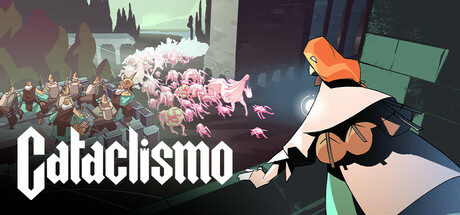
Attractive Art Style and Graphics: Graphics are widely praised as good, beautiful, and stylish, with a well-cared-for aesthetic. The visual presentation, including art style and direction, is consistently commended.
Innovative Genre Hybrid Gameplay: Players highly praise the unique blend of tower defense, real-time strategy, city building, and resource management. This hybrid formula is consistently described as refreshing, satisfying, and well-executed.
Addictive and Enjoyable Core Loop: The core gameplay is frequently described as fun, addictive, and engaging. Many reviewers highlight that the game is simply enjoyable to play.
Custom Fortress Building Mechanics: The ability to build defenses brick by brick and create custom defensive structures is a standout feature. Players enjoy the freedom and creativity this provides.
Strong Campaign and Story: The campaign is noted for being solid, well-developed, and featuring an interesting story. The narrative and characters are often highlighted as strong points.
Common complaints
Slow pacing and progression: The game is frequently described as slow, dull, and meandering, with building and resource gathering taking a very long time. This slows the overall pace to a crawl and makes the experience feel tedious.
Building controls are cumbersome: Many players report that construction feels fiddly and the controls make intricate building difficult. Building walls, towers, and stairs is frustrating, leading some to give up entirely.
Scarce resources hinder building: Players consistently note that resources are extremely limited, making it hard to build freely or even construct necessary factories. Resource management is intense and resource gain over time heavily restricts what can be built.
Insufficient unit and enemy variety: Reviewers complain about a lack of variety in units, monsters, and enemies. Only a small handful of units and enemy types are available, leading to repetitive gameplay.
Campaign feels too short: Multiple players feel the campaign mode is too short, with some completing it in under 9 hours. The story in early access is also slightly short.
Gameplay and performance
Tower Defense and City Building Hybrid: The game blends tower defense, resource management, construction, and city building into a cohesive strategy experience. Players build defenses and manage resources to fend off waves of enemies.
Block-by-Block Construction System: Building is done piece by piece, allowing for detailed fortifications. Players construct walls, supports, and platforms in a granular fashion.
Real-Time Strategy Elements: Many players describe the game as an RTS, either as a primary genre or blended with tower defense mechanics. It features classic RTS resource management and unit control.
Wave and Horde Defense Gameplay: The core gameplay involves defending against waves of enemies or hordes. This includes base defense building and surviving massive enemy attacks.
Campaign and Multiple Game Modes: The game offers a campaign with story elements, as well as endless and skirmish modes. These provide dozens of hours of gameplay and varied challenges.
Frequent crashes during sessions: Players report unexpected crashes in every session and often, sometimes as early as 15 minutes in. These crashes can black out screens and require force quitting and reloading, persisting even after troubleshooting.
Good performance reported by some: Several players report good performance, with the game running well, flawlessly, or extremely smoothly even with many units. They experience stable above 60fps and no hiccups or crashes.
Poor performance on minimum settings: The game runs at only 40-50 FPS on minimum settings, and medium settings yield the same frame rate, indicating poor optimization. PC fans also spin up despite unimpressive graphics.
Crashes escalate after day 60: Crashes begin around day 60 and become so severe by day 70 that the game is unplayable. This progression makes late-game progression impossible for affected players.
Performance issues with many enemies: Frame rates drop significantly in final campaign levels with many enemies on screen, and performance sometimes tanks due to numerous moving elements. This affects gameplay during intense moments.
Recommendations
Worth the price: Multiple reviewers agree the game is worth full price or the money spent, with some noting it is especially good value on sale. Cluster 11 offers a dissenting view that it is not worth the full asking price.
Recommended for RTS fans: Players strongly recommend the game to those who enjoy real-time strategy titles, with one noting that liking even half of the listed RTS games predicts enjoyment. Strategy and management enthusiasts are also encouraged to try it.
Positive overall recommendations: A large number of reviewers simply recommend the game without reservations, calling it a great game worth trying. Many say they highly recommend it and would do so without any doubts.
Recommended for tower defense fans: The game is highly recommended for tower defense enthusiasts, especially those who appreciate good visuals and strong voice acting. It also appeals to fans of building and management within the genre.
Appeals to city builder fans: Reviewers recommend the game to fans of city builders and similar management games, highlighting its blend of city-building and tower defense elements. It is seen as a natural fit for those who enjoy constructing and managing settlements.
Buying context
Community fair range: $20.00 - $30.00.
Story completion: 26.0h.
Session length: 1.5h.
Endgame: 200.0h.
Cataclismo often starts strong: its core wall-building loop is addictive and draws players in through novelty and customization. For many, however, the fun fades after the first few hours or around endless waves 40-50 as construction becomes repetitive and tedious.
Friction: Intrusive, unskippable tutorial; Tedious, time-consuming block-by-block building; Slow level pacing and short combat relative to building; Unclear progression, especially Survival Mode tech points; UI, menu navigation, and interface polish issues; Lack of good blueprinting or mass cloning for repetitive builds.
Unlock drivers: Using blueprints or premade build tabs reduces tedious stairs and house construction; Unlocking all building pieces is linked to satisfying fortress construction; Spending tech points after each wave supports a satisfying endless loop; Meta progression can support blueprint redesign and replayability; Pause feature helps slow chaotic building and turns it into a puzzle; Constructing specific buildings unlocks settlement improvements.
Player profiles
RTS and Tower-Defense Genre Fan: Builds layered defenses, manages resource economy, adapts to waves, and uses pause and planning to optimize. Motivation: Challenging RTS and tower-defense strategy with resource management. Stance: buy.
Creative Fortress Architect: Builds for aesthetics, uses brick-by-brick construction, blueprints, workshop content, level editor, and photo mode. Motivation: Creative freedom to design and beautify fortresses. Stance: buy.
Narrative Campaign Player: Plays campaign and skirmish missions, often on easier difficulty, and values story over endless replayable modes. Motivation: Story-driven RTS campaign and narrative progression. Stance: buy.
Platform notes
The Windows <8GB VRAM cohort mostly reports playable performance with some optimization caveats, while the Windows 12-15GB VRAM cohort is dominated by crashes and performance complaints.
Windows <8GB VRAM: positive. Most reports say the game runs well, with minor optimization issues and isolated performance drops in later campaign levels or a black-screen bug after story completion.
Windows 12-15GB VRAM: negative. Reports describe crashes after an update, inability to generate random maps or select options, and performance problems despite adequate hardware.
Steam Deck: The Steam Deck feedback is mixed. Some users report strong performance and working community controls, but official gamepad support is missing or inconsistent, one user abandoned the controls due to excessive effort, and there are clear stability problems including frequent crashes and a post-story black screen. Under the scoring criteria, the presence of frequent crashes places the experience in the Broken range despite positive performance reports.
Linux and Proton: The supplied reviews contain no Linux or Proton compatibility feedback. One review comments on a gameplay limitation, and the other gives a generic positive note on performance and controls. No Linux-specific launch, stability, anti-cheat, or workaround evidence is present, so Linux/Proton friction cannot be measured from this dataset.
Other review notes
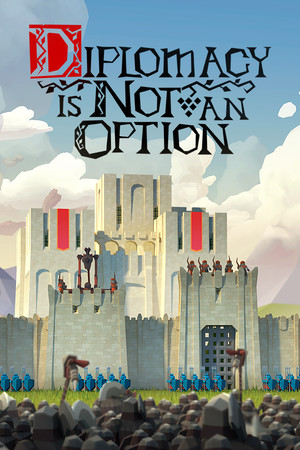
Similar to They Are Billions: Many reviewers compare the game to They Are Billions, often describing it as a 3D or enhanced version with similar mechanics. It is also compared to other titles like Rift Breaker and Diplomacy is Not an Option.
Stronghold series comparison: The game is frequently compared to the Stronghold series, particularly for its fortification building and classic RTS elements. Reviewers note similarities to old Stronghold games and modern quality-of-life improvements.
Early access title: The game was released in early access and was purchased by reviewers during that phase. It is described as having strong bones or a solid foundation despite being in early access.
Developed by Digital Sun: The game is developed by Digital Sun, the studio known for Moonlighter and Mageseekers. Reviewers often mention this as a point of reference.
Steam Workshop support: Community-made levels are available through Steam Workshop, and the game includes a level editor for sharing maps. This feature is highlighted by several reviewers.