- Varied and well-designed puzzles
- Challenging but engaging puzzles
- Free game with good value
- Puzzles require hints or brute force
- Puzzles lack explanations and logic
- Repetitive and monotonous puzzles
Emotions
Archetypes
What players like:
Common complaints:
Gameplay feedback:
Performance notes:
Recommendations:
Other player notes:
Similar games
Blend with other games




Review evidence
Why players say this
Review evidence
Why players say this
Steam review verdict
Free puzzler offers varied, well-designed challenges that are engaging yet tough, though puzzles often demand hints or brute force, lack clear logic, and grow repetitive.
What players like
Puzzles are varied and well-designed: Players consistently praise the puzzle variety and quality, noting a good mix of difficulty levels that are neither too hard nor too easy. The puzzles are described as diverse, fun, and well-made across many levels.
Challenging but engaging puzzles: Some players find the game challenging and engaging, with puzzles that can get very difficult at times. The difficulty is seen as a positive feature for those seeking intellectual challenges.
Good time-passing game: The game is frequently recommended as a way to pass time, being simple yet enjoyable for casual play. It is considered a good recreational game for short sessions or when bored.
Free game with good value: Reviewers appreciate that the game is free, noting it as a pleasant and excellent pastime for a free title. The free-to-play model is seen as a positive aspect.
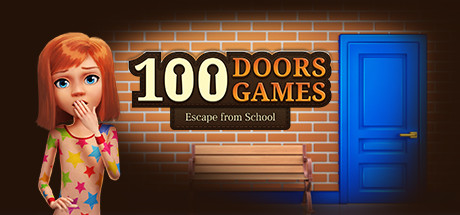
Pleasant cartoon graphics: The graphics are described as pleasant, cartoony, and cute, with music that complements the style. Overall, the visual presentation is considered fine and appealing.
Common complaints
Puzzles require hints or brute force: Many puzzles are illogical and cannot be solved without hints, often requiring brute force or random clicking. Even after using hints, some puzzles remain confusing or unsolvable.
Puzzles lack explanations and logic: Many puzzles are not self-explanatory and require outside knowledge, such as historical or obscure facts. This design choice frustrates players and makes puzzles feel unfair.
Puzzles are repetitive and monotonous: Many puzzles are similar or redundant, leading to boredom and repetition. The same rooms are recycled across levels, and puzzle types become predictable.
Game is boring and lacks substance: The game is often described as boring, with little substance and repetitive gameplay. It fails to stand out from other puzzle games.
Hints are limited and unhelpful: Hints are scarce, sometimes unhelpful, and may require payment when exhausted. Some hints are vague or nonsensical, forcing players to seek external resources.
Gameplay and performance
Coins for hints and skips: Players earn in-game coins by solving puzzles, which can be spent on hints and level skips. Additionally, hints and skips can be purchased with real money through microtransactions.
140 doors to unlock: The game consists of 140 doors that players must unlock by solving puzzles. Each door presents a new challenge, and the number of doors has increased from 100 to 140 after an update.
Escape room puzzle game: The game is a casual point-and-click escape room puzzle game where players solve puzzles to escape themed rooms. It features bite-sized puzzles and a school setting in some levels.
Door-opening puzzle mechanics: Each level requires opening a door by solving puzzles, such as riddles, assembling puzzles, and finding keys. The game follows a 100 Doors style format.
Puzzle game with hints: The core gameplay involves solving puzzles, with hints available to assist players. The game is primarily a puzzle-solving experience with varied challenges.
Frequent game crashes: Multiple players report the game crashing regularly, with some experiencing crashes every session. This is a critical stability issue that disrupts gameplay.
Poor PC optimization: Players mention the game is not well optimized for PC, and there is a lack of settings like an FPS limiter and full screen option. This suggests the PC version needs technical improvements.
Recommendations
Recommended for casual puzzle fans: Several reviewers recommend the game for those who enjoy simple puzzles and escape-room style tasks without expecting a big challenge. It is seen as a light puzzle snack for passing time.
Not recommended for adults: Some reviewers explicitly state the game is not suitable for an adult audience, suggesting it is too simple or childish. It is instead recommended for younger players.
Good for logical thinking: Some reviewers recommend the game for those who enjoy intellectual challenges and engaging puzzles that test logical thinking. It is seen as a good mental exercise.
Good for young children: The game is recommended for young children, including those under 10 and as young as 6 with a parent. It is considered appropriate for a younger audience.
Best in short bursts: Reviewers suggest the game is best enjoyed in short bursts and for a leisurely playthrough. It is not meant for long, dedicated sessions.
Buying context
Game completion: 6.5h.
The game is enjoyable at first but quickly becomes repetitive and boring due to similar puzzles and backgrounds, with some early friction from hint purchases and lack of handholding.
Friction: Need to buy hints to progress; Lack of handholding after tutorial; Some puzzles don't make sense until later.
Player profiles
Casual Relaxed Solver: Plays a few levels at a time, takes breaks, and enjoys the game at a leisurely pace. Motivation: Relaxation and casual entertainment without stress or time pressure. Stance: buy.
Puzzle Challenger: Solves puzzles methodically, may use hints sparingly, and enjoys the difficulty curve. Motivation: Mental challenge and testing puzzle-solving skills. Stance: buy.
Achievement Completionist: Replays levels, uses guides, and focuses on meeting achievement requirements rather than casual enjoyment. Motivation: Completing all achievements and achieving 100% game completion. Stance: sale.
Extra review signals
Monetization: The game is free-to-play but heavily monetized through real-money purchases of hints and skips. Reviews indicate that the game is designed to be confusing and difficult, pushing players to buy hints, with some calling it pay-to-win and calculating costs up to $60. While a few players claim in-game coins are sufficient, many report getting stuck and feeling forced to pay. The monetization is aggressive, mobile-like, and includes currency obfuscation.
Other review notes
Free with microtransactions: The game is free to play but includes microtransactions for hints and skips, which are optional but present. Some reviews note that the game can be completed without spending money.
Mobile port presentation: Multiple reviews describe the game as looking and feeling like a mobile port, with art style and in-app purchase mechanics typical of mobile games. This suggests a lack of PC-specific optimization or design.
Achievements tied to purchases: Some achievements require spending real money on hints, which has been criticized. However, a developer update removed these paid achievements, making them easier to unlock.
Language support broad: The game supports multiple languages, including Turkish, Russian, and Simplified Chinese, though the store page may not list all. Translation quality is noted as poor in some cases.
Steam achievements included: The game features Steam achievements, which are generally easy to unlock but may take time. Some achievements are linked to using hints or completing levels.