- Comprehensive gaming history documentary
- Karateka remaster and archives
- Inclusion of playable prototypes
- Missing game versions
- Combat and movement issues
- Timing issues in Karateka Remastered
Emotions
Archetypes
What players like:
Common complaints:
Gameplay feedback:
Performance notes:
Recommendations:
Other player notes:
- -
No data available
Similar games
Blend with other games 75%UFO 50
 71%The Fancy Pants Adventures: Classic Pack
 71%Rayman: 30th Anniversary Edition
 71%Dino Crisis 2
 70%Monkey Island™ 2 Special Edition: LeChuck’s Revenge™
 69%The Basement Collection
 69%GEX Trilogy
 69%Tomba! 2: The Evil Swine Return Special Edition
 69%Neighbours back From Hell
 69%LUNAR Remastered Collection
 68%Beyond Good & Evil - 20th Anniversary Edition
 68%Mortal Kombat: Legacy Kollection
Review evidence
Why players say this
Review evidence
Why players say this
What players like
Comprehensive gaming history documentary: The game offers a detailed and thorough presentation of real video game history, particularly focusing on early computer games and the development process in the 80s. It includes video interviews, historical clips, and high-resolution scans of art and development assets.
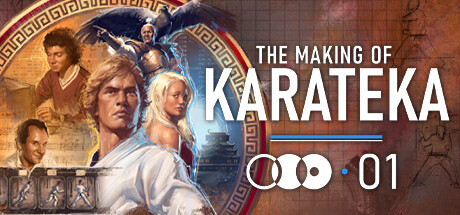
Karateka remaster and archives: The game provides an inside look at the evolution of Karateka, including multiple versions such as prototypes and modern remakes. It features a terrific remaster of Karateka with improved graphics and gameplay.
Excellent presentation of multimedia content: The game excels in presenting documents, interviews, prototypes, and remasters. It includes concept art, interviews, 3D mockups, and various iterations of games, providing a rich multimedia experience.
Inclusion of playable prototypes: Players have access to playable prototypes and earlier games, including multiple prototypes of a 40-year-old unpublished game. This feature allows users to experience the development process firsthand.
Masterclass in game preservation: The game is a triumph of game preservation, offering a thorough preservation of landmark titles. It serves as a great entry in video game historical preservation.
Common complaints
Missing game versions: The game is missing several versions, including NES, MS-DOS, and Atari 7800, which players want included.
Combat and movement issues: Combat is mainly spamming kick, and running is awkward. The hitbox on the eagle is particularly problematic.
Timing issues in Karateka Remastered: Players report problems with the timing mechanics, particularly in the panther fight and gate timing puzzle.
6 button mode issues: Problems with starting the game in 6 button mode for Atari and Commodore, and inconsistencies in the Remastered version.
Limited AI and stereotypes: The game has limited AI and contains stereotypes that some players find problematic.
Gameplay and performance
Inclusion of multiple game versions: The collection includes multiple versions and prototypes of Karateka and other games, allowing players to experience different iterations and ports of the original games.
Remastered versions of Karateka: The remastered version of Karateka includes improved graphics, music, and modern controls. It is praised for its faithful recreation and additional content like developer commentary and in-game goals.
Interactive documentary content: The game features an interactive documentary with various media types, including concept art, interviews, and gameplay iterations. This provides a behind-the-scenes look at the development process.
Development materials and timeline: An interactive timeline with video interviews, archival footage, photographs, original concept art, and design documents is included, providing a comprehensive look at the game's development history.
Playable prototypes and unreleased games: The collection features playable prototypes and other unreleased games, offering a unique opportunity to experience early versions and experiments that did not make it to the final release.
Control scheme options needed: Players want the ability to switch between different control schemes, including a six-button variation. This suggests a desire for more customizable and modern control options.
Lock framerate for consistency: There is a demand for locking the framerate to ensure consistent performance. This indicates that players are experiencing performance issues that affect their gameplay.
Flawless Steam Deck performance: The game works well on Steam Deck, which is a positive note for players using this platform. This feedback highlights the game's compatibility and smooth performance on specific hardware.
Recommendations
Interest in game history: Many players expressed a strong interest in the history of video games, including gaming industry history and development history. This includes a focus on specific eras like the Apple II era and the 1980s game publishing scene.
Positive reception of Atari 50: Players are enthusiastic about Atari 50, encouraging others to purchase and enjoy the game. This indicates a positive reception and satisfaction with the product.
Interest in specific game stories: Players showed interest in specific game development stories, such as The Jeff Minter Story and the remaster of Karateka. This highlights a desire for in-depth looks at particular games and developers.
Desire for more content: There is a desire for additional content, such as free DLC with missing versions and more content. Players are looking forward to future developments from Digital Eclipse's Gold Master series.
Appreciation for comprehensive packages: There is appreciation for comprehensive game packages, such as the one for Prince of Persia 1 & 2. Players value complete collections that offer extensive content.
Buying context
Community fair range: $18.00 - $22.00.
Game completion: 30.0h.
Story completion: 5.0h.
Session length: 0.5h.
Player profiles
History Preservationist: Explores historical content and detailed documentation. Motivation: Preservation and appreciation of game history. Stance: buy.
Curious Explorer: Explores interactive documentaries and detailed information. Motivation: Learning about game design and history. Stance: buy.
Nostalgic Veteran: Enjoys remastered classic games with historical context. Motivation: Nostalgia and appreciation for classic games. Stance: buy.