- Expansion improves game overall
- Music is masterful and beautiful
- Colossi offer fun planet destruction
- Price is too high
- Colossus is underwhelming
- Causes severe late game lag
Archetypes
What players like:
Common complaints:
Gameplay feedback:
Performance notes:
Recommendations:
Other player notes:
- -
No data available
Similar games
Blend with other games 79%Stellaris: Nemesis
 77%Stellaris: Federations
 76%Sins of a Solar Empire II
 75%Stellaris: MegaCorp
 75%Stellaris: Overlord
 74%AI War 2: The Spire Rises
 74%Stellaris: BioGenesis
 74%Stellaris: Grand Archive Story Pack
 74%Stellaris: First Contact Story Pack
 73%Stellaris: Shadows of the Shroud
 73%Stellaris: Leviathans Story Pack
 73%Interstellar Space: Genesis
Review evidence
Why players say this
Review evidence
Why players say this
Steam review verdict
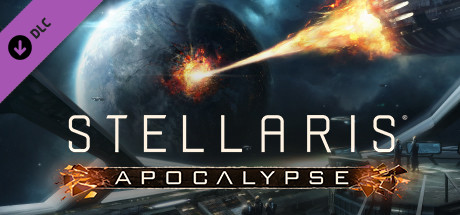
The expansion improves the game with masterful music and fun planet destruction, but the high price, underwhelming Colossus, and severe late game lag hold it back.
What players like
Marauders add mid-game challenge: Marauders are frequently praised for adding a mid-game crisis that creates both challenge and opportunity, with interesting raid and recruit mechanics that spice up local gameplay.
Colossi offer fun planet destruction: Colossi are described as absurdly fun and cool, with multiple weapon types including planet destroyers, bio-lifeform destroyers, shields, and assimilators, allowing for satisfying planet destruction strategies.
Titans are powerful capital ships: Titans are highlighted as powerful capital ships with auras and heavy weapons, serving as massive artillery ships that are valuable giant flagships.
New civics and perks are nice: New civics and ascension perks are considered nice additions, with players appreciating more options in these areas.
Music is masterful and beautiful: The game's music is praised as great, masterful, and beautiful, enhancing the overall experience.
Common complaints
Price too high: The $20 price point is considered too high for the content offered, with many users recommending waiting for a sale. Multiple clusters emphasize that the DLC is overpriced and not worth full price.
Colossus underwhelming: The Colossus is described as niche, flashy but shallow, underwhelming, and requiring an ascension perk slot that many feel is wasted. It also has a long charge time and needs escort.
Marauders are annoying: Marauders are frequently described as repetitive, annoying, and often game-breaking or unfair. Some users note that their empires disintegrate after the Khan's death, which feels abrupt.
New FTL system slow and limited: Removal of warp and wormhole FTL methods is disappointing, and the new hyperlane-only system is gimped. Travel times are very slow for large empires without wormholes or gateways.
Titans underpowered and limited: Titans are barely stronger than battleships, require late-game tech, are capped by naval capacity, and have limited customization (only one section type). This makes them underwhelming compared to expectations.
Gameplay and performance
Colossus planet destroyer added: The Colossus is a planet-destroying ship class with multiple weapon variants (e.g., Planet Cracker, Neutron Sweep, Global Pacifier) that provides a Total War casus belli. It allows players to destroy, sterilize, or shield planets, adding a powerful strategic option.
Titan class ship introduced: Titans are powerful late-game capital ships with limited numbers (e.g., 1 per 200 naval cap) that mount heavy weapons and provide system-wide auras (e.g., -10% enemy fire rate). They serve as flagships that buff the fleet.
Marauder empires added: Marauder empires are new AI factions that raid player empires and can be hired to attack rivals. They act as a mid-game challenge and add a dynamic raiding mechanic.
New ascension perks and civics: New ascension perks and civics are available, including Life-Seeded, Post-Apocalyptic, and Barbaric Despoilers. These expand empire customization options.
War exhaustion system added: War exhaustion is now a base game mechanic that increases even when winning, affecting war dynamics. It adds a strategic layer to prolonged conflicts.
Severe late game lag: Multiple reports indicate severe performance degradation, especially in the late game (after year 2350 or 100 years), with slowdowns and lag making the game barely playable even on high-end CPUs. The code is described as unoptimized spaghetti.
Multiplayer desync issues: Multiplayer is reported as impossible due to frequent desynchronizations and connectivity issues.
4.0 update worsened issues: The 4.0 update is reported to have made performance and stability worse than before.
Chinese language crash bug: A crash bug occurs specifically when the official Chinese language setting is enabled, preventing gameplay.
4K text rendering broken: Players report that text rendering is broken when playing at 4K resolution, making UI elements unreadable.
Recommendations
Wait for a sale: Many reviewers advise waiting for a sale before purchasing this DLC, citing the $20 price as too high for the content offered. They suggest buying at a significant discount, often around half price or $10, as the value is not seen as worth the full cost.
Not recommended overall: A significant number of reviewers do not recommend this DLC, citing issues like high price for little content, bugs, or that it's not suitable for beginners. Some suggest skipping it entirely or buying other DLCs like Utopia instead.
Recommended for fans: Many reviewers recommend the DLC for Stellaris fans, especially those who enjoy intense mid-late game wars, Titans, or playing as a galactic villain. It's seen as essential for wide and aggressive players, and a must-have for regular players.
Wait for updates: Several reviewers express disappointment with bugs, lack of updates, or the need for a fundamental rework. They advise waiting for patches or mods before purchasing, or reverting to an older version.
Conditional recommendations: Some reviewers give conditional recommendations, such as buying only if interested in specific elements like Titans or Marauders, or if using mods. Others suggest disabling Marauders or recommend pure corvette swarm strategies.
Buying context
Community fair range: $10.00 - $15.00.
Stellaris: Apocalypse adds significant late-game content like titans, colossus, and marauders, but the fun is locked behind many hours of play, with early game marauders posing a threat and performance issues hindering enjoyment.
Friction: late game performance issues and bugs; slow game pace requiring many hours to reach fun content; marauders can be overwhelmingly destructive early game; colossus locked behind an ascension perk and very late game research; content is primarily late game, leaving early/mid game stale for some.
Unlock drivers: reaching late game through research and tradition completion; unlocking the colossus ascension perk; surviving early game marauder raids; using game speed sliders to accelerate progress.
Player profiles
Roleplay Enthusiast: Focuses on roleplaying specific empire types (genocidal, barbaric) and using DLC features like Colossus for storytelling rather than optimal play. Motivation: Narrative immersion and thematic fun. Stance: sale.
Mechanics-Conscious Min-Maxer: Evaluates DLC content for competitive viability, avoids roleplay-only features, and prioritizes mechanical strength and value. Motivation: Efficient gameplay and cost-benefit optimization. Stance: deep sale.
Multiplayer-Focused Player: Plays primarily in multiplayer, values synchronization and reliability over single-player content. Motivation: Stable multiplayer experience. Stance: no buy.
Extra review signals
Monetization: The reviews focus entirely on the high price of Stellaris DLCs and the perception that Paradox prioritizes DLC revenue over fixing the game. There is no evidence of microtransactions, pay-to-win mechanics, loot boxes, currency obfuscation, or other predatory monetization within the game itself. All complaints are about the upfront cost of expansions, which falls under base-price and DLC pricing complaints. According to the scoring rules, such complaints cannot push the score above 20. Therefore, the monetization model is considered fair (one-time purchase with traditional DLCs), and the score is set to 10 to reflect mild dissatisfaction with pricing but no predatory behavior.