- Extensive music source integration for gameplay.
- Stunning, reactive visuals enhance experience.
- Deep ship customization and progression system.
- Generally recommended, especially on sale.
- Overwhelming visuals may cause health issues.
- Repetitive gameplay, lacks variety.
What players like:
Common complaints:
Gameplay feedback:
Performance notes:
Recommendations:
Other player notes:
Similar games
Blend with other games





Review evidence
Why players say this
Review evidence
Why players say this
What players like
Extensive music source integration: The game seamlessly integrates with various music sources, including local files, streaming services like Spotify and YouTube, and even live audio input via the 'Open Mic' feature. This allows players to personalize their experience and enjoy the game with their favorite music.
Vastly improved over original: Beat Hazard 2 significantly improves upon the original game with enhanced graphics, smoother gameplay, and more content. The game offers quality of life improvements, new features, and a more visually appealing and ergonomic interface.
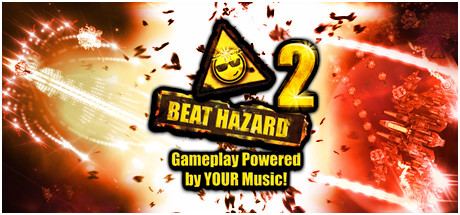
Stunning, reactive visuals: The game features visually stunning graphics with vibrant colors, dazzling particle effects, and a dynamic 3D lighting system that reacts to the music. The visuals can be intense, but options are available to adjust the intensity for player comfort.
Deep ship customization and progression: The game features extensive ship and weapon customization, unlockable modules, and a rewarding progression system. Completing Shadow Missions unlocks perks, encouraging exploration of the music library and providing a sense of accomplishment.
Unique daily challenges: The game features daily and lightning challenges that offer new and varied gameplay experiences. Each track creates a unique gaming experience, and the amount of enjoyment depends on the player's success and connection to the music.
Common complaints
Overwhelming visuals cause health issues: The game's intense and chaotic visuals, especially flashing lights, can cause eye strain, headaches, and even trigger epileptic episodes. The intensity is exacerbated by a mechanic that ties score multipliers to visual effects, forcing players to endure discomfort for high scores. Accessibility options to reduce these effects are lacking.
Repetitive gameplay, lacks variety: Players find the gameplay loop repetitive due to procedurally generated levels lacking variety, a grindy upgrade system, and the re-use of enemies and bosses. Many reviewers feel the game doesn't offer enough new content compared to the original, making it feel more like an expansion than a sequel.
Frequent crashes and bugs: The game suffers from frequent crashes, VR issues, infinite loading screens, and other bugs that make it unstable and sometimes unplayable. VR support is particularly problematic, with issues persisting for a long time without fixes.
'Open Mic' feature is broken: The 'Open Mic' feature is plagued with issues, including poor music recognition, audio imbalances, and excessive visual brightness. These problems detract from the intended experience and can even cause discomfort.
Poor music recognition, desynchronization: The game struggles to accurately identify music, leading to incorrect song titles and challenges that are impossible to complete. The core gimmick of music affecting gameplay feels disconnected and ineffective.
Gameplay and performance
Music-driven procedural generation: The game dynamically generates levels, enemies, and bosses based on the music being played from various sources, including local files, streaming services, and even microphone input. This core mechanic creates a unique and interactive experience where the gameplay is directly influenced by the chosen music.
Twin-stick bullet hell gameplay: The core gameplay revolves around twin-stick shooter mechanics in a bullet hell environment. Players control a ship to battle enemies, dodge projectiles, and score points while the music intensifies the action.
Weapons, abilities, and perks: Players can utilize various weapons, abilities, and perks to combat enemies and enhance their ship's capabilities. Leveling up unlocks perks that can be upgraded to increase score, firepower, and survivability.
Procedural bosses and enemy variety: The game features procedurally generated bosses with varying appearances and weaponry. New enemy types and bosses have been added, increasing enemy health and variety compared to the first game.
Multiple modes and challenges: The game offers various modes, including standard, survival, bosses, and relaxation, with local co-op for up to 4 players. Daily and emergency challenges are available for competition, requiring maxed-out upgrades to be competitive.
Technical issues and poor performance: The game suffers from technical issues. Players report crashes, sound problems, VR conflicts, and performance stutters during song identification, even on high-end PCs. Troubleshooting can be time-consuming.
Unnoticeable ASW on Rift: The reviewer didn't notice ASW (Asynchronous Spacewarp) on Rift. This suggests that the game is running smoothly enough in VR to avoid the need for ASW, which is a technique used to maintain a smooth framerate by interpolating frames.
Supports Ultrawide Resolution: The game supports ultrawide resolutions. This is a positive feature for players with ultrawide monitors, as it allows them to play the game without stretching or distortion.
Recommendations
Generally recommended, especially on sale: Beat Hazard 2 is generally recommended, especially for newcomers or fans of the original seeking more content. Reviewers praise its improvements and replayability, suggesting it's worth the price, particularly on sale. The game is considered a good starting point for the series.
Overly complex, frustrating experience: Some reviewers suggest that Beat Hazard 2 sacrifices core gameplay for sensory overload and complexity. They recommend sticking with the first game or waiting for a sale due to frustrating visuals, controls, and difficulty spikes. Some even advise against purchasing it in its current state.
Hopes for further development: Reviewers express hope for continued development and improvements, particularly regarding the scoring system and the addition of new features. Some feel the game has potential to be more than it currently is and suggest that further updates could enhance the overall experience and replayability.
VR implementation is inconsistent: VR implementation receives mixed feedback. While some are happy with the VR mode, others strongly advise against buying the game solely for VR due to issues like incompatibility with Meta Quest and performance concerns. Testing the VR mode before committing is recommended.
Enhanced enjoyment when sleep-deprived: One reviewer jokingly rated the game 12/10 when sleep-deprived, suggesting enhanced enjoyment under those specific conditions. This point is included for completeness but has a low importance score due to its subjective and non-specific nature.
Other review notes
Early Access, language support: The game is in early access and has language support for Russian, Chinese, and Japanese. This provides information about the game's development stage and language options.
Includes seizure warning: The game includes a seizure warning due to bright flashing lights, advising caution for those with epilepsy or light sensitivity. This is an important accessibility consideration for players.
Dedicated song directory: The game provides a dedicated directory for users to add their own music. This allows for easy customization of the game's soundtrack.
Buggy VR support (alpha): VR support is currently in alpha and has several bugs. Players interested in VR should be aware of the early state of this feature.
Amazon server login issues: Login issues are attributed to the game's use of Amazon's servers. This is a technical issue that impacts the player experience.