- Engrossing story and plot
- Kuroyuki route highly praised
- Hanzo route shows heroine growth
- Uncomfortable relationship dynamics
- Weak and passive heroine
- Repetitive routes and tedious gameplay
Emotions
Archetypes
What players like:
Common complaints:
Gameplay feedback:
Performance notes:
- -
No data available
Recommendations:
Other player notes:
Similar games
Blend with other games




Review evidence
Why players say this
Review evidence
Why players say this
Steam review verdict
An engrossing story with a praised Kuroyuki route and Hanzo-route heroine growth, but a weak, passive heroine, uncomfortable dynamics, and repetitive, tedious routes weaken it.
What players like
Engrossing story and plot: The story is described as engrossing, fantastic, and well-written, with many unexpected twists that keep players invested. The narrative improves after routes split and features strong emotional moments.
Kuroyuki route highly praised: Many players find Kuroyuki's route the most entertaining, citing comedic dialogue, a quick-recovering heroine, and a cute, affectionate male lead. His voice acting and warm happy ending are also highlighted.
Hanzo route shows heroine growth: Hanzo's route is praised for clear heroine development, especially in combat ability. Players also enjoy Hanzo's reliable, strong, and kind character, as well as the sweet romance and healing story.
Beautiful art style: The art style, particularly the CG artwork and character designs by Teita, is frequently described as extremely beautiful and gorgeous. Specific CGs, like the campfire scene, are also singled out for praise.
Excellent voice acting: The voice acting is widely praised, with players highlighting the stellar cast, including Hikaru Midorikawa, Kenjiro Tsuda, and others. The performances are described as superb and elevating emotional scenes.
Common complaints
Uncomfortable relationship dynamics: The game features romanceable characters who are the protagonist's cousin or adoptive brothers, and large age gaps between the 16-year-old MC and adult love interests. Reviewers find these tropes uncomfortable and believe the game normalizes them.
Weak and passive heroine: The protagonist is often described as bland, indecisive, and lacking agency, with little growth across routes. Her constant passivity and reliance on others frustrate players.
Repetitive routes and tedious gameplay: Multiple reviewers complain about repetitive battle scenes, escape sequences, and forced interactions that cannot be skipped. The linear structure and lack of variety make replays feel like a chore.
Poor pacing and rushed plot: The story is criticized for being rushed with little buildup, childish early chapters, and a slow-burn that becomes boring. Inconsistencies and forced plot points further detract from the narrative.
Inconsistent route quality: Players note that some routes are poorly written, dragged out, or feel forced, while others are more enjoyable. The discrepancy makes the overall experience uneven.
Gameplay and performance
Multiple character routes structure: The game is a visual novel with a common route that branches into individual character routes, each with its own storyline.
Multiple endings per route: Each character route has multiple endings, including happy endings and bad endings.
Achievements require full completion: Achievements require selecting all choices, replaying the story, and completing all endings to unlock bonus content.
Choices affect affection and routes: Dialogue choices influence affection levels and determine which character route the player enters.
Bad endings include forced deaths: Some bad endings involve double suicide or forced plot deaths triggered by wrong decisions.
Recommendations
Mixed Overall Recommendations: Opinions are divided, with some strongly recommending the game and others advising against it. Potential buyers are encouraged to try it themselves to see if it appeals to them.
Caution for Non-Kuroyuki Routes: Those interested in other male characters are advised to think twice and consider purchasing a physical cartridge. This implies variable quality across routes.
Investing Story Despite Suffering: The narrative gets players invested, and some recommend it despite emotional suffering due to the art style. It appeals to those who value deep engagement.
Taboo Relationships Warning: The game features huge age gaps and a love interest related to the MC, which may deter some players. Those who can overlook these elements might enjoy it.
Historical Ninja Theme Appeal: Fans of historical otome and ninja themes are specifically recommended, suggesting the setting is well-executed for enthusiasts.
Buying context
Story completion: 11.0h.
Player profiles
Art-First Otome Aesthete: Pushes through slow or flawed sections for visual rewards and judges routes partly by CG quality and art appeal. Motivation: Seeing beautiful character art, romantic CGs, and attractive visual design. Stance: buy.
Route-Completionist Otome Veteran: Plans route order carefully, completes all routes and achievements, and avoids repeating similar routes back to back. Motivation: Unlocking the full story, true ending, and emotional payoff across every route. Stance: buy.
Character-Loyal Romance Player: Picks first routes by character charm or design, follows favorite love interests, and seeks sweet scenes and DLC content. Motivation: Spending time with appealing love interests and enjoying romantic route moments. Stance: buy.
Other review notes
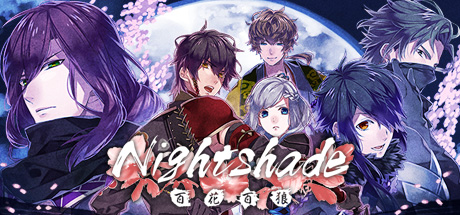
High-quality CG and voice acting: Players praise the high-quality CG artwork and voice acting. The game is fully voiced in Japanese by veteran voice actors, and the art is by Teita.
Multi-platform availability: The game is available on PC (Steam), Nintendo Switch, PS Vita, WeGame, and 1001. Some ported versions have technical issues.
Chinese language support lacking: The game does not include Chinese localization on Steam, requiring a fan-made patch. A Chinese patch is available, and the Chinese version was previously exclusive to WeGame.
Post-Sengoku Japan setting: Set in post-Sengoku Japan during a fragile era of peace, where the Kōga and Iga clans have nominally united under the Tokugawa regime. The protagonist is Enju Ueno, heiress of the Kōga clan.
Darker themes than typical otome: Nightshade explores darker themes compared to lighter otome titles, and the squad's blind loyalty is compared to another title.