- Engaging and polished arcade-style air combat
- Stunning visuals with dynamic weather effects
- High replayability and varied content
- Accessible controls for newcomers
- Unrealistic combat feels restrictive
- Poor mission design and frustrating progression
Emotions
What players like:
Common complaints:
Gameplay feedback:
Performance notes:
Recommendations:
Other player notes:
Similar games
Blend with other games


Review evidence
Why players say this
Review evidence
Why players say this
What players like
Engaging and polished gameplay: The gameplay is frequently highlighted as fun, smooth, and well-designed, with responsive controls and a satisfying blend of arcade and simulation elements. Players appreciate the variety in missions, the learning curve, and the replayability.
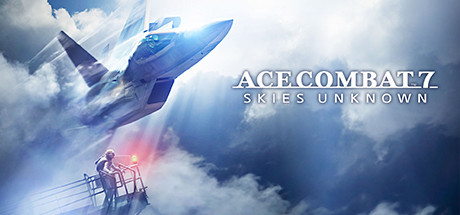
Stunning visuals and graphics: Players consistently praise the game's visuals, including detailed aircraft models, realistic clouds, weather effects, and breathtaking environments. The graphics are described as outstanding, photorealistic, and visually impressive even years after release.
High replayability and content: The game offers extensive replay value through aircraft customization, weapon loadouts, difficulty settings, and mod support. Players also enjoy replaying missions to achieve higher ranks or experience the story again.
Compelling and immersive story: The narrative is praised for its emotional depth, engaging twists, and anime-like style. Players find the story immersive, well-delivered, and capable of evoking strong emotions, even if it is not overly complex.
Accessible for newcomers: The game is designed to be beginner-friendly, with intuitive controls, adjustable difficulty settings, and a gentle learning curve. This makes it appealing to both casual players and fans of the series.
Common complaints
Combat feels unrealistic and restrictive: Players criticize the combat mechanics for being unrealistic, overly scripted, and restrictive. Many missions enforce a single way to complete objectives, reducing player agency and making gameplay feel repetitive and frustrating. The lack of realism, such as undetectable stealth aircraft or scripted enemy behavior, further detracts from immersion.
Poor mission design and linearity: Missions are frequently described as linear, grindy, and poorly designed. Players highlight issues such as mid-mission objective changes, lack of checkpoints, and excessive time limits, which create unnecessary stress and frustration. The repetitive nature of missions, particularly ground-attack tasks, contributes to a lack of replayability and enjoyment.
Frustrating flight mechanics and controls: Flight mechanics are described as arcade-like, unrealistic, and poorly optimized for various control schemes, including HOTAS, joysticks, and keyboard/mouse. Players report difficulties with controls, such as unresponsive inputs, poor sensitivity settings, and lack of customization, which make the game feel clunky and frustrating to play.
Unbalanced difficulty and progression: The game's difficulty is inconsistent, with some missions feeling overly punishing due to steep difficulty spikes, lack of checkpoints, or unclear objectives. Players also report issues with progression, such as unclear tech tree mechanics and save file corruption, which disrupt the gameplay experience.
Weak and confusing storytelling: The story is widely criticized for being poorly written, confusing, and unengaging. Players note that the narrative jumps between perspectives, lacks emotional depth, and often feels rushed or nonsensical. The execution of cutscenes and dialogue further undermines the storytelling, making it difficult for players to stay invested in the plot or characters.
Gameplay and performance
Arcade-style air combat focus: The game emphasizes fast-paced, arcade-style air combat with exaggerated maneuvers, large missile inventories, and a blend of realistic and unrealistic elements. Players engage in high-speed dogfights, ground attacks, and large-scale aerial battles, prioritizing fun over realism.
Mission variety and dynamic objectives: The game features 20+ missions with diverse objectives, including escort, stealth, air superiority, and ground attacks. Missions often include mid-mission objective changes, time limits, and environmental challenges like weather or low visibility, adding depth to gameplay.
Progression and unlockables: Players progress by unlocking aircraft, weapons, and special abilities through mission completion and earning in-game currency. Optional challenges, such as defeating aces or earning medals, provide additional replay value without requiring grinding.
Fictional universe and storytelling: Set in an alternate world with global conflicts, the game features a narrative-driven campaign with rival nations, betrayals, and sci-fi elements like drones and superweapons. The story unfolds during missions but is not the primary focus.
Controller optimization and settings: The game requires fine-tuning of controller settings (e.g., dead zones, linearity) for optimal performance. Players are encouraged to adjust these settings early to improve the flight experience, especially for newcomers.
Excellent optimization and performance: The game is widely praised for its strong optimization, running smoothly on a variety of hardware, including older systems, mid-range GPUs, and the Steam Deck. Players report high FPS, stable performance, and improved visuals/sound compared to older versions. Battery drain on Steam Deck is noted as a minor drawback.
Limited native ultrawide/VR support: The game lacks native support for ultrawide resolutions, multi-monitor setups, and VR/flight stick peripherals. Players must rely on mods (e.g., UEVR) or third-party fixes to enable these features, which can introduce technical hurdles.
Minor performance issues on specific setups: While generally well-optimized, some players report micro-stutters causing control issues or high temperatures on high-end hardware (e.g., 4060ti). These issues are isolated but impact user experience in specific scenarios.
Recommendations
Strong sale recommendation: The majority of reviewers emphasize that the game is worth purchasing, but almost exclusively during sales or at a discounted price. Many suggest it is not worth the full MSRP, citing better value at lower price points. This sentiment is highly consistent across clusters, particularly Cluster 1.
Low full-price value: A significant portion of reviewers explicitly state that the game is not worth its full price, recommending it only during sales or at steep discounts. This aligns with the broader trend of sale-based recommendations but highlights dissatisfaction with the game's value at MSRP, as seen in Clusters 1 and 19.
Mixed reception for newcomers: While the game is often recommended for newcomers to the series (especially if purchased on sale), some reviewers caution that it may not live up to the expectations set by older titles in the series. This creates a divide in recommendations for first-time players, as seen in Clusters 2 and 4.
Target audience: arcade flight fans: The game is repeatedly recommended for fans of arcade-style flight combat, aviation enthusiasts, and long-time series fans. Reviewers highlight its appeal to those seeking a fun, fast-paced experience without the complexity of realistic flight simulators. This is a core strength of the game, as noted in Clusters 2 and 11.
VR and hardware limitations: The game is highly recommended for VR users seeking immersion, but reviewers note technical limitations such as poor HOTAS support, performance issues on Steam Deck, and overheating. These hardware-related frustrations are mentioned in Clusters 2 and 7, but they are not universal experiences.
Other review notes
Nostalgic appeal and series loyalty: Many players express strong nostalgia for older Ace Combat titles (e.g., AC4, AC5) and view *Ace Combat 7* as a continuation of the series' legacy. The game's appeal is heightened for long-time fans who appreciate its callbacks to classic entries, though some feel it falls short of expectations set by predecessors like *Project Wingman* or *Ace Combat 3*.
Grinding unnecessary for progress: Players note that grinding is not required to complete the game, though some engage in it for payouts or replayability. This design choice is praised for catering to both casual and dedicated players.
Value and pricing concerns: The game's value is debated, with some players feeling it justifies its price (especially during sales) while others criticize the volume of DLCs (22 total) and high cost of the Ultimate Edition. Replayability is noted as moderate, with 1-2 additional playthroughs possible.
Accessibility and controls: The game is described as easy to learn but hard to master, with difficulty varying by player skill. Beginners are advised to adjust controls (e.g., 'Beginner' flight mode) and use a controller for the best experience. Some players express frustration with the lack of VR support.
Generational and social appeal: The game resonates across age groups, with older players sharing nostalgic memories (e.g., playing with parents) and introducing it to younger generations (e.g., children). Its themes and content are deemed suitable for teens and adults, though some note it may not engage casual players.