- Highly praised and chaotic gameplay experience.
- Strong, welcoming community engagement.
- Diverse class playstyles and unique characters.
- Free to play with no pay-to-win.
- Lack of updates and developer involvement.
- Presence of hackers, bots, and server issues.
Emotions
Archetypes
Hardware
What players like:
Common complaints:
Gameplay feedback:
Performance notes:
Recommendations:
Other player notes:
Similar games
Blend with other games






Review evidence
Why players say this
Review evidence
Why players say this
What players like
Highly praised gameplay: The game is frequently described as fun, enjoyable, and well-developed. Players appreciate its engaging and interesting gameplay mechanics, which contribute to its status as a classic and must-play game.
Strong and welcoming community: The community is highlighted as one of the game's strongest points. It is described as amazing, kind, vibrant, and welcoming, which enhances the overall gaming experience.
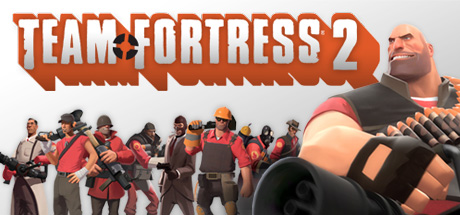
Diverse class playstyles: The game offers a variety of classes, each with unique playstyles and abilities. This diversity adds depth and replayability to the gameplay.
Unique and iconic characters: The game features characters with distinct personalities and charisma. These characters are often seen as more memorable and unique compared to those in newer games.
Excellent design and balance: The game is noted for its excellent design, balance, and visual and audio elements. Players find it enjoyable and well-rated even by today's standards.
Common complaints
Lack of updates and developer involvement: Players have noted a significant lack of meaningful updates and developer involvement since 2017. This includes infrequent updates and a perceived abandonment by the developers.
Presence of hackers and bots: The game is plagued by hackers, cheaters, and bots, which negatively impact the gameplay experience. This issue is frequently mentioned by players.
Matchmaking and queue issues: Players report problems with the matchmaking system, including long queue times, unbalanced teams, and a frustrating queue system.
Difficult for beginners: The game has a steep learning curve and can be difficult for beginners to get into. The complexity of some classes and the overall harsh environment for new players are noted.
Performance and server issues: There are reports of poor server performance, optimization issues, and low player activity on servers. Community servers are often empty.
Gameplay and performance
Chaotic and fast gameplay: The gameplay is described as chaotic, fast-paced, and less tactical compared to other FPS games, offering a unique and humorous experience.
Variety of game modes: The game features multiple game modes and maps, offering diverse gameplay experiences and scenarios.
Community servers with custom content: Community servers offer unique maps, modes, and custom game modes, providing a variety of content created by the community.
Unique movement mechanics: Certain classes have unique movement abilities, such as rocket jumping for the Soldier and double jumping for the Scout.
Team-based shooter: The game is a team-based FPS that emphasizes class-based strategy and cooperative play.
Performance and optimization issues: Many players report performance issues, including server lag, poor optimization, and high resource usage, which affect the gameplay experience.
Old engine causing problems: The game's aging engine is cited as a source of various technical issues, including an inability to handle numerous cosmetics.
Game freezing and technical issues: Players experience game freezing, shutting down, and various technical issues that disrupt gameplay.
Outdated default settings: The default settings and hardware specifications are based on outdated machines, which can lead to suboptimal performance on modern systems.
File bloat affecting performance: File bloat is mentioned as a factor affecting the game's performance, potentially leading to slower load times and other issues.
Recommendations
Highly recommended for fun gameplay: Many players strongly recommend the game for its unique and enjoyable experience, highlighting its engaging and team-based gameplay.
Try different classes and modes: Players suggest trying all the different classes and not sticking to just one mode like 2Fort or casual, to get the full experience of the game.
Great with friends: The game is highly recommended for playing with friends, enhancing the overall experience.
Recommended for shooter fans: The game is recommended for those who enjoy shooters with humor, personality, and unique style.
Recommended despite some flaws: Some players recommend the game even though it has certain flaws, suggesting that the overall experience is still worthwhile.
Buying context
Community fair range: $0.00 - $10.00.
Game completion: 1000.0h.
Session length: 2.0h.
Endgame: 2000.0h.
Team Fortress 2 has a steep learning curve and initial frustrations, but it becomes fun and addictive once players overcome these hurdles and learn the mechanics, especially when playing with friends.
Reported time to anchor: 3h.
Friction: Long queue times; Steep learning curve; Repetitive gameplay; Unbalanced weapons; Toxic community.
Player profiles
Nostalgic Veteran: Reflective and community-oriented. Motivation: Nostalgia and past experiences. Stance: no buy.
Casual Socializer: Casual and social. Motivation: Social interaction and humor. Stance: buy.
Struggling Newcomer: Trial and error, learning-oriented. Motivation: Learning and improving. Stance: deep sale.
Platform notes
The game generally performs well across most hardware cohorts, with positive feedback dominating in lower VRAM configurations and mixed results in higher VRAM setups due to occasional lag and optimization issues.
Windows <8GB VRAM: positive. The game runs well even on lower-end hardware, with some reports of crashes and graphical issues.
Windows 8-11GB VRAM: negative. Poor optimization reported, requiring significant time investment to improve performance.
Windows 12-15GB VRAM: mixed. While praised as a classic, there are reports of significant lag issues.
Steam Deck: The analysis of user feedback for Team Fortress 2 on the Steam Deck reveals several significant issues. The most prominent problems include compatibility issues with Proton and Linux, performance and configuration challenges, control and input difficulties, and ineffective anti-cheat systems. These issues collectively contribute to a less-than-optimal gaming experience on the Steam Deck. However, there are also reports of positive performance, indicating that the game can run well under specific conditions.
Linux and Proton: The game has significant issues with launch reliability and stability on Linux, often requiring specific tweaks and workarounds to run properly. However, there are also reports of the game running well on certain hardware configurations. The overall experience is mixed, with notable friction points for Linux users.
Extra review signals
Monetization: The game exhibits several predatory monetization practices, including pay-to-win mechanics, paywalled communication features, and locked cosmetics with gameplay advantages. While there is positive feedback regarding the free-to-play model and lack of pay-to-win mechanics from some players, the overall sentiment leans towards frustration with the game's monetization strategies. The presence of paywalls for essential content and communication features significantly impacts the user experience, leading to a high severity rating for these issues.
External guides: The analysis of user feedback reveals several key themes. Technical issues, such as difficulties with alt-tabbing and poor default settings, significantly impact the user experience. The reliance on the TF2 wiki for game information and customization is notable, indicating a need for better in-game resources. Additionally, users appreciate the variety of classes, achievements, and the balance between simplicity and depth in the game, which are seen as positive aspects.
Other review notes
Review popularity and awards: A review has gained significant attention, receiving many likes and an award, indicating it resonated with the community.
Players discuss playtime and accounts: Players are talking about their total playtime and the possibility of having multiple accounts.