- Best of the original trilogy
- Interesting and charming game
- Excellent side quests
- Frequent bugs and crashes
- Short and simple story
- Aged graphics and technology
Emotions
Archetypes
Hardware
What players like:
Common complaints:
Gameplay feedback:
Performance notes:
Recommendations:
Other player notes:
Similar games
Blend with other games 87%S.T.A.L.K.E.R.: Call of Prypiat - Enhanced Edition
 87%S.T.A.L.K.E.R.: Shadow of Chornobyl - Enhanced Edition
 86%S.T.A.L.K.E.R.: Clear Sky
 85%S.T.A.L.K.E.R.: Shadow of Chernobyl
 83%Tunguska: The Visitation - Final Cut
 83%Metro Exodus
 82%Atomfall
 82%S.T.A.L.K.E.R.: Clear Sky - Enhanced Edition
 81%Metro: Last Light Redux
 81%Chernobylite Complete Edition
 81%Horizon Zero Dawn™ Complete Edition
 80%S.T.A.L.K.E.R. 2: Heart of Chornobyl
Review evidence
Why players say this
Review evidence
Why players say this
Steam review verdict
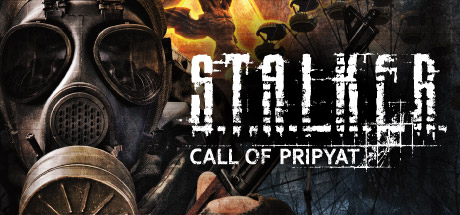
Charming and arguably the best of the original trilogy, it boasts excellent side quests, but frequent bugs and crashes, a short simple story, and aged graphics and technology hold it back.
What players like
Best of the original trilogy: Many reviewers consider this the best part of the original trilogy, both technically and narratively, and a perfect closer to the saga.
Interesting and charming game: Players widely find the game interesting, well-made, and full of unique charm and captivating atmosphere. The overall gameplay is considered excellent.
Most polished and stable entry: This game is frequently described as the most polished and stable in the series, with fewer bugs and significant improvements over previous titles.
Excellent side quests: Side quests are frequently praised as interesting, well-written, and developed with their own stories and characters, rather than simple fetch or kill tasks.
Varied and well-designed quests: Quests offer variability, are well-designed, and many are interlinked, providing multiple ways to complete them.
Common complaints
Frequent bugs and crashes: The game suffers from numerous bugs, including game-breaking issues and crashes, some caused by the X-Ray engine. Occasional minor bugs are also reported.
Short and simple story: The main story is short, simple, and lacks strong motivation, with little narrative depth.
Story weaker than predecessors: The story is simplified and less elaborate compared to previous games, particularly Shadow of Chernobyl.
Aged graphics and technology: The game shows its age technically and visually, with dated graphics and performance issues.
Mediocre plot: The plot is not great and considered mediocre, failing to engage players.
Gameplay and performance
Open-world exploration across multiple maps: Players explore a large open world divided into multiple maps, including Zaton, Yanov, and Pripyat. The design features interconnected locations filled with events and minimal loading between areas.
Engaging side quests with depth: The game offers numerous side quests that are on par with the main story, featuring developed characters and additional narratives. These quests can be completed alongside the main storyline and enrich the overall experience.
Player choices impact multiple endings: Missions and faction choices affect how the game ends, leading to multiple endings based on player decisions. Side quests also influence the outcome, adding replay value.
First-person shooter with RPG and survival elements: The game blends first-person shooter combat with RPG mechanics and survival elements, set in a post-apocalyptic open world. Players engage in shooting, exploration, and character progression.
Weapon and armor modification system: Players can modify and repair weapons and armor using money and purchased parts. The system includes upgrades and customization options.
Crashes during save/load: The game frequently crashes when saving or loading, including when entering the load game screen or with specific mods like Arsenal Overhaul 3. This is a common and frustrating issue.
Runs well on low-end hardware: Many players find the game runs smoothly on weak devices, including low graphics settings, Chromebooks, and Steam Decks. Clusters 5, 14, 17, and 23 confirm this.
Crashes triggered by specific actions: Crashes occur during various in-game actions such as sleeping, changing armor, talking to a trader, crouching, reloading a save, and saving. Cluster 21 lists these triggers, while Cluster 15 mentions resolution changes and Cluster 20 notes frequent crashes on Jupiter.
Engine instability and random crashes: The X-Ray engine causes random crashes on restart and mid-game, with some users noting it is more stable than earlier parts but still problematic. Cluster 2 and Cluster 4 highlight engine-related issues.
High-end hardware needed for max settings: Max graphics settings require a powerful computer, and the enhanced version has excessive system demands. Clusters 6, 22, and 18 indicate performance varies with hardware.
Recommendations
Highly recommended to everyone: Reviewers strongly recommend the game to all players, often with enthusiastic language like 'highly recommend' and 'wholeheartedly recommend'.
Play Shadow of Chernobyl first: Many reviewers advise playing Shadow of Chernobyl before this game to understand references and lore; they do not recommend this as a first entry for series newcomers.
Best game in the series: Multiple reviewers consider this the best and most cohesive game in the STALKER series, calling it the best part of the original trilogy.
Use mods for better experience: Many recommend installing mods such as ABR, Gunslinger, or Zone Reclamation Project to improve graphics, fix bugs, and enhance gameplay.
Good for newcomers to series: Some reviewers recommend this game as a starting point for newcomers, though opinions are mixed on whether to play earlier entries first.
Buying context
Community fair range: $20.00 - $40.00.
Game completion: 22.0h.
Story completion: 16.0h.
Session length: 0.8h.
Players describe a rough, self-taught opening followed by enjoyment once they persist past the first hour and progress into stronger pacing.
Friction: No tutorial, introductory cutscene, or basic explanation; Players are dropped in and must learn what things are on their own; Early combat is tense and can be difficult; Story can feel slow-moving; World can feel too spread out; Economy and progression can feel odd or too easy.
Unlock drivers: Persisting past the first hour; Reaching the mid-to-late game, when combat becomes a breeze; Lowering difficulty settings if the game feels too tough; Using the xrMPE co-op mod; Focusing on mechanics rather than the story.
Player profiles
Hardcore Survival FPS Purist: Plays cautiously on higher difficulty, values survival tension, and treats the game as a hardcore FPS survival experience. Motivation: Overcoming tense, punishing survival challenges in an immersive world. Stance: buy.
Modded Co-op Zone Veteran: Installs community mods such as XRMPE and plays co-op or heavily modded survival sessions. Motivation: Shared modded co-op runs and customized survival experiences. Stance: buy.
Story-Continuity Newcomer: Follows trilogy order, pays attention to narrative context, and may start here before exploring earlier entries. Motivation: Understanding the series story and experiencing the franchise in the intended order. Stance: buy.
Platform notes
The provided Windows cohort with under 8GB VRAM has only one included recommended report, which is positive and mentions no performance or stability problems.
Windows <8GB VRAM: positive. The only included review is recommended and reports a good gameplay experience, with no stability or performance issues mentioned.
Extra review signals
Monetization: The reviews contain no direct evidence of real-money gacha, loot boxes, battle passes, paid power, paid convenience, or a cash shop. Complaints center on upfront price, compact content size, one ambiguous paywall reference, and publisher conduct. These are insufficient to confirm predatory monetization under the evidence threshold.
Other review notes
Part of classic STALKER trilogy: It is the concluding part of the legendary S.T.A.L.K.E.R. trilogy, often considered the best expansion and most technically advanced of the three.
Dated graphics: The graphics are considered poor for the release year, not modern, and show the game's technical age, though mods can slightly improve them.
Large modding community: The game has extensive mod support, with numerous quality-of-life and visual mods created by a dedicated fan base.
Free standalone mods: STALKER Anomaly is a free standalone mod made by fans, and the GAMMA modpack combines 330+ mods for Anomaly; other mods like Escape from Pripyat exist.
Improved stability and optimization: Compared to Shadow of Chernobyl and Clear Sky, the game is more polished, stable, and less buggy, with better optimization.