- Fun, social, and hilarious courtroom experience.
- Unique, humorous courtroom roleplay.
- Extensive customization enhances the fun.
- Generally recommended, worthwhile purchase.
- Relies heavily on player improvisation.
- Frequent connectivity issues/disconnects.
What players like:
Common complaints:
Gameplay feedback:
Performance notes:
Recommendations:
Other player notes:
Similar games
Blend with other games






Review evidence
Why players say this
Review evidence
Why players say this
What players like
Fun, social, and hilarious experience: The game is highly enjoyable, especially when played with friends or in public lobbies. Its interactive nature and potential for hilarious, chaotic moments make it a great choice for social gaming and parties. Players consistently report having a blast and forming connections within the game.
Unique, humorous courtroom roleplay: The game provides a unique courtroom role-playing experience where players can argue ridiculous cases and create memorable moments. The ability to put friends on trial in a 'kangaroo court' setting is a key aspect of the fun, allowing for humorous and creative interactions.
Extensive customization enhances fun: The game's customization options, particularly the ability to create custom card decks and evidence, significantly enhance the experience. This allows players to incorporate inside jokes, tailor the game to their group, and create emergent, unpredictable storylines. Customization of characters, such as socks, also adds to the enjoyment.
Great value, expanded content: The full game offers a significant amount of content compared to the demo, making it well worth the low price. New roles, mechanics, and features add to the replayability and overall enjoyment. The game is considered a steal for its price point.
Customizable socks and good soundtrack: The game offers customization options, including sock customization. The soundtrack is surprisingly good.
Common complaints
Relies heavily on player improv: The game's reliance on player-driven content and improv can lead to a lack of structure, repetitive gameplay, and a quickly diminishing appeal, especially for those not skilled at improvisation or playing with uncooperative groups. The core gameplay loop depends heavily on the players' creativity and engagement, which can be inconsistent and lead to a disappointing experience if players don't actively participate or lack the necessary skills.
Limited, unbalanced evidence cards: The limited variety and perceived imbalance of evidence cards, coupled with the default deck's lack of utility, restricts strategic options and replayability. Players desire more diverse and balanced evidence options to enhance the depth and adaptability of their arguments.
Requires a large, engaged group: The game's enjoyment is significantly diminished with fewer players, particularly without friends, due to reduced energy and fewer opportunities for dynamic interactions. The game requires a critical mass of engaged participants to reach its full potential.
Lacks language/chat support: The absence of language support and in-game communication features creates barriers for non-English speakers and players without microphones. This limits accessibility and inclusivity, hindering the ability of some players to fully participate and enjoy the game.
Unengaging spectator roles: Roles like jurors and bailiffs offer limited engagement, reducing player agency and enjoyment. Many players feel like spectators, especially when not directly involved as witnesses or journalists, leading to a less immersive experience.
Gameplay and performance
Courtroom drama with social elements: The game blends elements of social deduction, courtroom drama, and improv, casting players as defendants in a judicial process. It's designed as a cooperative experience for groups, emphasizing player interaction and creative problem-solving within a courtroom setting.
Unique role-specific mechanics: Specific roles, such as the journalist and witness, have unique mechanics. The journalist provides evidence through drawings and headlines, while the judge can assign the witness role to either side, adding strategic depth.
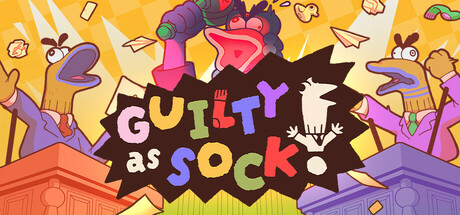
Customizable characters, varied roles: The game features customizable sock characters and diverse roles like judge, accusant, and journalist. Players can engage in humorous actions like throwing socks, adding a layer of absurdity to the courtroom setting.
Initial clunky card/jury systems: Early versions of the game had issues with the card system feeling clunky and the jury system being ineffective for larger groups. These initial shortcomings may have impacted the early player experience.
Creativity requires group interaction: The game's creativity is only limited by the players themselves, and requires interaction with a group of people to play.
Good optimization, few bugs: The game demonstrates good optimization, running smoothly on older PCs and exhibiting a lack of bugs. This suggests a stable and accessible experience for a wide range of players, indicating a polished final product.
Recommendations
Generally recommended, worthwhile purchase: The game is widely recommended and considered a worthwhile purchase by many reviewers. They highlight its fun and engaging gameplay, often emphasizing its value for the price. Some reviewers mention specific issues that need resolution but still lean towards recommending the game.
Lacks structure, wasted potential: One reviewer feels the game is a waste of time, while another acknowledges its potential but notes a lack of structure. This suggests that the game may not be fully realized or polished in its current state.
Demo is very limited: The demo is extremely bare-bones compared to the full game. This may not give players an accurate representation of the full game experience.
Customize deck quickly: Creating a custom deck quickly is recommended. This suggests that the base game may not have enough content or that players want to tailor the experience to their specific group.
Other review notes
Controversial narrative premise: The game's narrative revolves around defending a controversial character who pushed a child into a gorilla enclosure. This premise is a core element of the game's plot and may be a point of interest or concern for players depending on their sensitivity to the subject matter.
Game has potential: Reviewers acknowledge the game's potential, particularly given that the review was written shortly after launch. This suggests that the game may have room to grow and improve with future updates and content additions.