- Improves upon original game
- Fun and satisfying swarm mechanics
- Good value on sale
- Too short and insufficient content
- Frequent crashes and bugs
- Price not justified
Emotions
Archetypes
What players like:
Common complaints:
Gameplay feedback:
Performance notes:
Recommendations:
Other player notes:
Similar games
Blend with other games




Review evidence
Why players say this
Review evidence
Why players say this
Steam review verdict
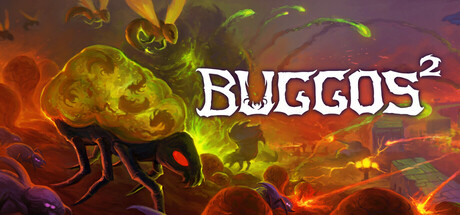
While it improves on the original with fun swarm mechanics and is good value on sale, it's too short with insufficient content and frequent crashes, making the price hard to justify.
What players like
Sequel improves upon original: Many reviewers agree that the game is a significant upgrade over its predecessor, with better controls, graphics, gameplay, and quality-of-life improvements. This sentiment is expressed across several clusters, indicating strong consensus.
Game is enjoyable and fun: A large number of players find the game fun and enjoyable, using descriptors like 'amazing', 'addictive', and 'great'. This positive feedback spans multiple clusters, suggesting widespread satisfaction.
Swarm mechanics are satisfying: Controlling a large swarm of bugs is highlighted as a key enjoyable aspect, with players loving the feeling of commanding an ever-growing horde. This is noted in multiple clusters, indicating a core strength.
Fun RTS puzzle experience: The game is praised for its unique blend of RTS and puzzle elements, providing a refreshing take on the genre. Players appreciate the casual yet engaging gameplay and the strategic depth it offers.
Challenging yet balanced difficulty: Reviewers appreciate that the game offers a satisfying level of difficulty, with later levels providing a good challenge without being frustrating. The difficulty settings are also seen as well balanced.
Common complaints
Insufficient content overall: The game is widely seen as lacking content, with sparse missions, limited tech tree unlocks, and repetitive gameplay. Compared to the first game, fewer units and features are available, reducing replayability.
Game too short: Multiple players report a short campaign length, ranging from 3 to 7 hours, which feels insufficient for the price. This is consistently highlighted as a major drawback.
Price not justified: Many reviewers feel the game's content does not match its full price, with complaints about being overpriced and not worth the cost even on sale. The short length and sparse content amplify this perception.
Balance issues abound: Players report significant balance problems, with certain factions or units being overpowered while others are nearly useless. Examples include artillery unable to shoot over walls, overpowered humans, and weak titan units.
Similar to predecessor: Many feel this is not a true sequel but more like a rehash or DLC of the first game, with only minor changes and no significant new features. This leads to disappointment among fans of the original.
Gameplay and performance
Swarm-based bug controls: Players control a large swarm of bug units, including warriors, defenders, exploders, and gigantic types, allowing for massive swarming tactics over the battlefield. This core gameplay identity resonates across multiple clusters.
Multiple difficulty modes: The game offers a range of difficulty settings, including normal, hard, and an 'Impossible' mode, catering to different player skill levels. The presence of a maximum difficulty option adds replayability for challenge-seekers.
Main campaign and survival: The game features a dedicated main campaign alongside a separate survival mode, which offers endless enemy waves for replayability. These two modes provide structured objectives and more open-ended gameplay.
Tech tree progression: Progression is driven by evolution points spent on a technology tree, which includes various upgradeable technologies. This system allows players to customize their swarm's capabilities and provides long-term goals.
Complex skill tree: The skill tree is more complex than previous iterations and can be freely respecced, allowing for experimentation. This system ties into the evolution tree, which can be fully maxed out with enough playtime.
Frequent game crashes: Several clusters report repeated crashes or freezes during gameplay, spanning various stages and difficulties. This occurs even on systems meeting recommended specs, impacting playability.
Crashes with high entity counts: Crashes and performance issues become more frequent when large numbers of units or bugs are on screen, such as over 3000 entities. This suggests scalability problems under heavy load.
Performance issues on higher difficulties: Gameplay slows or becomes unplayable on higher difficulties, with reports of FPS drops requiring restarts. This ties difficulty-driven enemy counts to technical strain.
Good performance on capable hardware: Some players report smooth performance on PCs with sufficient hardware, even during large battles, and minimal hiccups on low-end laptops. This indicates the game can run well with proper specs.
Optimization issues requiring workarounds: Players experience stuttering, freezes, and crashes that may force them to close other applications or restart the game. This suggests suboptimal resource management.
Recommendations
Not worth full price: Players consistently advise against paying full price, suggesting waiting for a steep discount or sale instead. This feedback appears across multiple clusters, indicating a common sentiment about value.
Better on sale: A significant number of players recommend purchasing the game only on sale, reinforcing that the full price is seen as too high. Sale purchases are considered acceptable value.
Not recommended in current state: Reviewers cannot recommend the game as it currently stands, often due to bugs or incomplete content. This suggests a need for fixes or additional polish before it becomes a solid purchase.
Not worth buying: Some reviewers outright say not to buy the game or do not recommend it to friends, referencing the price and content. This indicates a subset of players found the game disappointing overall.
Compare to Buggos 2: Many players recommend buying Buggos 2 over Buggos 1, implying that Buggos 2 is the better choice. Others suggest sticking with the original game on sale, showing a split in preferences.
Buying context
Community fair range: $5.00 - $15.00.
Game completion: 22.0h.
Story completion: 6.0h.
The game starts off enjoyable with solid mechanics, but quickly becomes repetitive and tedious after a few hours, especially on later planets and higher difficulties.
Player profiles
Swarm Devotee: Aggressive macro swarming, adapting to enemy with massive unit production, enjoying the theme and challenge. Motivation: Love of swarming alien themes and satisfying RTS gameplay. Stance: buy.
Meta Critic: Meta-optimizing, analytical, seeking efficient strategies and balanced fairness. Motivation: Desire for strategic variety and balanced difficulty. Stance: sale.
Casual Swarmer: Low APM, experimental, focusing on fun over efficiency, playing on lower difficulties for relaxation. Motivation: Relaxation and casual fun from a non-intimidating strategy game with a unique theme. Stance: buy.
Extra review signals
Monetization: User feedback centers on the base game being overpriced and lacking content relative to its predecessor, with no mention or evidence of microtransactions, gacha, lootboxes, or other real-money in-game purchases.
Other review notes
Short campaign length: Players consistently report that the game is short, with completion times ranging from 4 to 8 hours on normal difficulty. This is a recurring complaint tied to the game's value.
Improvement over Buggos 1: Many reviewers note that Buggos 2 is a clear upgrade from the first game, with quality-of-life improvements and enhanced gameplay. Some call it a worthy successor, while others see it as a re-do.
Similar to Buggos 1: Several reviewers see Buggos 2 as essentially the same as the first game, with only new maps and minor tweaks. A few consider it worse than the original, describing it as a carbon copy or an expansion.
Overpriced for content: Many reviewers think the price is too high for the amount of content, especially given the short playtime. Some mention specific prices like 20 euros and feel it doesn't justify the purchase.
Price-to-length ratio: The short length relative to the price is a major criticism, with some stating the game is too expensive for what it offers. This affects the perceived value significantly.